
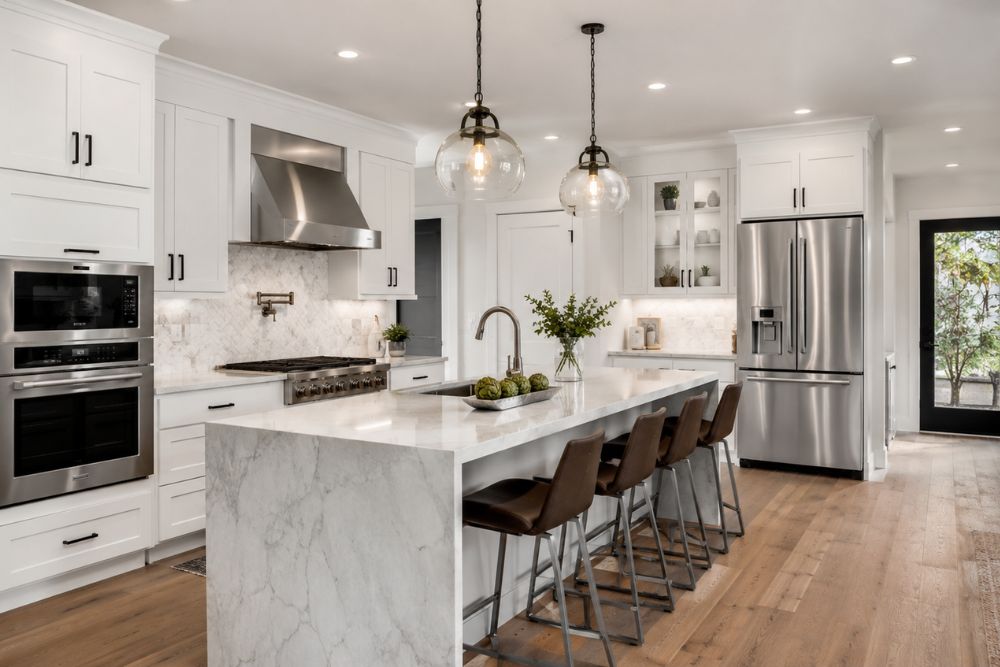
The best paint for kitchen cabinets in 2026 is a high-quality waterborne alkyd enamel or urethane enamel paint because it provides exceptional durability, a smooth factory-like finish, and resistance to scratches, stains, and moisture.
For most homeowners, Sherwin-Williams Emerald Urethane Trim Enamel, Benjamin Moore Advance, and INSL-X Cabinet Coat are among the top-performing options for long-lasting cabinet refinishing.
If you’re looking for the most durable paint for kitchen cabinets, choose a hybrid alkyd enamel. If you want the best paint for kitchen cabinets without sanding, look for high-adhesion cabinet paints paired with a bonding primer. For laminate surfaces, specialty cabinet paints and primers offer the best results.
Best Paint for Kitchen Cabinets: Why Your Paint Choice Matters
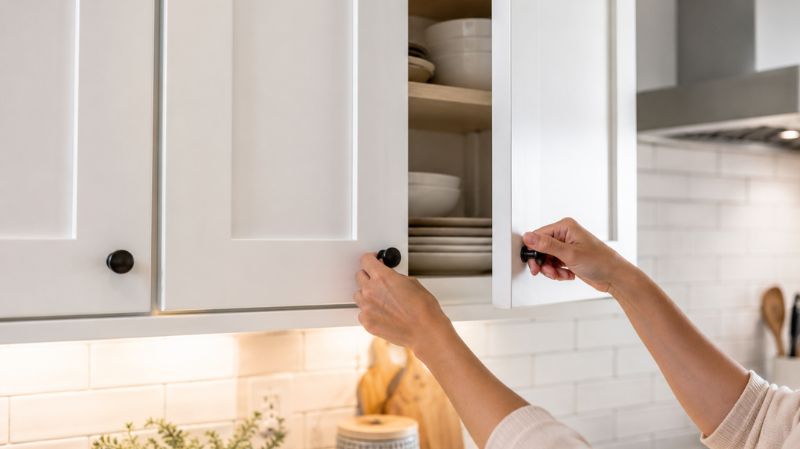
Kitchen cabinets endure more abuse than almost any other painted surface in a home.
They are opened and closed hundreds of times each week. They encounter grease, moisture, fingerprints, food splatters, cleaning products, and constant wear.
Using standard wall paint on cabinets often leads to:
- Chipping
- Scratching
- Peeling
- Yellowing
- Poor adhesion
- Difficult cleaning
Cabinet-specific paints are formulated differently.
They contain stronger binders, harder finishes, and self-leveling technology that helps create a smoother appearance while resisting damage.
A quality cabinet paint can extend the life of your cabinets for years while costing a fraction of a complete kitchen renovation.
According to remodeling industry estimates, replacing kitchen cabinets can cost between $5,000 and $25,000 or more, while painting existing cabinets typically costs only a small percentage of that amount.
For homeowners seeking maximum value, cabinet painting remains one of the highest-ROI kitchen upgrades available.
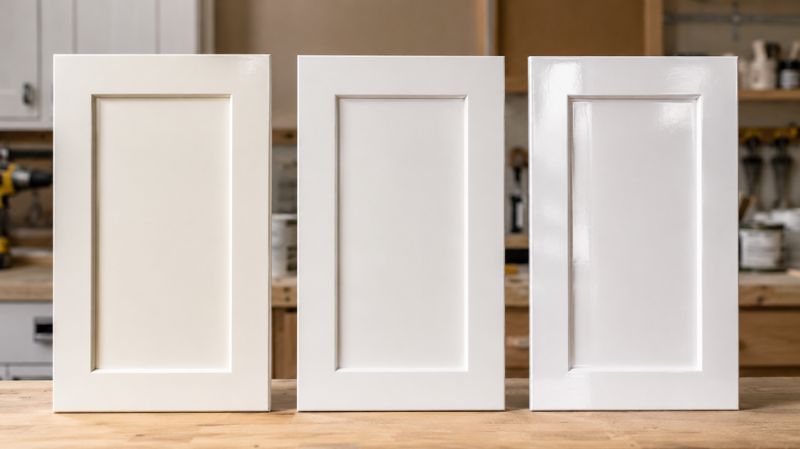
Quick Comparison Table: Best Paints for Kitchen Cabinets
| Paint | Type | Best For | Durability | Finish Quality |
| Sherwin-Williams Emerald Urethane Trim Enamel | Hybrid Alkyd | Best Overall | Excellent | Excellent |
| Benjamin Moore Advance | Waterborne Alkyd | Premium Finish | Excellent | Excellent |
| INSL-X Cabinet Coat | Urethane Acrylic | Budget-Friendly Durability | Very Good | Very Good |
| General Finishes Milk Paint | Acrylic Mineral | Easy DIY Use | Good | Very Good |
| Behr Urethane Alkyd Enamel | Hybrid Alkyd | Budget Projects | Good | Good |
| Valspar Cabinet & Furniture Paint | Acrylic Enamel | DIY Beginners | Good | Good |
| Rust-Oleum Cabinet Transformations | Cabinet System | Full Makeovers | Good | Good |
What Is the Best Paint for Kitchen Cabinets?
The best cabinet paints combine four important characteristics:
- Strong adhesion
- Smooth leveling
- High durability
- Easy maintenance
Modern hybrid alkyd paints outperform many traditional options because they combine the benefits of water-based and oil-based technologies.
These paints apply easily like latex paint but cure into a harder finish similar to traditional oil paint.
For most homeowners and professional painters, hybrid alkyd enamel remains the gold standard.
Top 10 Best Paints for Kitchen Cabinets in 2026
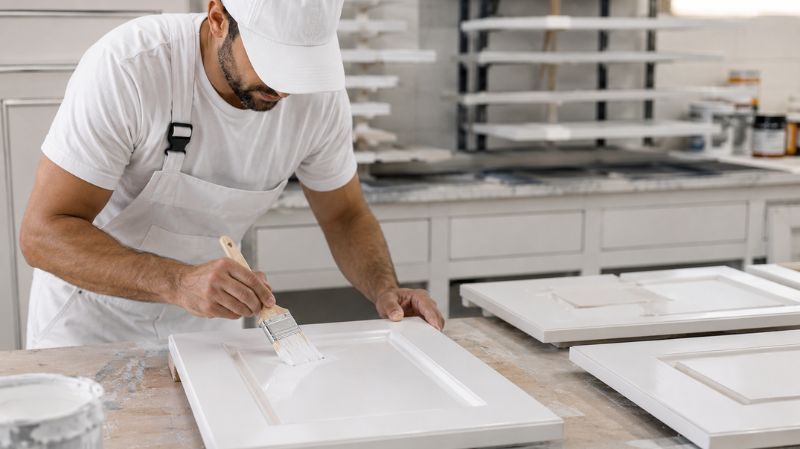
1. Sherwin-Williams Emerald Urethane Trim Enamel
Why Is It Considered the Best Overall Cabinet Paint?
Sherwin-Williams Emerald Urethane Trim Enamel consistently ranks among the highest-performing cabinet paints available today.
Its advanced urethane-modified alkyd formula provides:
- Outstanding leveling
- Exceptional durability
- Excellent scratch resistance
- Professional-looking finish
Unlike many paints that leave visible brush marks, Emerald Urethane self-levels remarkably well.
This creates a factory-smooth appearance even when applied by DIY homeowners.
Pros
- Exceptional self-leveling
- Excellent adhesion
- Highly washable
- Low VOC formula
- Available in many colors
Cons
- Higher price point
- Longer curing period than acrylic paints
Best For
Homeowners seeking the most professional finish possible.
2. Benjamin Moore Advance
Why Do Professionals Recommend Benjamin Moore Advance?
Benjamin Moore Advance has earned a reputation among cabinet painters for producing furniture-grade finishes.
The paint combines:
- Water cleanup
- Oil-like finish quality
- Outstanding flow and leveling
One major advantage is its ability to create an exceptionally smooth surface that closely resembles sprayed cabinetry.
Pros
- Beautiful finish
- Excellent leveling
- Strong durability
- Wide color selection
Cons
- Longer cure time
- More expensive than standard paints
Best For
Premium kitchen cabinet projects.
3. INSL-X Cabinet Coat
Is INSL-X Cabinet Coat Worth It?
INSL-X Cabinet Coat is one of the strongest value options available.
It was specifically developed for:
- Cabinets
- Furniture
- Trim
- High-traffic surfaces
Many homeowners choose it because it delivers impressive durability without premium pricing.
Pros
- Excellent adhesion
- Affordable
- Smooth finish
- Easy maintenance
Cons
- Limited sheen options
- Requires proper preparation
Best For
Budget-conscious cabinet refinishing.
4. General Finishes Milk Paint
Can You Use General Finished Milk Paint on Cabinets?
Absolutely.
Despite the name, this is not traditional milk paint.
It is a durable acrylic mineral paint designed for furniture and cabinetry.
Many DIYers appreciate it because it often performs well with minimal preparation.
Pros
- Beginner-friendly
- Excellent coverage
- Smooth application
- Fast drying
Cons
- Benefits from protective topcoat
- Fewer color choices
Best For
DIY cabinet makeovers.
5. Behr Urethane Alkyd Enamel
Behr’s cabinet paint combines affordability with respectable performance.
Its hybrid formulation offers:
- Good durability
- Smooth finish
- Easy availability
For homeowners shopping at major home improvement stores, it remains a practical choice.
6. Valspar Cabinet & Furniture Paint
Valspar has improved significantly over the years.
Its cabinet-specific formula offers:
- Good adhesion
- Decent durability
- Smooth finish
- Easy application
It works especially well for moderate-use kitchens.
7. Rust-Oleum Cabinet Transformations
This complete refinishing system appeals to homeowners seeking a structured step-by-step process.
The kit includes products designed specifically for cabinet renovation.
8. Benjamin Moore Scuff-X
Scuff-X was originally developed for commercial spaces but has become popular for cabinetry.
Its standout feature is scratch resistance.
Homes with children and pets often benefit from its durability.
9. Sherwin-Williams ProClassic
ProClassic remains a trusted option for trim and cabinet painting.
It provides:
- Smooth finish
- Reliable durability
- Professional results
Many painting contractors still use it regularly.
10. Beyond Paint Cabinet Paint
Beyond Paint is marketed toward homeowners seeking easier refinishing.
Its simplified application process appeals to DIY enthusiasts.
While not always as durable as premium alkyd enamels, it offers convenience.
What Type of Paint Works Best on Kitchen Cabinets?
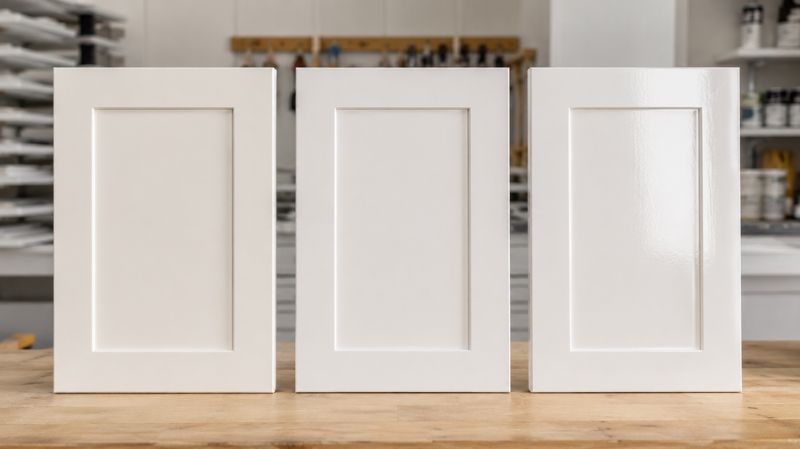
Choosing the right paint type matters just as much as choosing the right brand.
Let’s compare the major categories.
Acrylic Latex Paint
Acrylic latex paint is common and affordable.
Advantages include:
- Fast drying
- Easy cleanup
- Low odor
However, standard wall-grade acrylic paints often lack the durability required for cabinets.
Not all acrylic paints are suitable for kitchen cabinetry.
Alkyd Enamel Paint
Alkyd enamel creates an extremely hard finish.
Benefits include:
- Superior durability
- Excellent leveling
- Better resistance to wear
Traditional oil-based alkyd paints have largely been replaced by waterborne versions.
Hybrid Urethane Paint
Hybrid urethane paints combine the strengths of acrylic and alkyd technologies.
They offer:
- Easy cleanup
- Lower VOCs
- Excellent durability
- Professional finish quality
For most kitchens, this is currently the best option available.
Water-Based vs Oil-Based Paint for Kitchen Cabinets
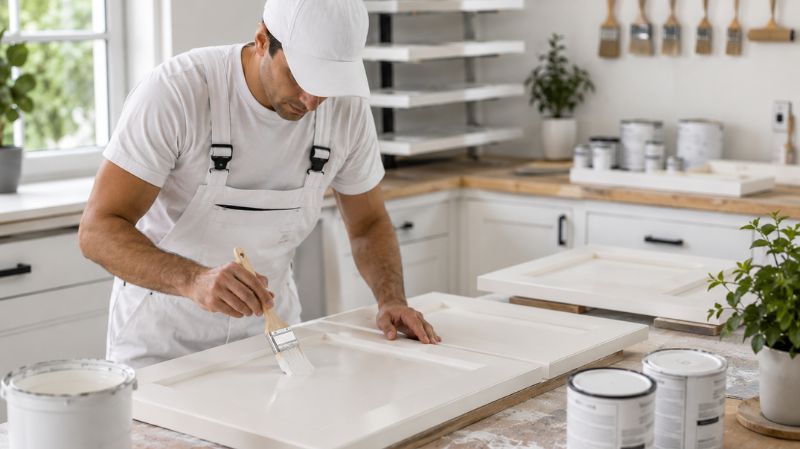
For decades, oil-based paint dominated cabinet refinishing.
Today, technology has changed.
Modern waterborne alkyd paints now rival oil-based products in durability while offering:
- Easier application
- Faster cleanup
- Lower odor
- Reduced environmental impact
Most professional painters now prefer waterborne alkyd systems over traditional oil paints.
How Do You Choose the Best Paint for Kitchen Cabinets?
Durability
Kitchen cabinets receive constant use.
Choose paints specifically designed for cabinetry, trim, or furniture.
These products cure harder than standard wall paint.
Self-Leveling Properties
A smooth finish depends heavily on leveling.
Self-leveling paints minimize:
- Brush marks
- Roller texture
- Surface imperfections
Premium cabinet paints excel in this area.
Moisture Resistance
Kitchens generate humidity.
Choose paints formulated to resist:
- Water exposure
- Steam
- Grease
- Frequent cleaning
This helps maintain appearance for years.
Stain Resistance
Cabinets near cooking areas often encounter grease and food splatter.
Quality cabinet paints clean easily without damaging the finish.
VOC Levels
Low-VOC paints improve indoor air quality during renovation.
Most premium cabinet paints now offer lower VOC formulations without sacrificing performance.
Which Paint Finish Is Best for Kitchen Cabinets?
The best paint finish depends on your style preferences and maintenance expectations.
Most professionals recommend satin or semi-gloss.
Satin Finish
Benefits include:
- Modern appearance
- Easy cleaning
- Reduced fingerprint visibility
- Balanced sheen
Satin remains the most popular cabinet finish today.
Semi-Gloss Finish
Benefits include:
- Higher durability
- Greater moisture resistance
- Easier cleaning
Semi-gloss is especially popular in busy family kitchens.
What Is the Best Paint for Laminate Kitchen Cabinets?
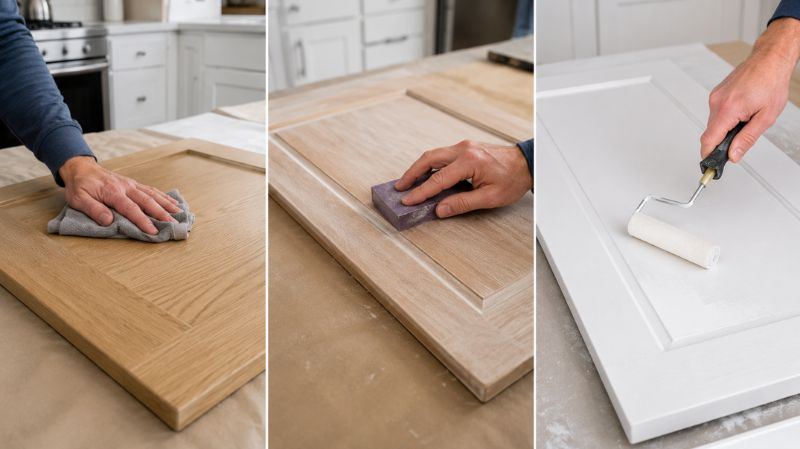
Many homeowners assume laminate cabinets cannot be painted successfully.
That is a myth.
The key is proper preparation and product selection.
For the best paint for laminate kitchen cabinets, choose:
- High-adhesion bonding primer
- Urethane enamel cabinet paint
- Durable topcoat if needed
Recommended products include:
- Sherwin-Williams Emerald Urethane Trim Enamel
- INSL-X Cabinet Coat
- Benjamin Moore Advance
Tips for Painting Laminate Cabinets
- Clean thoroughly
- Degrease surfaces
- Lightly scuff sand
- Apply bonding primer
- Use thin paint coats
Skipping primer is the biggest reason laminate paint jobs fail.
What Is the Best Paint for Kitchen Cabinets Without Sanding?
Many homeowners search for the best paint for kitchen cabinets without sanding because sanding can be time-consuming.
While some products claim sanding is unnecessary, professionals still recommend at least a light scuff sanding whenever possible.
However, if minimal sanding is your goal, consider:
- General Finishes Milk Paint
- Beyond Paint
- Cabinet-specific urethane paints with bonding primer
Important Reality Check
No paint completely eliminates the need for proper surface preparation.
The most successful “no-sanding” projects still involve:
- Deep cleaning
- Degreasing
- Bonding primer
Preparation is often more important than paint selection.
What Is the Best Paint for Kitchen Cabinets That Doesn’t Yellow?
Yellowing is a common concern, especially with white cabinets.
Traditional oil-based paints tend to yellow over time, particularly in low-light environments.
If you want the best paint for kitchen cabinets that doesn’t yellow, choose waterborne products.
Top options include:
- Sherwin-Williams Emerald Urethane Trim Enamel
- Benjamin Moore Advance
- INSL-X Cabinet Coat
- Benjamin Moore Scuff-X
These products maintain color accuracy significantly better than traditional oil paints.
Why Paint Turns Yellow
Common causes include:
- Oxidation
- UV exposure
- Poor-quality binders
- Oil-based formulations
Modern waterborne alkyd paints largely solve this issue.
What Is the Most Durable Paint for Kitchen Cabinets?
Durability is often the deciding factor for homeowners.
After all, kitchen cabinets experience daily wear and tear.
The most durable paint for kitchen cabinets is generally considered a high-quality hybrid alkyd enamel.
Characteristics of Durable Cabinet Paint
- Hard curing finish
- Scratch resistance
- Moisture resistance
- Chemical resistance
- Washability
Top performers include:
- Sherwin-Williams Emerald Urethane
- Benjamin Moore Advance
- Benjamin Moore Scuff-X
- INSL-X Cabinet Coat
These products consistently outperform ordinary latex paints.
Do You Need a Primer Before Painting Kitchen Cabinets?
The short answer is yes.
Most professional painters prime cabinets before painting.
Primer improves:
- Adhesion
- Durability
- Stain blocking
- Coverage
Skipping primer may save time initially but often reduces long-term performance.
When Is a Primer Absolutely Necessary?
Primer is essential when:
- Painting laminate cabinets
- Covering dark colors
- Painting unfinished wood
- Covering glossy surfaces
- Blocking wood tannins
Best Primers for Kitchen Cabinets
Popular options include:
Zinsser BIN Shellac Primer
Best for:
- Stain blocking
- Tannin blocking
- Maximum adhesion
Zinsser Smart Prime
Best for:
- Water-based applications
- Low odor projects
Kilz Adhesion Primer
Best for:
- Laminate cabinets
- Glossy surfaces
How to Paint Kitchen Cabinets for a Smooth Professional Finish
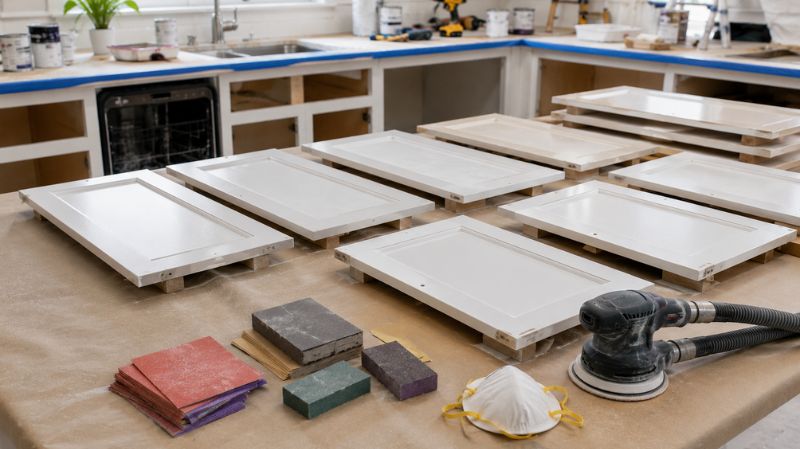
The difference between amateur and professional-looking cabinets usually comes down to process.
Step 1: Remove Doors and Hardware
Label everything.
Store hinges and screws in separate bags.
This makes reassembly easier.
Step 2: Clean Thoroughly
Cabinets collect grease over time.
Use:
- Degreaser
- TSP substitute
- Cabinet cleaner
Paint will not adhere properly to grease.
Step 3: Sand the Surface
Light sanding creates microscopic scratches that help primer grip.
Use:
- 180-grit sandpaper
- 220-grit sandpaper
You do not need aggressive sanding.
Step 4: Apply Primer
Apply one complete coat.
Allow full drying time according to manufacturer instructions.
Step 5: Apply Cabinet Paint
Use:
- High-quality brush
- Foam roller
- Paint sprayer
Apply thin coats.
Thin coats level better and cure harder.
Step 6: Sand Between Coats
Lightly sand with:
- 220-grit
- 320-grit
Remove dust before repainting.
Step 7: Apply Final Coat
Two coats are typically sufficient.
Darker colors may require three coats.
Step 8: Allow Full Cure Time
Dry and cured are different things.
Many cabinet paints require:
- 7–14 days for light use
- 21–30 days for full cure
Patience improves durability dramatically.
Life Example: How Cabinet Paint Saved a Kitchen Renovation Budget
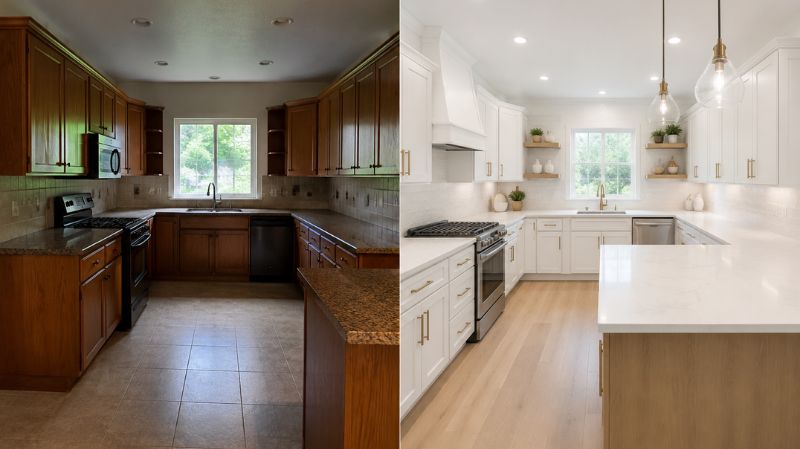
A homeowner planning a complete kitchen remodel received cabinet replacement quotes exceeding $12,000.
Instead of replacing solid wood cabinets, they:
- Cleaned existing cabinets
- Primed surfaces
- Used Sherwin-Williams Emerald Urethane
- Installed new hardware
Total project cost was approximately $600.
The kitchen achieved a modern appearance while saving thousands of dollars.
This illustrates why cabinet painting remains one of the highest-return home improvement projects.
Common Cabinet Painting Mistakes to Avoid
Even premium paint cannot compensate for poor preparation.
Avoid these mistakes:
Skipping Cleaning
Grease prevents adhesion.
Always clean thoroughly.
Using Wall Paint
Wall paint is not designed for cabinetry.
It chips and scratches more easily.
Applying Thick Coats
Heavy coats increase:
- Drips
- Brush marks
- Longer drying times
Thin coats perform better.
Ignoring Cure Time
Many homeowners reinstall doors too quickly.
This can damage fresh paint.
Skipping Primer
Primer creates the foundation for a durable finish.
Professionals rarely skip it.
How Long Does Cabinet Paint Last?
A quality cabinet paint job can last:
- 8–15 years
- Sometimes longer with proper care
Factors affecting longevity include:
- Surface preparation
- Paint quality
- Primer quality
- Household traffic
- Cleaning methods
Final Verdict
If you’re looking for the best paint for kitchen cabinets 2026, hybrid alkyd enamel paints remain the clear winner.
For most homeowners, Sherwin-Williams Emerald Urethane Trim Enamel offers the best balance of:
- Durability
- Smoothness
- Ease of application
- Long-term value
Painting your cabinets is one of the most cost-effective ways to completely change the look of your kitchen without the expense of a full renovation.
Choose a high-quality cabinet paint, follow the proper preparation steps, and invest a little extra time in surface prep. The result can rival the appearance of brand-new cabinetry at a fraction of the cost.
Whether you’re updating outdated oak cabinets, refreshing laminate surfaces, or creating a modern kitchen makeover, the right paint can deliver stunning results that last for years.
Frequently Asked Questions
1. What is the best paint for kitchen cabinets?
The best paint for kitchen cabinets is typically a waterborne alkyd enamel or urethane enamel paint. Products like Sherwin-Williams Emerald Urethane Trim Enamel and Benjamin Moore Advance provide excellent durability, smooth finishes, and long-lasting performance.
2. What is the most durable paint for kitchen cabinets?
Hybrid alkyd enamel paints are generally considered the most durable option. They cure to a hard finish that resists scratches, stains, moisture, and everyday wear.
3. Can I paint kitchen cabinets without sanding?
Yes, but results are usually better with light sanding. If sanding is not possible, use a high-adhesion bonding primer and a cabinet-specific paint designed for difficult surfaces.
4. What is the best paint for laminate kitchen cabinets?
The best paint for laminate cabinets is a cabinet-specific urethane enamel used over a bonding primer. Sherwin-Williams Emerald Urethane and INSL-X Cabinet Coat are popular choices.
5. How many coats of paint do kitchen cabinets need?
Most cabinets require two coats of paint after priming. Dark colors and significant color changes may require a third coat for full coverage.
6. Do I need a primer before painting cabinets?
Yes. Primer improves adhesion, durability, stain blocking, and overall finish quality. Most professionals consider primer essential.
7. Is satin or semi-gloss better for kitchen cabinets?
Both work well. Satin offers a softer appearance and hides fingerprints better, while semi-gloss provides slightly greater durability and moisture resistance.
8. How long should cabinet paint cure before use?
Most cabinet paints require at least 7–14 days before regular use and up to 30 days for complete curing.
9. What paint do professional cabinet painters use?
Many professionals prefer Sherwin-Williams Emerald Urethane, Benjamin Moore Advance, Benjamin Moore Scuff-X, and INSL-X Cabinet Coat due to their smooth finish and durability.
10. What paint color is best for kitchen cabinets in 2026?
White, warm off-white, sage green, navy blue, and soft greige remain among the most popular kitchen cabinet colors for 2026.


