
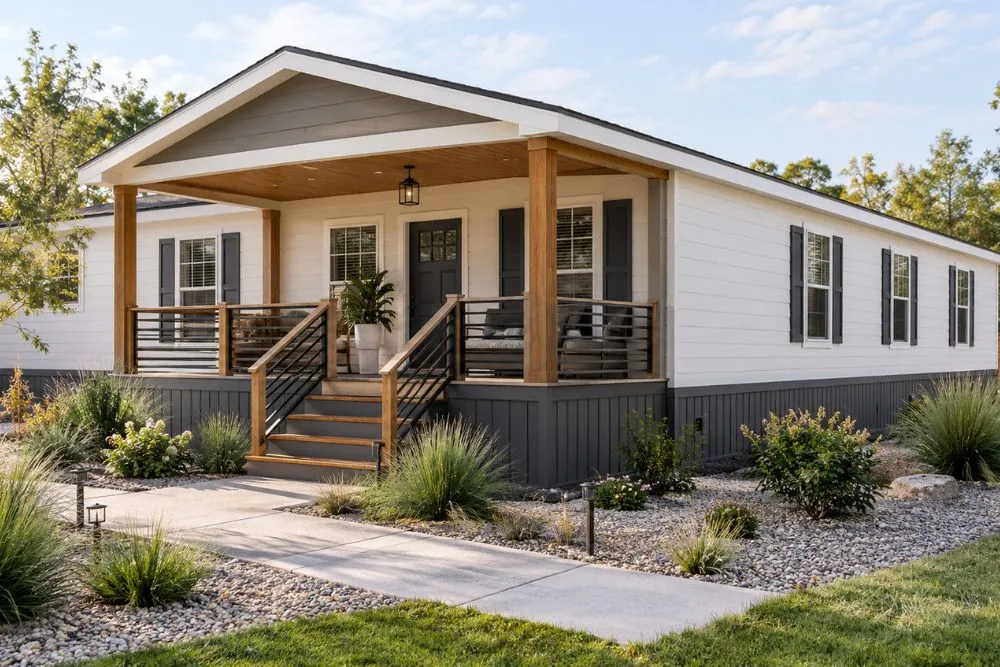
Mobile home skirting ideas can transform the lower exterior of a manufactured home from an exposed, unfinished area into a polished part of the overall design. The best approach balances appearance with durability, ventilation, moisture control, accessibility, budget, and coordination with your siding, porch, landscaping, and exterior paint colors.
Instant Answer Box
What is the best skirting for a mobile home?
The best option depends on your home’s style, climate, budget, maintenance preferences, and local requirements. Vinyl is affordable and versatile, faux stone and brick create a more substantial appearance, while wood-look, metal, and concrete-style mobile home skirting panels can create distinctive modern, rustic, or traditional exteriors.
What Is Mobile Home Skirting?
Mobile home skirting, sometimes called underpinning, covers the open area between the ground and the underside of a manufactured home. It gives the exterior a more finished appearance while helping protect the enclosed area from weather, animals, debris, and moisture.
Skirting should not be treated purely as decoration. Federal manufactured-home installation standards address weather resistance, attachment, wood near the ground, and crawlspace ventilation when skirting is used.
That makes skirting both a home improvement decision and an exterior design decision.
21 Mobile Home Skirting Ideas for a Stylish Exterior
1. Classic White Vinyl Skirting
White vinyl remains one of the simplest choices for a clean, traditional exterior. It works particularly well with white, cream, light-gray, pale-blue, or soft-green siding.
For a cottage-inspired look, repeat the white on window trim, porch railings, or columns. This creates visual continuity rather than making the skirting look like a separate addition.
2. Charcoal Gray Skirting for a Modern Look
Dark gray can give a manufactured home a more contemporary foundation. Pair charcoal skirting with white siding for crisp contrast or with medium-gray siding for a sophisticated monochromatic palette.
From a color-design perspective, darker skirting can visually anchor the lower portion of the home while allowing lighter walls to remain the dominant feature.
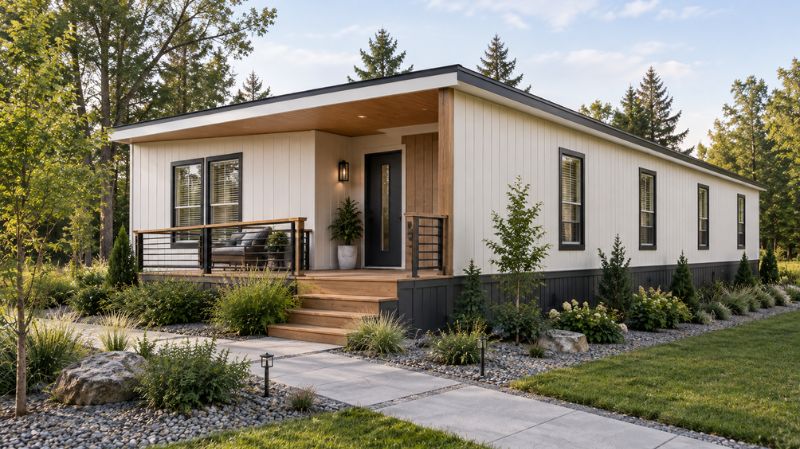
3. Black Skirting for Dramatic Curb Appeal
Black is a strong option for modern and minimalist exteriors. It pairs especially well with white, warm gray, sage green, beige, and natural wood.
A designer-style combination is black skirting, warm-white siding, natural wood accents, and simple landscaping. Keep the rest of the exterior relatively restrained so the dark base does not make the home feel visually heavy.
4. Faux Stone Skirting for a Substantial Appearance
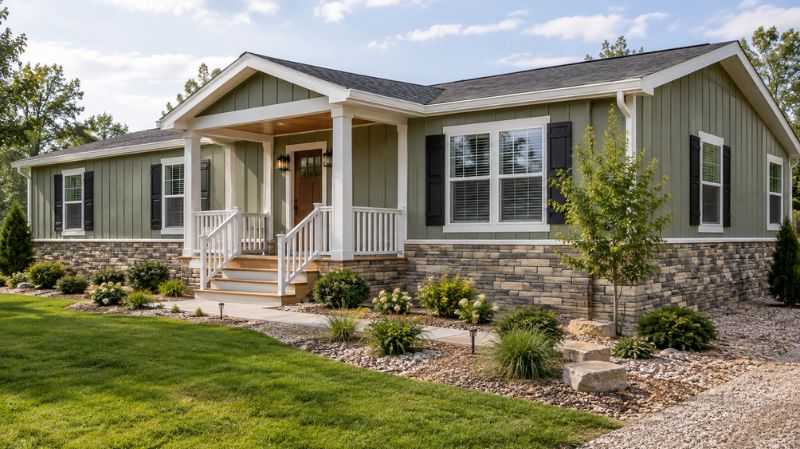
Faux stone is popular because it creates the visual impression of a more permanent foundation without necessarily using full masonry construction. Current idea galleries frequently feature stone textures as a major skirting option.
Gray stone works with cool siding, while beige or tan stone is better suited to warm cream, taupe, or brown palettes.
5. Faux Brick for Traditional Charm
Brick-style skirting can make the lower portion of a manufactured home feel more architectural.
Try red or brown brick with cream siding for a traditional look, or choose gray brick with white siding for a more contemporary interpretation. Avoid introducing a brick color that clashes with the home’s existing roof, siding, and trim.
6. Natural Wood-Look Skirting
Wood adds warmth that can soften a manufactured home’s exterior. Cedar-inspired, walnut, weathered-brown, and natural oak tones work particularly well with earthy paint colors.
Actual wood requires more maintenance than many synthetic alternatives. If you want the appearance without the same upkeep, consider wood-look panels designed for exterior applications.
7. Horizontal Wood Slat Skirting
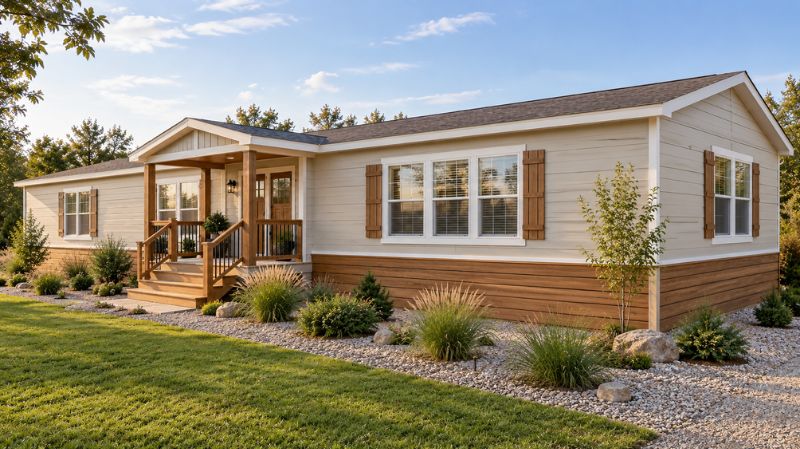
Horizontal lines can make the base of the home appear visually wider. This works particularly well on long single-wide or double-wide homes where you want to emphasize horizontal proportions.
Pair the skirting with simple landscaping and avoid too many competing patterns on the siding.
8. Vertical Panel Skirting
Vertical mobile home skirting panels create a different visual effect by directing the eye upward.
This can work well when the exterior already contains vertical siding, board-and-batten details, or tall landscaping. A consistent direction of lines makes the exterior feel intentional.
9. Traditional Lattice Skirting
Lattice remains a useful choice around porches and decks, especially for cottage, traditional, and garden-inspired homes.
However, lattice should be used thoughtfully. Its open appearance can make it less effective at visually creating a solid foundation than closed panels, and the design still needs to accommodate required ventilation.
10. Modern Metal Skirting
Metal can give a manufactured home an industrial or contemporary character.
Matte dark finishes work well with modern gray siding, while galvanized or weathered finishes can complement rustic exteriors. Because metal can dent, consider how exposed the skirting will be to lawn equipment, children, pets, or heavy weather.
11. Concrete-Look Skirting
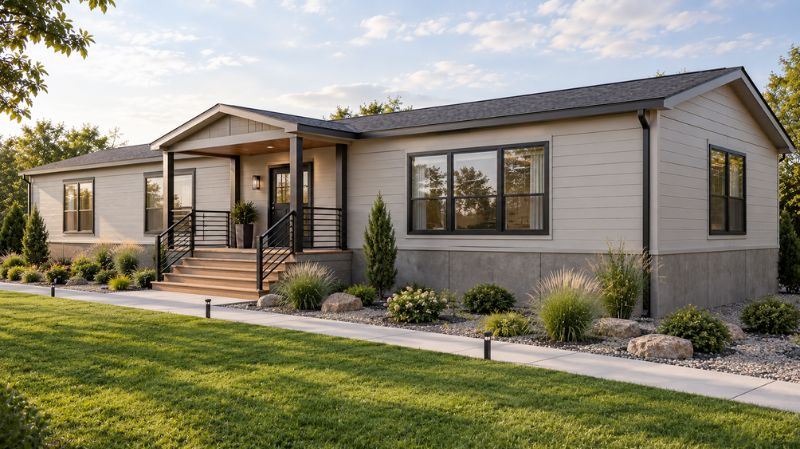
Concrete-inspired finishes suit contemporary and minimalist homes. Smooth gray panels create a restrained foundation that pairs naturally with white, charcoal, greige, and muted green siding.
This is particularly effective when the home’s exterior already uses concrete-look steps, modern pavers, or gray landscaping materials.
12. Mix Stone and Vinyl
You do not necessarily have to use one material around the entire home.
For example, use faux stone on the front-facing portion beneath the porch and entry while using simpler vinyl panels along less-visible sides. This creates a focal point without requiring a premium material everywhere.
13. Try a Two-Tone Skirting Design
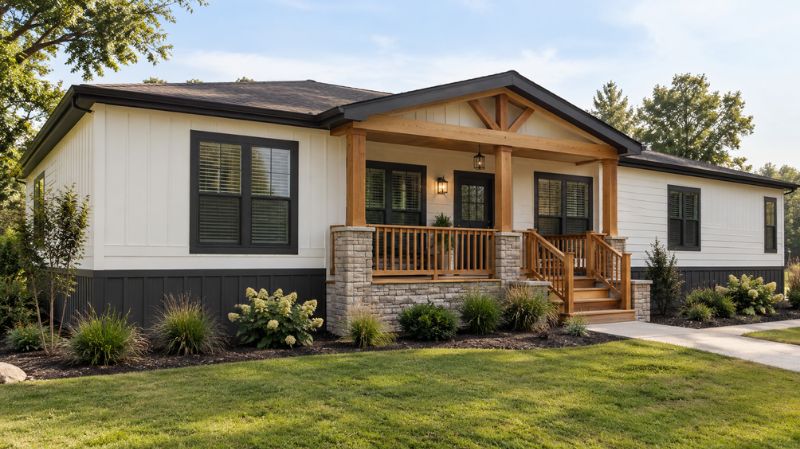
Two-tone skirting can add dimension without becoming overly decorative.
Good combinations include:
- Charcoal and black
- White and gray
- Beige and brown
- Stone and charcoal
- Warm wood and dark gray
Keep one color dominant and use the second as an accent.
14. Match the Skirting to the Siding
Matching does not mean the colors must be identical.
A tonal approach often looks more sophisticated. For example, pair sage-green siding with a darker gray-green base, or beige siding with a deeper taupe skirting.
This creates a layered exterior color palette instead of a flat block of one color.
15. Coordinate Skirting With the Porch and Steps
The porch is often the transition between the house and its foundation, so skirting should work with it.
If your porch has natural wood decking, consider wood-tone or warm neutral skirting. For a gray composite deck, charcoal, gray, or concrete-look skirting can create a cohesive appearance.
16. Create a Rustic Exterior With Wood and Landscaping
Combine wood-look skirting with gravel, natural stone, ornamental grasses, and warm neutral siding for a rustic or organic look.
For paint inspiration, consider muted sage, olive, cream, taupe, or warm gray rather than highly saturated colors.
17. Give Your Home a Farmhouse-Inspired Look
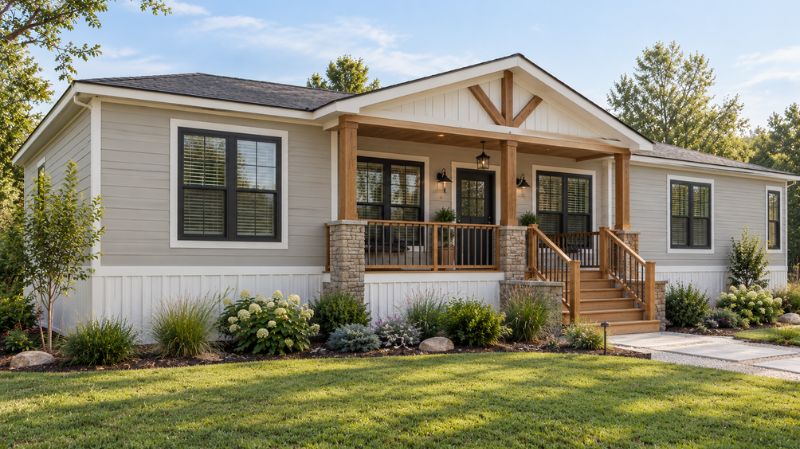
Farmhouse-style manufactured homes can benefit from a restrained palette of white, black, warm wood, and natural stone.
White skirting with darker siding creates a different effect from black skirting with white siding. Choose the combination based on whether you want the foundation to blend in or become a deliberate design feature.
18. Use Minimalist Skirting for a Contemporary Home
Modern design usually benefits from fewer competing textures.
Choose smooth panels, simple colors, clean horizontal or vertical lines, and restrained landscaping. Charcoal, black, warm gray, and concrete-inspired finishes are particularly useful here.
19. Refresh Existing Vinyl on a Budget
Replacing every panel is not always the first step.
If your existing skirting is structurally sound, inspect it for cracked panels, loose sections, damaged tracks, and other problems. A thorough cleaning and selective replacement may provide a noticeable exterior improvement at a lower cost.
For painted surfaces, only use a coating system appropriate for the specific skirting material and follow the manufacturer’s preparation instructions.
20. Use Color to Customize the Exterior
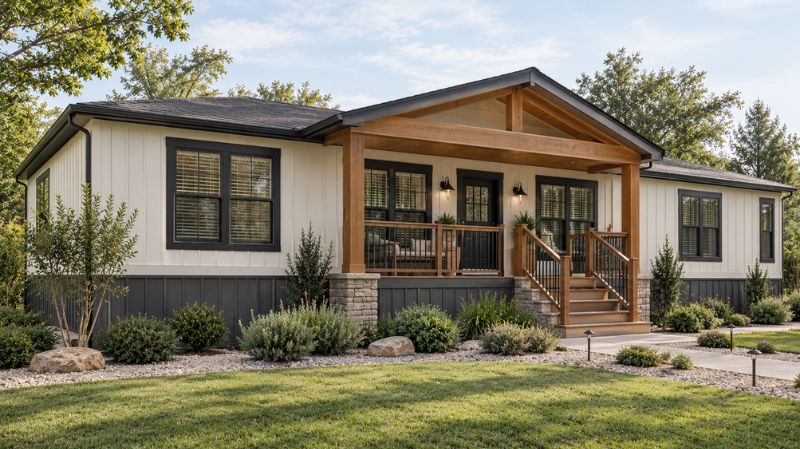
Skirting can become part of your home’s overall exterior color strategy rather than simply a neutral barrier.
For example:
| Siding Color | Skirting Color | Overall Effect |
| Warm white | Charcoal | Modern contrast |
| Sage green | Dark gray | Organic and sophisticated |
| Beige | Brown | Warm and traditional |
| Light gray | Black | Contemporary |
| Pale blue | White | Coastal/cottage |
| Cream | Natural wood | Warm and relaxed |
Color psychology can help guide the choice: darker colors tend to create visual weight, while lighter colors can make the lower portion feel less dominant.
21. Finish the Look With Landscaping
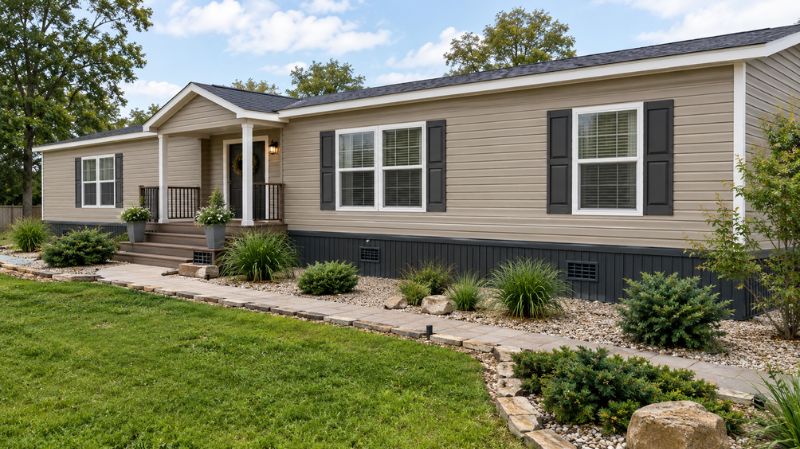
One of the easiest ways to make a new skirting look integrated is to connect it visually to the surrounding landscape.
Use gravel, mulch, low shrubs, ornamental grasses, planters, or a defined walkway to create a transition between the home and yard.
Keep plants, soil, mulch, and other landscaping elements away from required ventilation openings and service areas.
Best Mobile Home Skirting Materials Compared
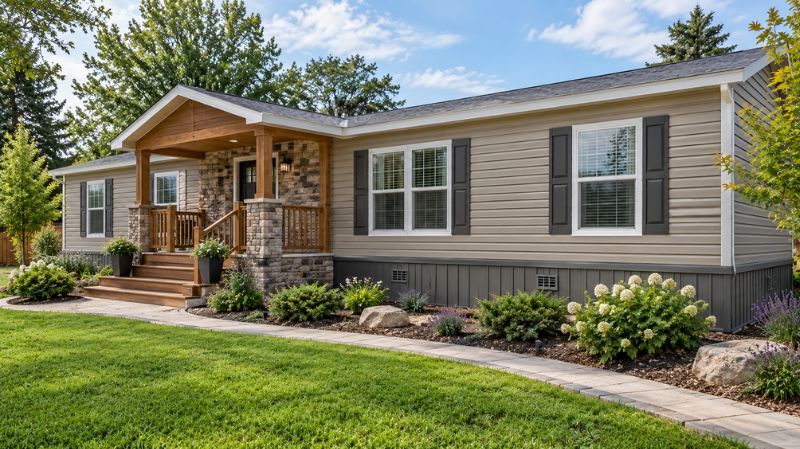
| Material | Appearance | Maintenance | Relative Cost | Good For |
| Vinyl | Clean and traditional | Low | Low | Budget upgrades |
| Faux stone | Substantial and upscale | Low-moderate | Medium | Curb appeal |
| Faux brick | Classic | Low-moderate | Medium | Traditional homes |
| Wood | Warm and natural | Higher | Medium | Rustic designs |
| Metal | Modern/industrial | Low-moderate | Medium | Contemporary homes |
| Concrete-style panels | Solid and modern | Low | Medium-high | Long-term aesthetic upgrades |
| Lattice | Open and decorative | Moderate | Low-medium | Porches and cottage styles |
There is no universally “best” material. The right choice depends on appearance, climate, maintenance, installation method, local requirements, and how the skirting interacts with the rest of the exterior.
How Do You Choose the Right Mobile Home Skirting?
Consider Your Home’s Exterior Style
Start with the architecture rather than the skirting itself.
A farmhouse exterior may suit white, brick, or wood-look options, while a contemporary home can support charcoal, black, metal, or concrete-inspired designs.
Match the Existing Color Palette
Look at the siding, roof, trim, doors, porch, and landscaping together.
If your siding is already visually busy, a simple neutral skirting color can prevent the exterior from feeling cluttered.
Consider Your Climate
Weather exposure matters. Federal standards require skirting, when used, to be made from weather-resistant materials or protected against weather deterioration. Wood skirting within 6 inches of the ground must meet specific treatment or natural-decay-resistance requirements under the federal standard.
Local conditions still matter, so homeowners should also follow local requirements and manufacturer instructions.
Think About Maintenance
Ask how often you are willing to:
- Clean the panels
- Repaint or reseal surfaces
- Replace damaged sections
- Inspect fasteners
- Clear vegetation
- Check ventilation
A slightly higher initial investment may make sense if it substantially reduces maintenance for your situation.
Does Mobile Home Skirting Need Ventilation?
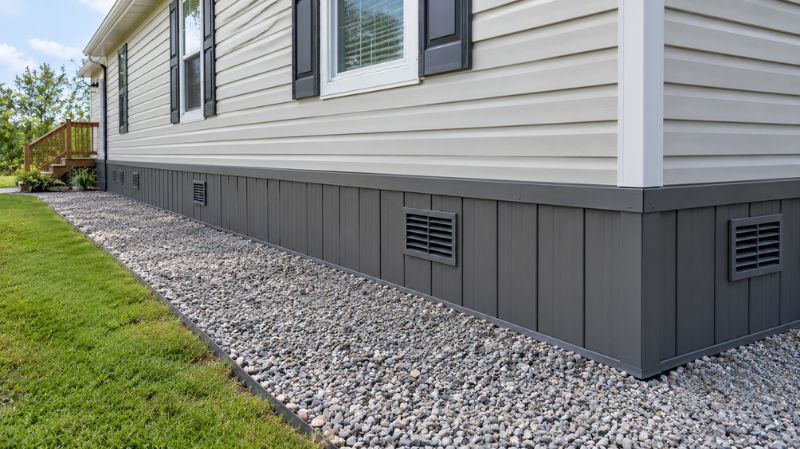
Yes. Ventilation is a critical part of a skirted manufactured-home crawlspace.
Under 24 CFR §3285.505, a crawlspace with skirting must have ventilation openings. The baseline requirement is at least 1 square foot of net ventilation opening for every 150 square feet of floor area, with different provisions available when an appropriate ground vapor retarder is installed. Openings must be positioned to provide cross-ventilation and protect against rodent entry.
HUD’s foundation guidance likewise emphasizes adequate moisture control and cross-ventilation beneath manufactured homes.
This is why you should never simply seal every gap around the home for cosmetic reasons.
What About Moisture Under a Mobile Home?
Moisture management should be considered before installing attractive new skirting.
Federal installation standards address ground moisture control when the space beneath a manufactured home is enclosed. In covered situations, a vapor retarder is generally required beneath the home unless an applicable arid-region exception applies.
In practical terms, homeowners should think about drainage + ground moisture + ventilation + skirting as one system rather than treating skirting as an isolated decorative project.
Should You DIY or Hire a Professional?
A straightforward replacement using a compatible skirting system may be suitable for an experienced DIY homeowner. Accurate measurements, proper attachment, ventilation, access, and material-specific installation instructions still matter.
Professional help makes more sense when the project involves structural repairs, drainage problems, difficult terrain, extensive custom work, or uncertainty about local requirements.
Before starting, check your manufactured home’s installation information and applicable local rules.
Mobile Home Skirting Mistakes to Avoid
Blocking Ventilation
Never sacrifice required airflow simply to create a seamless visual appearance.
Ignoring Drainage
Skirting should not trap water against the home. Federal standards specifically prohibit installation that can trap water between siding and trim or force water into wall cavities.
Choosing a Color That Fights the Siding
A dramatic skirting color can be attractive, but it should relate to the home’s existing palette.
Using Too Many Materials
Stone, brick, wood, metal, multiple paint colors, elaborate landscaping, and decorative trim can quickly compete for attention.
Forgetting Access
Utilities and service areas need practical access. A beautiful exterior becomes a problem if important equipment cannot be reached when maintenance is required.
Blocking Appliance Exhausts
Skirting should never interfere with required appliance or dryer exhaust routes. Federal standards require applicable exhaust systems to terminate outside the home and beyond perimeter skirting.
How to Make Mobile Home Skirting Look More Expensive
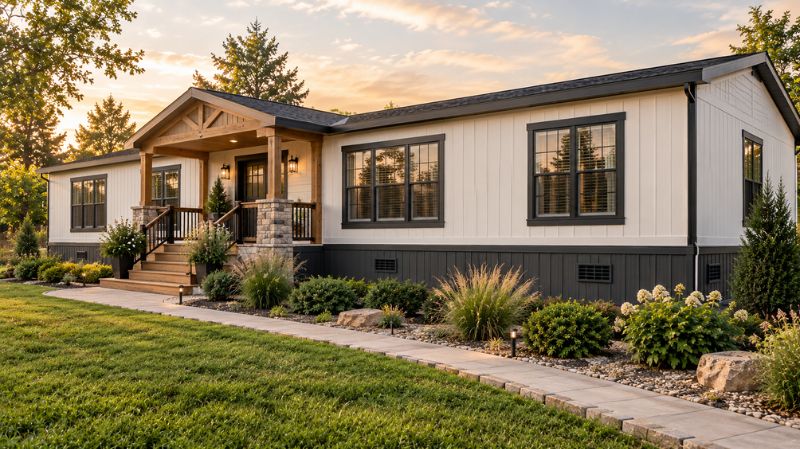
The most convincing exterior designs usually rely on coordination rather than expensive materials alone.
Choose one dominant exterior color, one secondary color, and perhaps one accent material. Repeat those choices across the siding, skirting, trim, porch, front door, and landscaping.
For example, charcoal skirting, warm-white siding, natural wood porch elements, and muted green landscaping can look considerably more intentional than several unrelated decorative materials.
Final Thoughts
The best mobile home skirting ideas do more than hide the underside of a manufactured home. They connect the foundation area to the siding, exterior paint colors, porch, landscaping, and overall home design.
Whether you choose classic vinyl, faux stone, brick, wood-look panels, metal, or a modern concrete-inspired finish, start with the practical requirements first. Make sure the system allows appropriate ventilation, manages moisture, remains accessible, and follows applicable installation requirements.
Then bring in the design details: choose a coordinated color palette, repeat materials strategically, and use landscaping to soften the transition between the home and yard.
Ready to upgrade your home’s exterior? Start by photographing your existing siding, trim, porch, and landscaping, then choose two or three skirting materials and color combinations that complement what you already have. The right combination can turn a basic skirting replacement into a complete curb-appeal upgrade.
Frequently Asked Questions
What is the best skirting for a mobile home?
There is no single best choice. Vinyl works well for budget-conscious projects, while faux stone, brick, metal, wood-look, and concrete-style options suit different aesthetic and maintenance priorities.
What is the cheapest way to skirt a mobile home?
Vinyl is commonly positioned as a budget-friendly option, although the total project cost depends on the home’s dimensions, ground conditions, labor, accessories, and installation method.
What looks best under a mobile home?
That depends on the exterior style. Stone and brick create a substantial appearance, wood-look panels add warmth, while dark gray or black panels can create a modern foundation.
Can you paint mobile home skirting?
Some skirting materials and products can be painted, but compatibility varies. Always follow the material or manufacturer’s coating instructions rather than assuming any exterior paint will work.
What color skirting makes a mobile home look bigger?
A lighter skirting color can make the base feel less visually heavy, while darker skirting can create stronger grounding and contrast. The best choice also depends on the siding color and surrounding landscape.
Is vinyl skirting good for a mobile home?
Vinyl can be a practical option because it is lightweight, widely available, and offered in multiple colors and textures. Its suitability depends on the product, installation, climate, and homeowner priorities.
Does mobile home skirting need ventilation?
Yes. Federal manufactured-home installation standards specify ventilation requirements for crawlspaces enclosed with skirting. The exact requirements depend on floor area and applicable vapor-retarder provisions.
How do you prevent moisture under mobile home skirting?
Use appropriate ground moisture control, maintain required ventilation, manage surface drainage, and install skirting without creating water traps. HUD guidance emphasizes moisture control and cross-ventilation beneath manufactured homes.
Should skirting match the siding?
It can, but it does not have to. Tonal matching, complementary colors, or controlled contrast can create a more sophisticated exterior than an exact color match.
Is professional installation necessary?
Not always. A capable DIYer may handle a straightforward project, but professional assistance is advisable when there are structural, drainage, difficult-site, code, or ventilation concerns.


