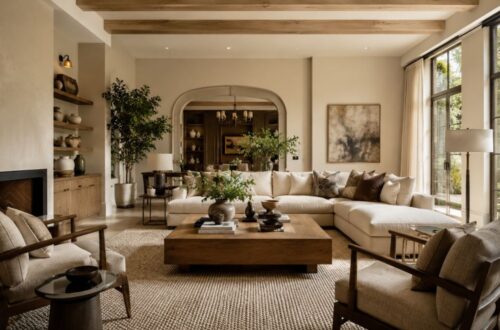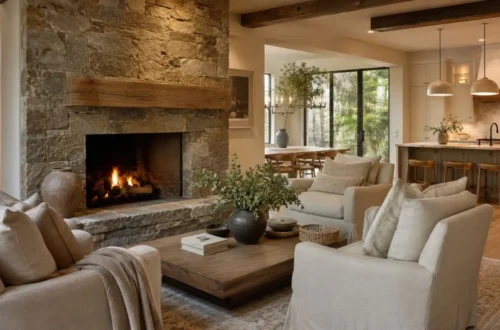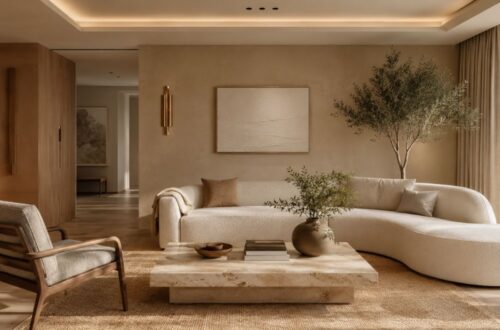
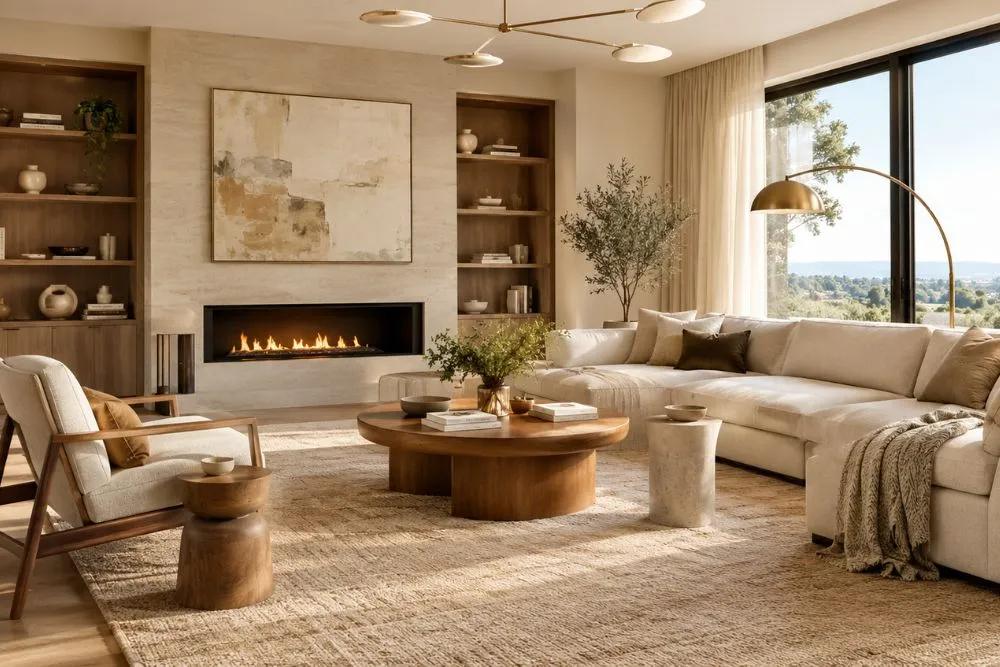
Contemporary interior design is an evolving approach to decorating that reflects current tastes through clean lines, comfortable furniture, open layouts, layered textures, natural materials, and carefully chosen statement pieces. Unlike modern design, which refers to a defined historical movement, contemporary design changes with the way people live, decorate, and use materials today.
Contemporary interior design combines a clean, uncluttered foundation with warm materials, functional furniture, intentional lighting, neutral or nature-inspired colors, and selective decorative accents. To get the look, focus on proportion and negative space first, then build the room with paint, furniture, texture, lighting, artwork, and accessories.
What Is Contemporary Interior Design?
Contemporary interior design means design of the present moment. That definition is important because contemporary style does not belong to one fixed decade or follow a permanent rulebook.
A contemporary home might combine clean architectural lines with a curved sofa, natural oak, stone surfaces, sculptural lighting, and an antique accent. The combination can change as design preferences change.
Current design coverage consistently describes contemporary interiors as flexible, trend-aware spaces that borrow from multiple influences while maintaining a cohesive appearance.
The goal is not to make every item look new. Instead, contemporary style interior design focuses on how different elements work together right now.
For homeowners, that makes the style particularly adaptable. You can update paint colors, lighting, textiles, or artwork without completely renovating the room.
What Are the Main Characteristics of Contemporary Interior Design?
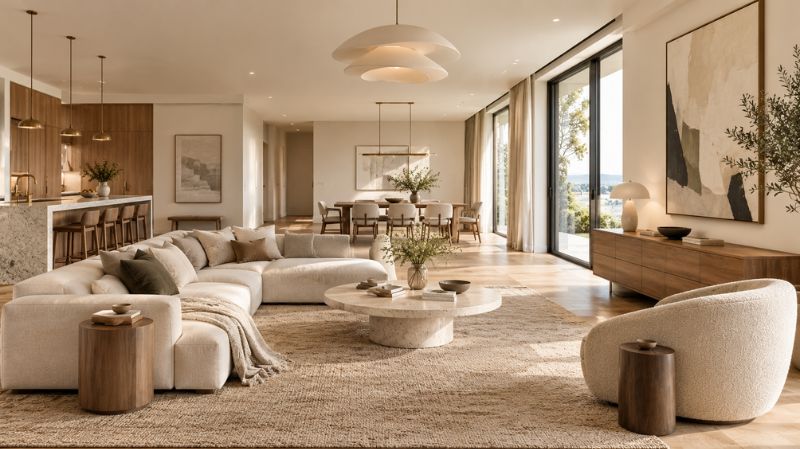
The most recognizable characteristics include:
- Clean architectural and furniture lines
- Open or visually connected layouts
- Neutral and nature-inspired colors
- Natural and mixed materials
- Comfortable, functional furniture
- Curved and sculptural forms
- Layered lighting
- Intentional negative space
- Textural contrast
- Carefully selected artwork and accessories
A contemporary room should feel edited rather than empty and sophisticated rather than overly formal.
Contemporary vs. Modern Interior Design: What’s the Difference?
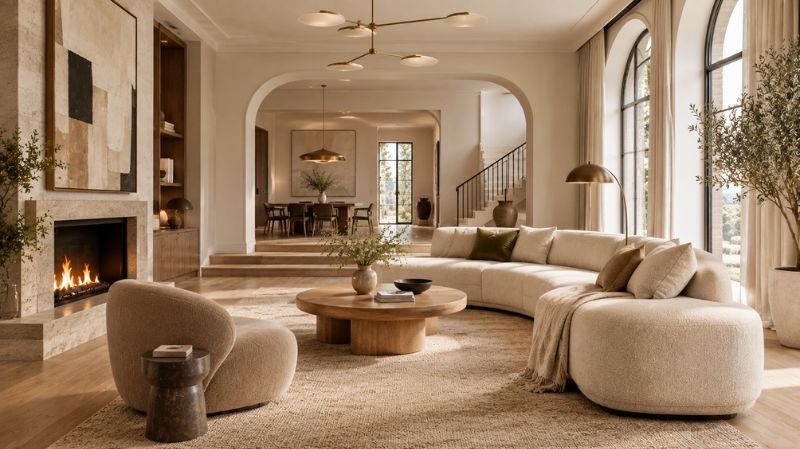
This is one of the most important distinctions for homeowners searching for contemporary interiors.
Modern design refers to a historical design movement associated with 20th-century modernism. The Bauhaus, founded by Walter Gropius in 1919, became one important influence on modern architecture and design.
Contemporary design, by contrast, describes what feels current. It can borrow from modernism, minimalism, mid-century design, organic interiors, industrial design, and other influences.
| Feature | Modern Interior Design | Contemporary Interior Design |
| Meaning | Historical design movement | Current and evolving approach |
| Time period | Primarily 20th century | Changes with the present |
| Furniture | Often structured and geometric | Can be straight, curved, or sculptural |
| Materials | Wood, leather, steel, glass and stone | Mix of wood, stone, glass, metal and textiles |
| Color | Earthy neutrals and controlled accents | Neutrals, warm tones and selective accents |
| Flexibility | More historically defined | More adaptable |
| Décor | Restrained | Restrained but more experimental |
The terms are frequently used interchangeably in furniture retail and everyday conversation, which explains much of the confusion. For a renovation project, however, defining the desired characteristics is more useful than relying on the label alone.
15 Key Elements of Contemporary Interior Design
1. Clean, Streamlined Lines
Clean lines create the visual foundation of contemporary rooms.
Look for cabinetry with simple fronts, furniture with uncomplicated silhouettes, uncluttered walls, and architectural details that do not compete for attention.
That does not mean every line must be perfectly straight. Contemporary rooms can successfully combine straight architectural lines with rounded furniture or curved lighting.
2. Open and Flexible Layouts
Contemporary interiors often prioritize visual connection between spaces.
A living room may flow into a dining area, while a kitchen connects directly with both. In smaller homes, you can create the same feeling without removing walls by maintaining clear sightlines and using furniture to define zones.
The key is visual openness, not simply having a large floor plan.
3. A Thoughtful Neutral Color Palette
Neutral colors remain a strong foundation for contemporary homes.
Consider:
- Warm white
- Cream
- Beige
- Greige
- Taupe
- Soft gray
- Charcoal
- Mushroom
- Natural clay tones
However, contemporary color schemes do not need to be completely colorless.
A warm greige living room can gain depth from olive artwork, walnut furniture, black lighting, or a muted blue accent chair.
How Does Color Psychology Work in a Contemporary Room?
Color affects the visual and emotional character of a space, but its effect also depends on lighting, surrounding materials, saturation, and personal preference.
For example, soft greens and muted blues can support a calm visual atmosphere, while terracotta, ochre, and warm brown accents can make a neutral room feel more grounded.
Designer tip: Test paint samples on more than one wall before committing. A color can appear noticeably different in morning, afternoon, and artificial light.
4. Natural Materials
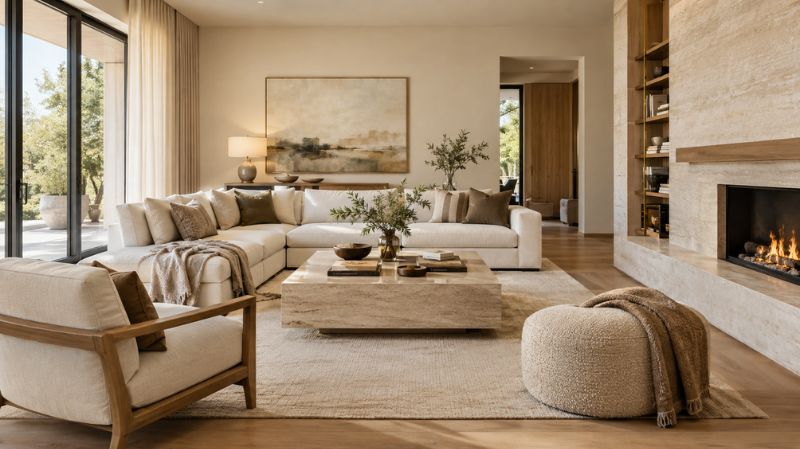
Natural materials prevent a clean contemporary room from feeling sterile.
Use combinations such as:
- White oak + limestone
- Walnut + cream upholstery
- Travertine + linen
- Stone + wool
- Rattan + painted walls
- Wood + brushed metal
The strongest rooms generally do not use every material at once. Choose a small group of complementary finishes and repeat them throughout the space.
5. Mixed Textures
When the color palette is restrained, texture becomes particularly important.
A contemporary bedroom might combine a smooth painted wall with a linen headboard, wool rug, wood nightstand, ceramic lamp, and soft bedding.
The colors may be similar, but the surfaces feel different.
This creates depth without relying on excessive pattern.
6. Functional, Well-Proportioned Furniture
Furniture should work for the people who actually live in the home.
A beautiful contemporary sofa that is uncomfortable or oversized for the room is still a poor design choice.
Before buying furniture, measure:
- Room dimensions
- Doorways
- Walking paths
- Furniture depth
- Seating clearance
- Distance between major pieces
Contemporary furniture can be minimalist, but it does not need to be uncomfortable.
7. Curved and Sculptural Forms
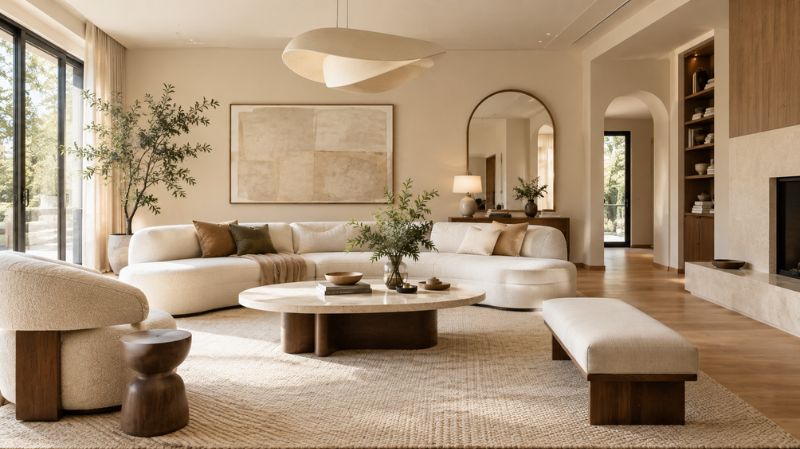
Curves have become an important part of current contemporary interiors.
Think:
- Rounded sofas
- Oval coffee tables
- Curved accent chairs
- Arched mirrors
- Sculptural lamps
- Rounded kitchen islands
The easiest way to introduce curves is to balance one prominent rounded piece with simpler architectural lines.
For example, place a curved cream sofa against a clean warm-white wall and pair it with a rectangular rug and linear media console.
8. Natural Light
Daylight can significantly influence how paint, furniture, flooring, and finishes appear.
A pale warm-white wall may look creamy in one room and noticeably cooler in another because of window orientation, surrounding surfaces, and artificial lighting.
The U.S. Department of Energy notes that interior finishes and their reflectance affect the effectiveness of daylighting and electric lighting strategies.
For contemporary homes, keep window treatments visually simple and avoid unnecessarily blocking useful daylight.
9. Layered Lighting
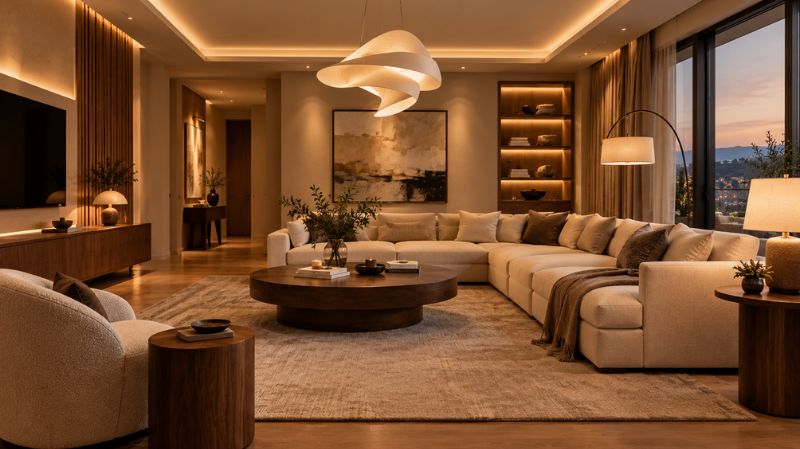
A single ceiling fixture rarely creates the best contemporary atmosphere.
Instead, combine:
- Ambient ceiling lighting
- Task lighting
- Accent lighting
- Floor lamps
- Table lamps
- Decorative pendants
- Wall sconces
The Illuminating Engineering Society describes layered approaches in which decorative and functional lighting work together to create different lighting effects within the same environment.
For living rooms, combine overhead lighting with floor or table lamps. In kitchens, use general illumination plus task lighting around work surfaces.
10. Negative Space
Negative space is not wasted space.
Leaving room around furniture allows important pieces to become focal points and makes movement through the room easier.
Instead of filling an empty wall with several small decorations, one large artwork may create a stronger visual anchor.
This principle is especially useful in small homes, where excessive furniture can quickly make a contemporary space feel cramped.
11. Statement Artwork
Contemporary rooms benefit from artwork that adds personality without creating visual clutter.
Consider:
- Oversized abstract artwork
- Black-and-white photography
- Sculptural wall pieces
- Large-scale botanical art
- Color-block artwork
Choose artwork after establishing your main room palette rather than trying to match every color exactly.
A painting with muted green, cream, and charcoal can connect an otherwise neutral living room without requiring green furniture throughout the space.
12. Architectural Features
Contemporary design often lets the architecture participate in the décor.
Examples include:
- Large windows
- Built-in shelving
- Minimal fireplaces
- Statement staircases
- Wood wall panels
- Stone feature walls
- Floor-to-ceiling cabinetry
If your home already has an interesting architectural feature, avoid competing with it. Let that feature become the focal point.
13. Layered Textures for Warmth
One common problem with contemporary decorating is creating a room that looks polished but feels cold.
The solution is not necessarily adding more decorations.
Instead, introduce warmth through texture:
linen + wool + wood + stone + soft upholstery
Warm lighting also matters. The U.S. Department of Energy explains that correlated color temperature influences whether lighting appears warmer or cooler.
For a cozy residential setting, select lighting based on both appearance and the activities performed in the room.
14. Controlled Contrast
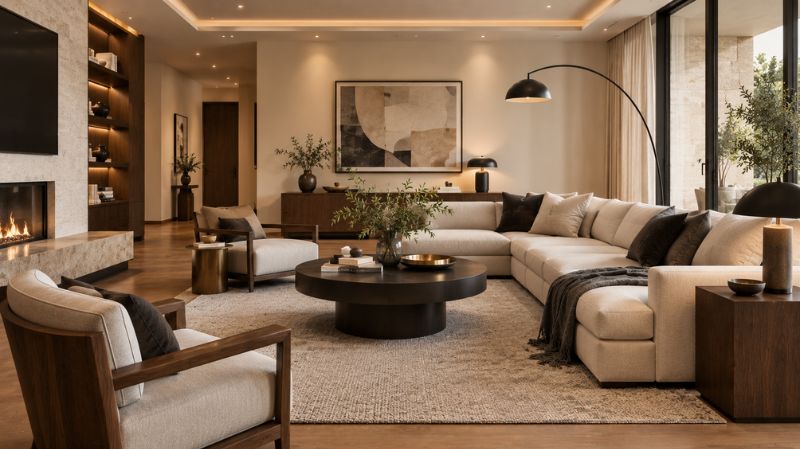
Contemporary interiors often depend on contrast.
Try:
- Cream + charcoal
- Warm white + walnut
- Beige + black
- Pale green + dark wood
- Soft upholstery + hard stone
- Matte surfaces + subtle metallic finishes
The objective is balance rather than maximum contrast.
If the walls, furniture, flooring, artwork, and lighting are all competing for attention, the room stops feeling calm.
15. Quality Over Quantity
A contemporary room does not need dozens of decorative objects.
Instead, select fewer pieces that contribute to the room’s function, scale, texture, or personality.
One sculptural coffee table can be more effective than several small tables. One oversized artwork can create more impact than a wall crowded with unrelated frames.
This is where contemporary style differs from simple minimalism: personality is welcome, but visual noise is controlled.
What Colors Work Best in Contemporary Interior Design?
The safest starting point is a flexible neutral foundation.
Warm Whites and Creams
These work particularly well in rooms with natural wood, stone, linen, and soft upholstery.
Greige and Taupe
Greige combines gray and beige qualities and can provide a versatile background for contemporary furniture.
Charcoal and Black
Use darker neutrals as accents through cabinetry, lighting, furniture, window frames, or artwork.
Green, Blue, and Earth Tones
Muted sage, olive, dusty blue, clay, terracotta, and earthy brown can introduce personality without overwhelming a neutral scheme.
Paint tip: Never choose a wall color from a digital image alone. Lighting, screen settings, sheen, surrounding colors, and the existing architecture can all change how paint appears.
How Do You Get the Contemporary Interior Design Look?
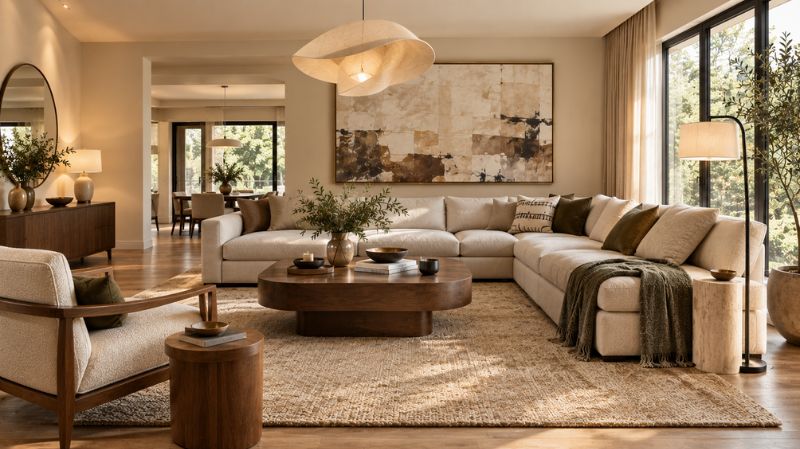
You do not necessarily need a complete renovation.
Step 1: Remove Visual Clutter
Start with furniture and accessories that no longer serve a purpose.
Step 2: Establish Your Wall Color
Choose the paint color before buying major decorative pieces, then test samples under both daylight and artificial lighting.
Step 3: Improve Furniture Placement
Create clear walking paths and make sure the furniture fits the scale of the room.
Step 4: Introduce Natural Materials
Add wood, stone, linen, wool, leather, or woven textures.
Step 5: Layer the Lighting
Combine general, task, and accent lighting rather than relying on one overhead fixture.
Step 6: Add One Strong Focal Point
Choose a statement sofa, artwork, pendant, coffee table, fireplace, or architectural feature.
Step 7: Add Color Through Flexible Pieces
If you are uncertain about a bold wall color, introduce stronger hues through rugs, artwork, cushions, chairs, or accessories first.
Step 8: Edit the Room Again
Stand back and ask what can be removed without reducing comfort or function.
That final edit is often what turns a room from merely decorated into a cohesive contemporary space.
Contemporary Interior Design Ideas for Every Room
Contemporary Living Room
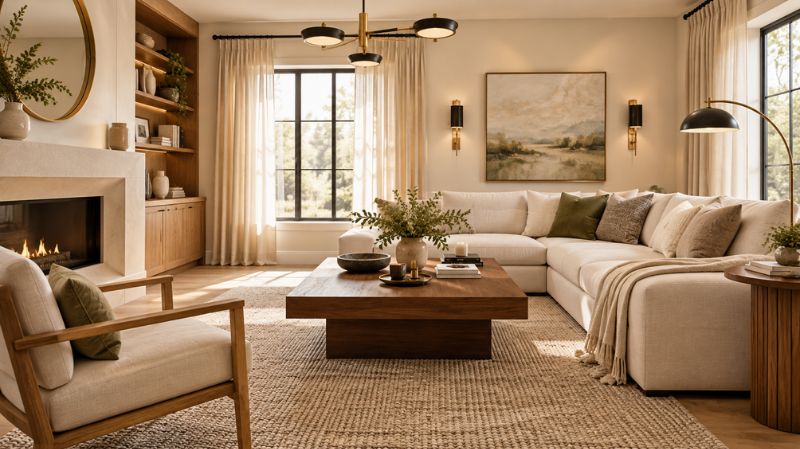
Start with a comfortable sofa, a large area rug, a simple coffee table, and layered lighting.
For a warm contemporary look, pair a cream sofa with walnut furniture, a textured beige rug, warm-white walls, and black or brass lighting.
Contemporary Bedroom
Use a simple upholstered or wood bed, restrained bedding, warm wall colors, soft bedside lighting, and one strong artwork.
A pale greige or warm off-white wall can work particularly well with oak, walnut, cream, and muted green accents.
Contemporary Kitchen
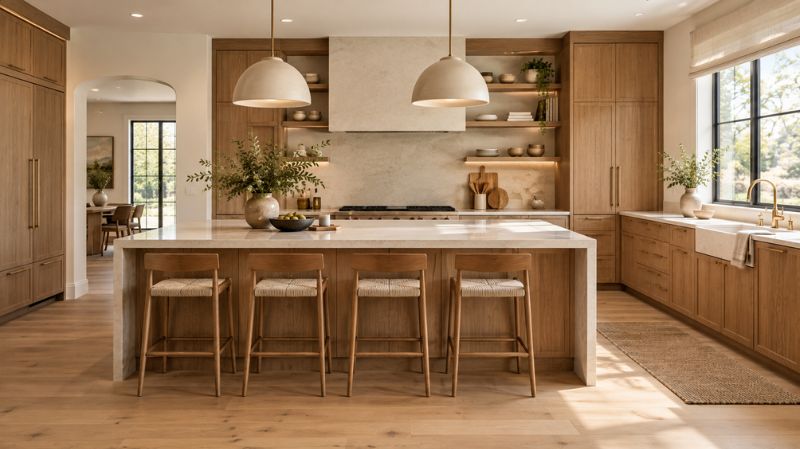
Focus on clean cabinetry, practical storage, simple hardware, durable surfaces, and intentional lighting.
Warm wood cabinetry combined with cream or stone-colored walls can soften a predominantly neutral kitchen.
Contemporary Bathroom
Use large-format tile, simple cabinetry, restrained hardware, and strong lighting.
Natural stone tones, warm whites, soft gray, and wood-look finishes can create a contemporary bathroom without making it feel overly clinical.
Contemporary Home Office
Keep the workstation functional and visually calm.
A simple desk, ergonomic chair, integrated storage, task lighting, and a small amount of artwork can create a professional space without unnecessary decoration.
Can Contemporary Interior Design Work in a Small Home?
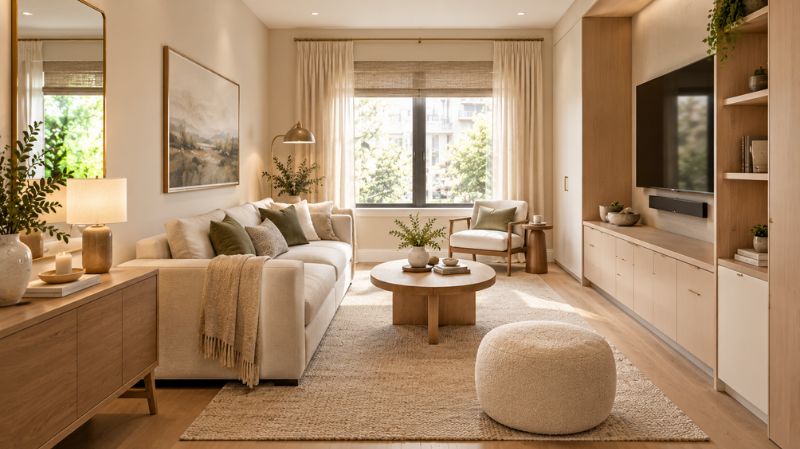
Yes. In fact, its emphasis on proportion, visual breathing room, and functional furniture can translate effectively to smaller rooms.
Choose furniture according to the room’s actual scale rather than buying oversized pieces simply because they look impressive in photographs.
Use a consistent wall color across connected spaces when appropriate, select furniture with useful storage, and keep visual pathways open.
Mirrors, glass, light-reflective finishes, and carefully positioned lighting can also influence how spacious a room feels.
Contemporary Interior Design on a Budget
You do not need designer furniture throughout the house to create a contemporary look.
Prioritize changes that have a large visual impact:
- Paint
- Lighting
- Furniture arrangement
- Area rugs
- Window treatments
- Artwork
- Hardware
- Textiles
For example, repainting a dated living room in a warm neutral, replacing an oversized traditional light fixture with a simpler pendant, and editing the furniture arrangement can change the visual character of the room without replacing everything.
Spend more selectively on pieces that receive daily use, such as a sofa, bed, dining table, or work chair.
What Are the Biggest Contemporary Interior Design Mistakes?
Making Everything Gray
Gray can be beautiful, but a room filled with cool gray surfaces can lack warmth. Balance it with wood, cream, natural textiles, or warmer accent colors.
Confusing Contemporary With Completely Minimal
A contemporary room can include artwork, vintage furniture, curves, color, plants, and decorative objects.
Ignoring Scale
A room can have excellent colors and materials but still look wrong if the furniture is too large or too small.
Using Too Many Trends
Because contemporary design changes, following every current trend can make a room feel dated quickly.
Forgetting Lighting
Paint and furniture cannot reach their full potential if the room is poorly lit.
Filling Every Surface
Allow some areas to remain visually quiet. Negative space helps statement pieces stand out.
What Does Contemporary Interior Design Look Like in 2026?
Contemporary interiors in 2026 are increasingly moving toward warmer minimalism rather than stark minimalism.
Current design coverage frequently highlights curved furniture, natural textures, warm neutrals, mixed materials, sculptural lighting, and more comfortable residential spaces.
That does not mean every contemporary home needs a curved sofa or beige walls.
The more useful lesson is that contemporary design is becoming less about creating a perfectly cold, showroom-like environment and more about combining clean structure with comfort, texture, and personality.
A Real-Life Contemporary Room Example
Imagine a south-facing living room with beige flooring, outdated white walls, a large sectional, and limited decorative interest.
Instead of replacing everything, start with a warm off-white or soft greige paint. Reposition the sectional to create a clearer conversation area, add a large textured rug, and introduce a walnut coffee table.
Next, replace a dated ceiling fixture with a sculptural pendant and add a floor lamp beside the sofa. Finish with one oversized artwork containing muted olive, cream, and charcoal.
The room now has a contemporary design language without requiring a complete renovation.
The important part is not any single product. It is the relationship between color, proportion, furniture, lighting, texture, and negative space.
Is Contemporary Interior Design the Same as Minimalism?
No, contemporary design and minimalism overlap because both can favor uncluttered rooms, simple forms, and intentional furniture placement.
Minimalism generally pushes reduction further. Contemporary interiors can include more texture, artwork, curves, color, vintage pieces, and decorative personality while maintaining visual control.
Think of minimalism as a stronger philosophy of reduction, while contemporary design is a broader and evolving design direction.
Final Takeaway
The best contemporary interiors are not created by buying the newest furniture or copying a single trend.
They come from making a series of connected decisions: choose a suitable wall color, establish clear furniture proportions, create breathing room, mix natural materials, layer lighting, add texture, and use artwork or accessories to introduce personality.
If you want a home that feels current without becoming visually overwhelming, begin with the structure of the room and then build the style gradually.
Start with the walls, refine the furniture layout, introduce natural textures, improve the lighting, and finish with a few pieces that genuinely reflect your taste.
Frequently Asked Questions
1. What is contemporary interior design?
Contemporary interior design reflects current design preferences rather than a fixed historical period. It commonly combines clean lines, functional furniture, open layouts, neutral colors, natural materials, layered textures, and selective statement pieces.
2. What is the difference between modern and contemporary interior design?
Modern design refers to a historical design movement, including influences associated with 20th-century modernism. Contemporary design refers to what is current and therefore continues to change over time.
3. What colors are best for contemporary interiors?
Warm white, cream, beige, greige, taupe, soft gray, charcoal, muted green, blue, and earthy tones can all work. The best choice depends on natural light, room size, furnishings, and the desired atmosphere.
4. Is contemporary interior design minimalist?
Not necessarily. Contemporary design shares minimalism’s preference for restraint but allows more artwork, color, texture, curves, and personal expression.
5. What furniture works best in a contemporary home?
Choose furniture with clear silhouettes, appropriate scale, useful function, and comfortable proportions. Both angular and curved furniture can work within a contemporary room.
6. How do I make my home look contemporary without renovating?
Start with decluttering, paint, furniture placement, lighting, textiles, artwork, and hardware. These changes can alter the visual language of a room without major structural work.
7. Can contemporary interior design be warm and cozy?
Absolutely. Wood, linen, wool, textured rugs, upholstered furniture, warm paint colors, and layered lighting can soften clean contemporary lines.
8. Can contemporary design work in a small room?
Yes. Use appropriately scaled furniture, clear pathways, restrained colors, multifunctional storage, mirrors, and thoughtful lighting to maintain visual openness.
9. What is contemporary style interior design?
Contemporary style interior design is an evolving approach that responds to current preferences in architecture, furniture, materials, color, lighting, and decoration. It is defined more by its relationship to the present than by a fixed historical rulebook.
10. Is contemporary interior design timeless?
The underlying principles—good proportions, useful furniture, thoughtful lighting, quality materials, and visual balance—can remain useful for years. However, specific contemporary trends inevitably change because the style is tied to the present moment.
<script type="application/ld+json">
{
  "@context": "https://schema.org",
  "@type": "FAQPage",
  "mainEntity": [{
    "@type": "Question",
    "name": "What is contemporary interior design?",
    "acceptedAnswer": {
      "@type": "Answer",
      "text": "Contemporary interior design reflects current design preferences rather than a fixed historical period. It commonly combines clean lines, functional furniture, open layouts, neutral colors, natural materials, layered textures, and selective statement pieces."
    }
  },{
    "@type": "Question",
    "name": "What is the difference between modern and contemporary interior design?",
    "acceptedAnswer": {
      "@type": "Answer",
      "text": "Modern design refers to a historical design movement, including influences associated with 20th-century modernism. Contemporary design refers to what is current and therefore continues to change over time."
    }
  },{
    "@type": "Question",
    "name": "What colors are best for contemporary interiors?",
    "acceptedAnswer": {
      "@type": "Answer",
      "text": "Warm white, cream, beige, greige, taupe, soft gray, charcoal, muted green, blue, and earthy tones can all work. The best choice depends on natural light, room size, furnishings, and the desired atmosphere."
    }
  },{
    "@type": "Question",
    "name": "Is contemporary interior design minimalist?",
    "acceptedAnswer": {
      "@type": "Answer",
      "text": "Not necessarily. Contemporary design shares minimalism's preference for restraint but allows more artwork, color, texture, curves, and personal expression."
    }
  },{
    "@type": "Question",
    "name": "What furniture works best in a contemporary home?",
    "acceptedAnswer": {
      "@type": "Answer",
      "text": "Choose furniture with clear silhouettes, appropriate scale, useful function, and comfortable proportions. Both angular and curved furniture can work within a contemporary room."
    }
  },{
    "@type": "Question",
    "name": "How do I make my home look contemporary without renovating?",
    "acceptedAnswer": {
      "@type": "Answer",
      "text": "Start with decluttering, paint, furniture placement, lighting, textiles, artwork, and hardware. These changes can alter the visual language of a room without major structural work."
    }
  },{
    "@type": "Question",
    "name": "Can contemporary interior design be warm and cozy?",
    "acceptedAnswer": {
      "@type": "Answer",
      "text": "Absolutely. Wood, linen, wool, textured rugs, upholstered furniture, warm paint colors, and layered lighting can soften clean contemporary lines."
    }
  },{
    "@type": "Question",
    "name": "Can contemporary design work in a small room?",
    "acceptedAnswer": {
      "@type": "Answer",
      "text": "Yes. Use appropriately scaled furniture, clear pathways, restrained colors, multifunctional storage, mirrors, and thoughtful lighting to maintain visual openness."
    }
  },{
    "@type": "Question",
    "name": "What is contemporary style interior design?",
    "acceptedAnswer": {
      "@type": "Answer",
      "text": "Contemporary style interior design is an evolving approach that responds to current preferences in architecture, furniture, materials, color, lighting, and decoration. It is defined more by its relationship to the present than by a fixed historical rulebook."
    }
  },{
    "@type": "Question",
    "name": "Is contemporary interior design timeless?",
    "acceptedAnswer": {
      "@type": "Answer",
      "text": "The underlying principles—good proportions, useful furniture, thoughtful lighting, quality materials, and visual balance—can remain useful for years. However, specific contemporary trends inevitably change because the style is tied to the present moment."
    }
  }]
}
</script>