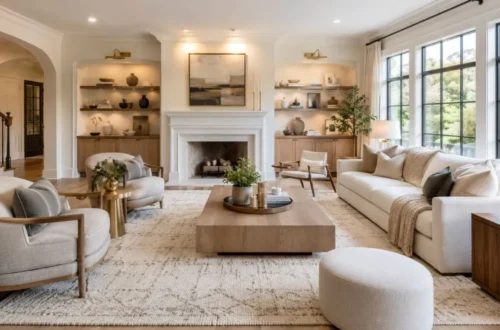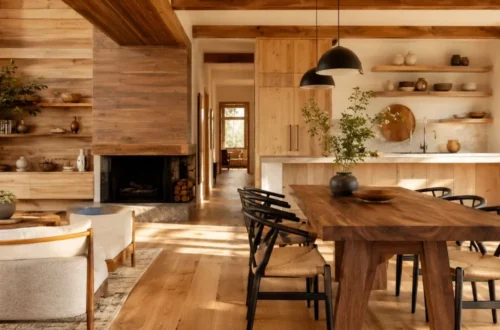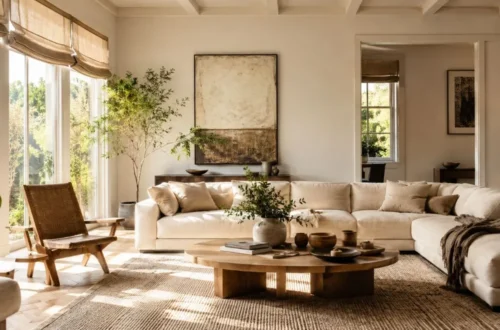
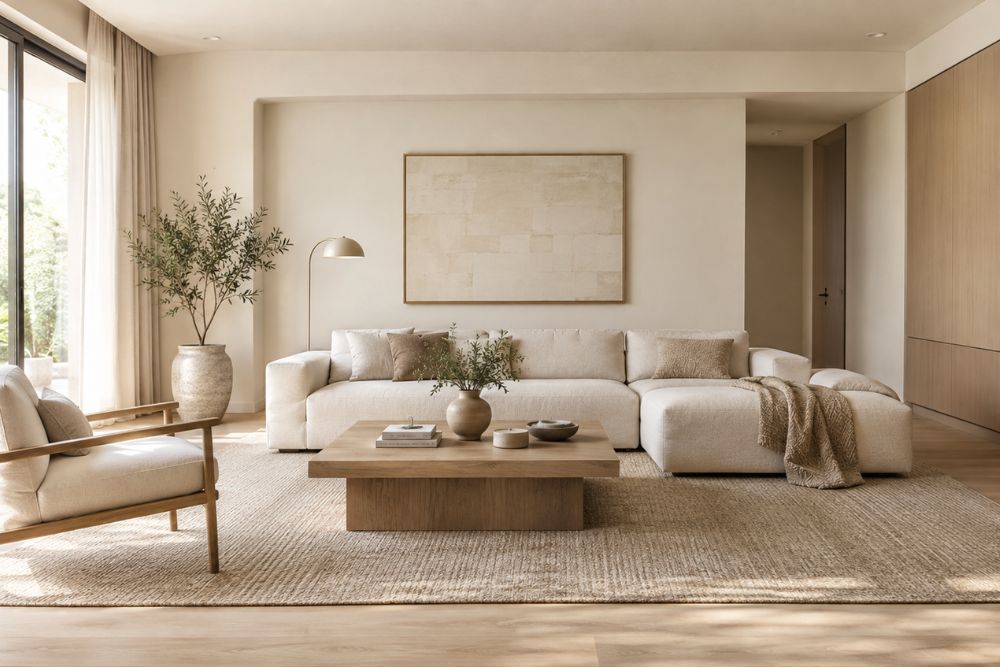
Minimalist home decor essentials are the functional, beautiful, and intentional pieces that make a home feel calm without making it feel empty. The best minimalist interiors combine streamlined furniture, smart storage, restrained colors, natural textures, thoughtful lighting, and enough personality to make the space feel lived-in.
Instant Answer Box
What are the essentials for a minimalist home?
The most useful essentials include a calm wall color, streamlined furniture, closed storage, natural wood, a simple area rug, layered lighting, simple curtains, mirrors, plants, textured textiles, meaningful artwork, multifunctional furniture, and intentional accessories. The key is not owning the fewest things; it is giving every visible item a clear purpose.
What Is Minimalist Home Decor?
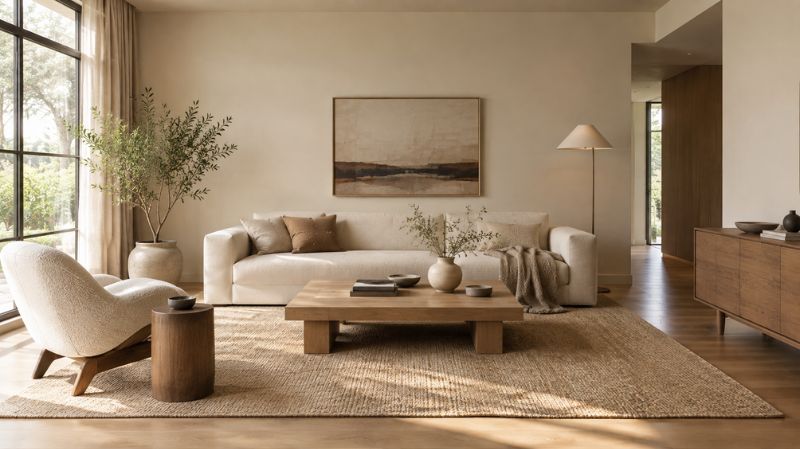
Minimalist home decor is an approach to interior design that prioritizes function, simplicity, proportion, and intentionality. Rather than filling every shelf, wall, and corner, you select fewer pieces and give them enough space to be noticed.
Architectural Digest’s design experts describe minimalism as resisting the urge to fill every void, while emphasizing thoughtful choices of objects, colors, and patterns. They also point to scale and texture as important ingredients in keeping minimalist rooms comfortable rather than sterile.
That distinction matters. A minimalist home does not have to be completely white, devoid of decoration, or uncomfortable.
Think of minimalist decorating as editing rather than eliminating.
Before buying something, ask:
- Does it solve a real problem?
- Does it improve comfort?
- Does it add visual value?
- Does it work with the rest of the room?
- Will I still want it a year from now?
If the answer is no to all five, the room may not need it.
25 Minimalist Home Decor Essentials for a Clutter-Free Home
1. A Calm Neutral Wall Color
Paint is one of the largest visual surfaces in a home, so it can establish the entire minimalist palette.
Consider warm white, soft beige, greige, taupe, muted gray, or a restrained earthy color. For a warmer organic look, muted sage green or clay-inspired tones can also work beautifully.
The important point is not simply choosing a “neutral.” Undertones matter.
A beige with pink undertones can look very different from a yellow-beige, while a gray can shift blue or violet depending on the surrounding light.
2. Streamlined Seating
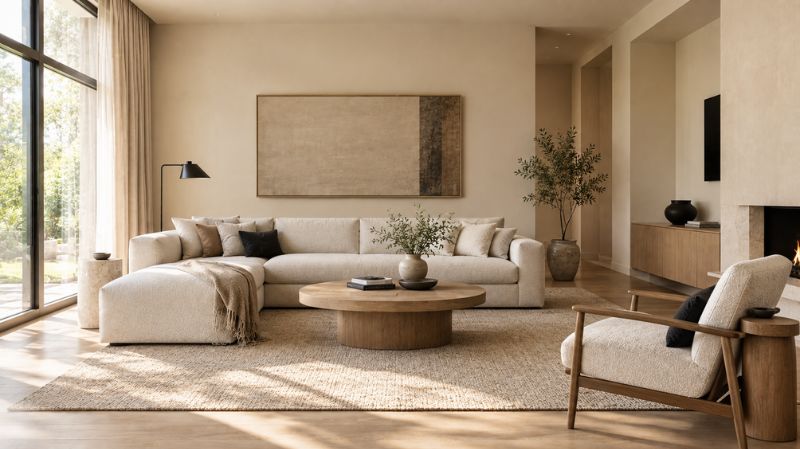
A sofa should be comfortable first and visually simple second.
Look for clean lines, limited ornamentation, and upholstery that works with your wall color and flooring. In a small living room, an oversized sectional can quickly consume the visual breathing room that makes minimalist design work.
For a warm minimalist room, pair a cream or oatmeal sofa with natural oak, soft beige walls, and a textured rug.
3. Multifunctional Furniture
Multifunctional furniture is particularly valuable in apartments and smaller homes.
Useful examples include:
- Storage ottomans
- Beds with drawers
- Benches with shoe storage
- Extendable dining tables
- Nesting tables
- Storage coffee tables
One well-designed piece can replace two or three separate items, reducing both physical and visual clutter.
4. Closed Storage
Minimalist rooms still contain chargers, paperwork, toys, kitchen equipment, cleaning supplies, and everyday belongings.
The solution is not pretending those things do not exist. It is giving them a practical home.
Closed cabinets, drawers, built-ins, and concealed storage can keep necessary items accessible without making them part of the room’s visual composition. IKEA similarly recommends convenient storage for living rooms, kitchens, bedrooms, and entryways so items can be returned to their places more easily.
5. Natural Wood Furniture
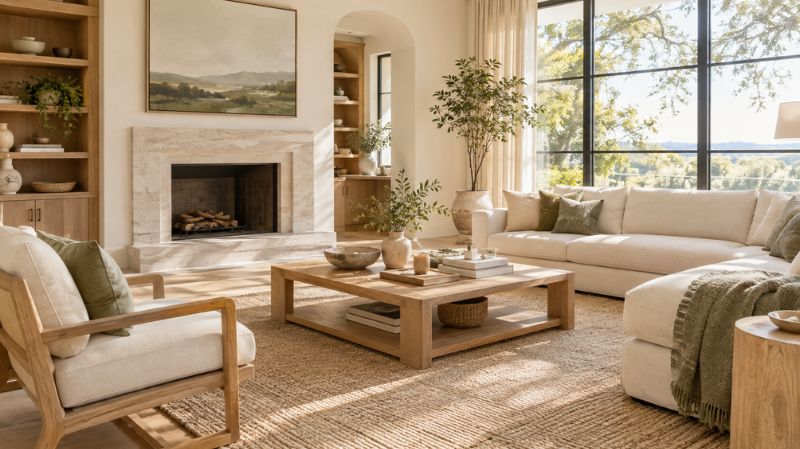
Natural wood introduces warmth into restrained interiors.
Light oak works well with:
- Warm white
- Cream
- Pale beige
- Soft sage
- Light gray
Walnut creates a richer contrast with ivory, greige, and warm white walls.
The goal is not to use wood everywhere. Repeating one or two wood tones is usually more cohesive than mixing numerous finishes.
6. A Properly Sized Area Rug
An area rug can visually anchor furniture and define a living or dining zone without adding more objects.
Choose a restrained pattern or solid color if the room already has strong architectural details.
For a neutral room, texture can be more useful than pattern. Wool, jute, cotton, and other tactile materials add depth while keeping the palette quiet.
7. Simple Curtains
Heavy, elaborate window treatments can compete with the clean lines of minimalist interiors.
Linen-look, cotton, or other softly textured curtains in cream, ivory, beige, or muted gray can provide privacy while maintaining visual simplicity.
Hang curtains high and allow enough length to create a clean vertical line from ceiling toward floor.
8. Layered Lighting
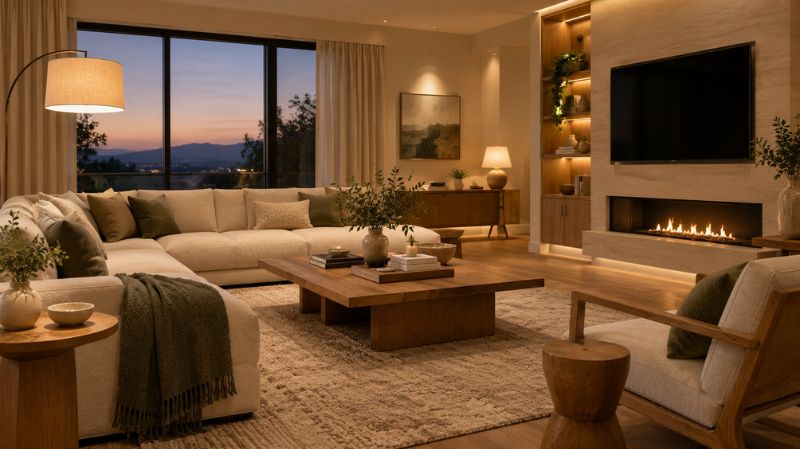
Minimalism is not just about furniture. Lighting can completely change how a room feels.
Use a combination of:
- Ambient lighting
- Task lighting
- Accent lighting
- Table lamps
- Floor lamps
- Wall lighting
Natural daylight should also be considered during planning. The U.S. Department of Energy notes that daylighting can brighten interiors and reduce reliance on artificial lighting, although glare and heat gain need to be controlled.
9. One Statement Light Fixture
Instead of filling the ceiling and walls with multiple decorative fixtures, consider one strong lighting element.
A sculptural pendant over a dining table or a simple oversized floor lamp beside a sofa can provide personality without requiring several smaller accessories.
10. Minimalist Wall Art
Bare walls can be beautiful, but completely undecorated walls are not mandatory.
Try:
- One oversized abstract artwork
- A simple landscape
- Black-and-white photography
- A restrained botanical print
- One meaningful painting
The principle is impact through selection.
One appropriately scaled piece can often create more visual clarity than a gallery wall containing unrelated frames.
11. A Well-Placed Mirror
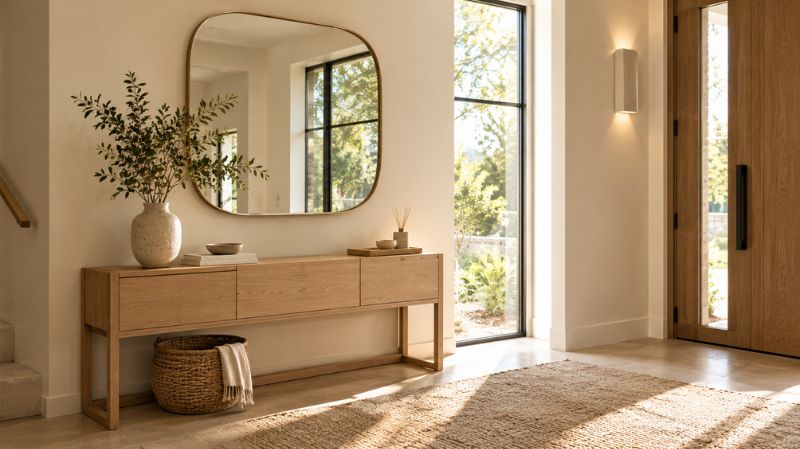
A mirror can serve both decorative and functional purposes.
Place one opposite or near a window where it is practical to reflect daylight. In an entryway, a large mirror can also provide a useful last-look station without requiring additional decoration.
Choose a simple frame that complements the room’s hardware and furniture.
12. Indoor Plants
Plants introduce organic color and texture without requiring a complicated decorative scheme.
A large floor plant can become the focal point of a living room, while smaller plants can soften a bedroom, kitchen, or home office.
Use simple planters in ceramic, stone, terracotta, or natural finishes to maintain visual consistency.
13. Textured Throw Blankets
A minimalist room needs texture because a completely flat palette can look unfinished.
Add one or two throws made from materials such as:
- Linen
- Cotton
- Wool
- Knitted fabric
A cream throw over a beige sofa, for example, creates tonal variation without introducing another major color.
14. A Small Collection of Cushions
You do not need a sofa covered in cushions.
Instead, select a few pieces with complementary tones and different textures. For example, combine ivory linen with taupe cotton and one muted sage cushion.
This creates depth while keeping the composition controlled.
15. Simple Ceramic or Stoneware Pieces
A single sculptural vase, bowl, or handmade ceramic can provide a focal point.
Choose pieces with organic shapes or subtle finishes rather than collecting numerous small ornaments.
Place one substantial object on a console, dining table, or shelf and leave surrounding space open.
16. A Functional Coffee Table
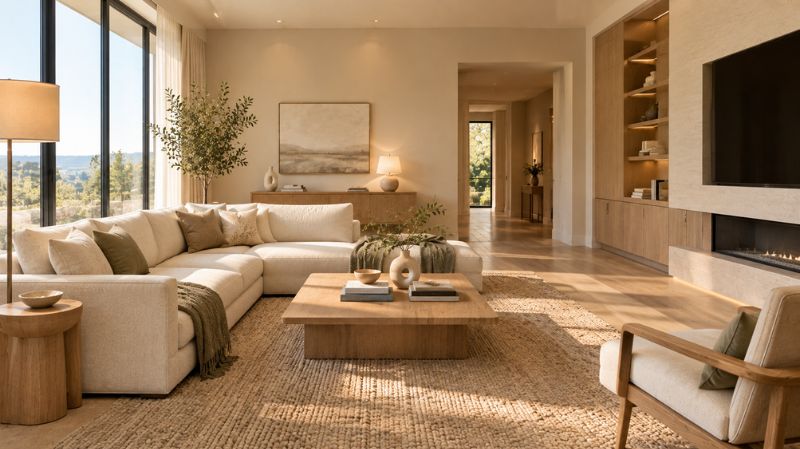
A coffee table should fit the sofa and leave enough circulation space around it.
Choose a simple rectangular, oval, round, wood, stone, or mixed-material design according to the room.
Storage can be particularly useful because remotes, books, blankets, and other small items can disappear when they are not being used.
17. A Minimalist Dining Table
The dining table is both furniture and a visual anchor.
For an organic minimalist home, consider natural wood. For a contemporary interior, a simple stone or streamlined wood-and-metal design may work better.
Do not select a table simply because it looks minimal in a photograph. Measure the room first and allow comfortable circulation around it.
18. A Clutter-Free Entryway
The entryway is where everyday clutter often begins.
A practical minimalist entry can include:
- A slim console
- Closed shoe storage
- A mirror
- A small tray
- Hooks
- One basket
Give keys, shoes, bags, and mail designated places so they do not migrate onto dining tables and kitchen counters.
19. An Organized Kitchen Counter
Minimalist kitchen design depends heavily on what remains visible.
Keep frequently used items accessible, but avoid allowing every appliance and container to become permanent countertop decor.
Use drawers, cabinets, trays, and coordinated containers to create a cleaner visual field.
20. Neutral Bedroom Bedding
Bedding covers a large portion of the bedroom, making it an important part of the color scheme.
Warm white, cream, oatmeal, beige, soft gray, and muted green work particularly well.
For a cozy minimalist bedroom, combine simple bedding with natural wood, soft lighting, linen curtains, and one piece of artwork rather than adding numerous decorative objects.
21. A Simple Bedside Table
Choose a nightstand based on storage and proportion rather than decoration.
A lamp, book, and perhaps one small personal object may be enough for the surface.
If your bedroom is compact, drawers are particularly useful because they prevent chargers, medication, glasses, and other necessities from accumulating beside the bed.
22. Meaningful Accessories
Minimalism does not require removing everything sentimental.
Family photographs, inherited ceramics, travel objects, books, or handmade pieces can make a minimalist home feel personal.
The supplied decorating source makes a similar distinction: its transition toward minimalism focused on keeping pieces that were genuinely loved or useful rather than automatically eliminating color and personality.
The goal is to curate memories instead of displaying every memory at once.
23. Coordinated Hardware and Finishes
Repeating finishes helps different rooms feel connected.
For example, if your kitchen uses aged brass hardware, repeating a similar brass tone in lighting or a nearby living area can create continuity.
Likewise, black hardware can work as a controlled accent against warm white, beige, oak, or greige.
24. Negative Space
Negative space is one of the most overlooked minimalist decor ideas.
An empty section of wall, a clear countertop, or open space around furniture is not necessarily unfinished. It gives important elements room to breathe.
Architectural Digest designers specifically emphasize restraint, scale, and leaving visual space rather than automatically filling every void.
25. A Consistent Color and Material Story
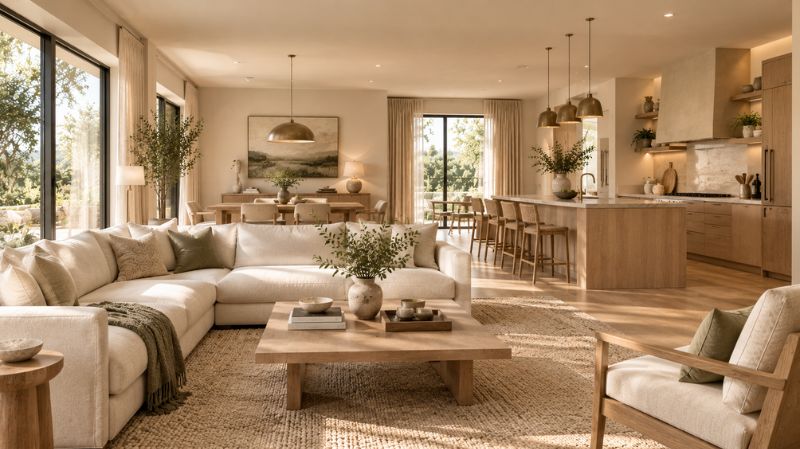
The final essential is not a physical object. It is cohesion.
Choose a small family of colors and materials that repeat throughout the home.
For example:
| Element | Suggested palette |
| Walls | Warm white or soft greige |
| Furniture | Natural oak |
| Upholstery | Cream and oatmeal |
| Accent color | Muted sage |
| Metal | Aged brass |
| Textiles | Linen, wool, cotton |
| Decor | Ceramic and stone |
This approach creates visual continuity without requiring every room to look identical.
Which Paint Colors Work Best for a Minimalist Home?
Minimalist decorating does not require white walls.
Warm whites, creams, beige, greige, soft taupe, muted gray, pale sage, and blue-gray can all work when their undertones complement the room.
The most important consideration is light.
Sherwin-Williams explains that Light Reflectance Value, or LRV, describes how much light a color reflects on a 0–100 scale. It also recommends considering room orientation when selecting neutral colors.
Benjamin Moore similarly notes that natural and artificial lighting can change the way undertones appear and recommends testing paint samples under different lighting conditions.
What Colors Work in Different Rooms?
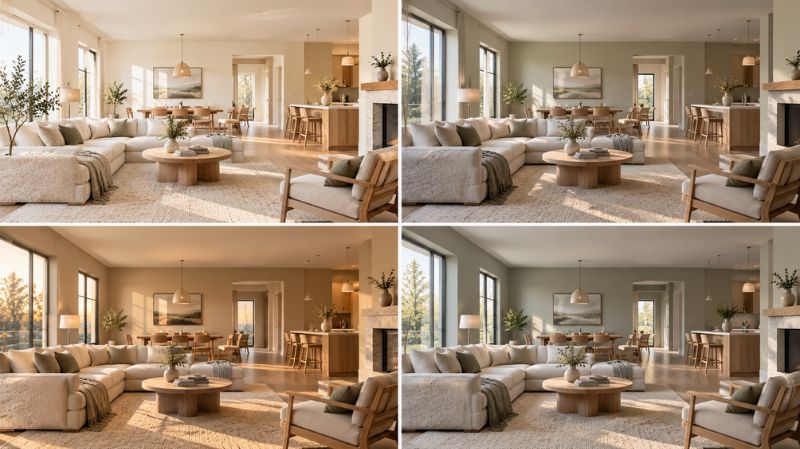
North-facing room:
Try warmer whites, creamy neutrals, warm greiges, or muted warm colors to balance cooler natural light.
South-facing room:
The stronger, warmer light can support balanced whites, cooler neutrals, muted greens, and soft grays.
East-facing room:
Morning light can be warmer and afternoon light more subdued, so test colors at multiple times of day.
West-facing room:
Afternoon and evening light can become warmer, making cooler or balanced neutrals useful depending on the room.
These are starting points, not rules. Your windows, surrounding buildings, flooring, furnishings, and artificial lighting all affect the final appearance.
How Do You Make Minimalist Decor Feel Warm and Cozy?
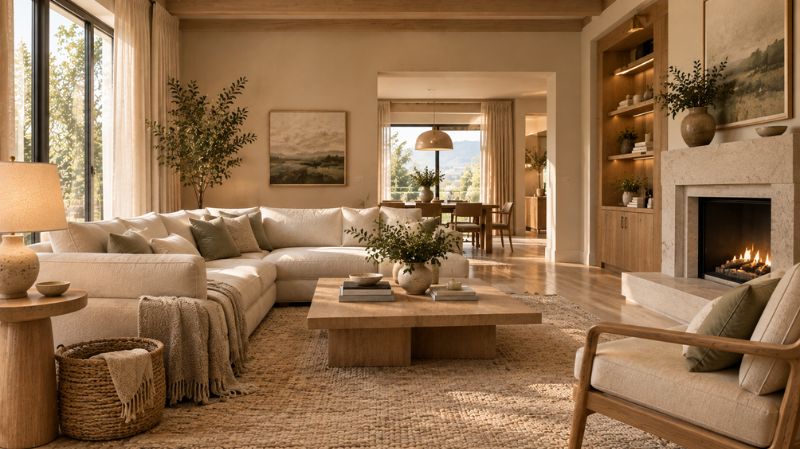
The secret is texture, proportion, and controlled contrast.
A room painted warm white can feel completely different when furnished with pale oak, linen, wool, woven baskets, soft lighting, and a textured rug.
Designers frequently use texture to prevent neutral interiors from appearing flat. Architectural Digest’s coverage of neutral interiors highlights materials such as wool, sisal, woven furnishings, and other tactile elements as ways to add contrast without abandoning a restrained palette.
A useful formula is:
Restrained color + varied texture + comfortable furniture + warm lighting + negative space.
How Can You Apply Minimalist Home Decor Ideas Room by Room?
Living Room
Start with a correctly sized sofa, area rug, coffee table, storage, and layered lighting. Add one substantial artwork or plant rather than decorating every surface.
Bedroom
Prioritize a comfortable bed, calming wall color, simple bedding, bedside storage, soft curtains, and warm lighting.
Kitchen
Focus on organized storage, clear work surfaces, coordinated hardware, and practical lighting. Let materials such as wood, stone, and cabinetry provide most of the visual interest.
Bathroom
Use a restrained palette, concealed storage, simple hardware, and one or two natural accents. Warm white walls with wood-look details can prevent a minimalist bathroom from feeling clinical.
Entryway
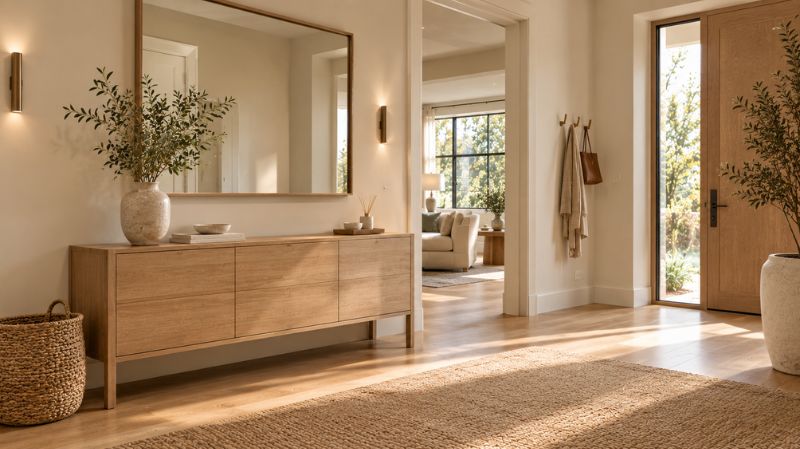
Solve storage first. A slim console, mirror, closed shoe storage, hooks, and a small tray can establish a practical drop zone.
What Are the Biggest Minimalist Decorating Mistakes?
Using Too Much White
An all-white room can work, but excessive white without texture or tonal variation may feel flat or sterile.
Choosing Furniture That Is Too Large
Minimalist interiors have fewer pieces, so each piece carries more visual weight. Correct scale becomes especially important.
Buying Decor Before Solving Storage
A beautiful room will quickly become cluttered if everyday belongings have nowhere to go.
Treating Minimalism as a Shopping List
Buying 25 new items to create a minimalist home defeats the underlying principle.
Start by editing what you already own.
Removing Too Much Personality
Books, artwork, plants, photographs, and meaningful objects can belong in minimalist interiors. The difference is that they are deliberately selected.
How Can You Create a Minimalist Home on a Budget?
You do not need to replace an entire room.
Start with the highest-impact changes:
- Declutter visible surfaces.
- Rearrange existing furniture.
- Remove duplicate accessories.
- Improve storage.
- Repaint if the existing wall color works against the desired mood.
- Replace harsh lighting with warmer, layered sources.
- Add one quality rug or textile.
- Introduce one plant or meaningful artwork.
- Upgrade hardware instead of replacing entire furniture.
- Buy slowly.
Paint can be particularly useful during a budget refresh because changing the wall color can alter the visual foundation of a room without replacing the furniture.
Final Thoughts
The best minimalist home decor ideas are not about making a home look empty. They are about making every visible choice feel intentional.
Start with the architecture of the room: wall color, lighting, furniture scale, flooring, and storage. Then add warmth through wood, textiles, plants, artwork, and a few meaningful objects.
If you are beginning a minimalist decorating project, resist the temptation to buy everything at once. Clear one room, establish its color palette, solve its storage problems, select the right furniture, and then live with the space before adding more.
Less can create more breathing room—but only when what remains works well.
Frequently Asked Questions
What are the essentials of minimalist home decor?
The essentials include functional furniture, practical storage, restrained colors, natural materials, layered lighting, textiles, artwork, plants, and intentional accessories. The exact combination depends on how you use each room.
How do I make my home look minimalist?
Start by removing unnecessary visual clutter, then organize what remains. Choose appropriately sized furniture, a cohesive color palette, closed storage, simple lighting, and a limited number of decorative pieces.
What colors are best for minimalist interiors?
Warm white, cream, beige, greige, taupe, soft gray, muted green, and other restrained colors can work well. Choose based on the room’s natural light and paint undertones rather than selecting a color simply because it is labeled “neutral.”
Does minimalist decor have to be white?
No. Minimalist interiors can use beige, greige, sage, blue-gray, taupe, charcoal, wood tones, and other colors. Minimalism is primarily about restraint and intentionality, not one specific color.
How do I make a minimalist home feel cozy?
Use natural wood, linen, wool, textured rugs, warm lighting, plants, and comfortable upholstery. Layer materials rather than adding large quantities of decoration.
What furniture is best for a minimalist home?
Choose furniture that is appropriately scaled, comfortable, functional, durable, and visually simple. Multifunctional furniture is especially useful in smaller homes.
How do I decorate a minimalist living room?
Start with a sofa, rug, coffee table, lighting, and storage. Then add one or two focal elements such as artwork, a plant, or a sculptural object while leaving plenty of open space.
Is minimalist decorating expensive?
It can be inexpensive because decluttering and rearranging cost little or nothing. The strategy can also allow you to spend more selectively on important pieces rather than buying large quantities of inexpensive decor.
How do I keep a minimalist home clutter-free?
Give frequently used objects designated storage locations, clear surfaces regularly, and avoid buying decorative pieces simply to fill empty space. A simple maintenance routine is more sustainable than repeatedly performing major decluttering sessions.
Can minimalist decor work in a small home?
Yes. Appropriate furniture scale, multifunctional pieces, concealed storage, light-reflective colors, mirrors, and clear circulation paths can work particularly well in compact rooms.