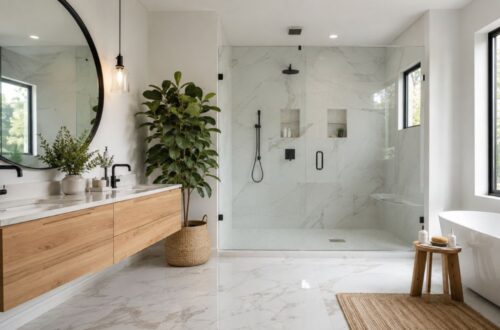
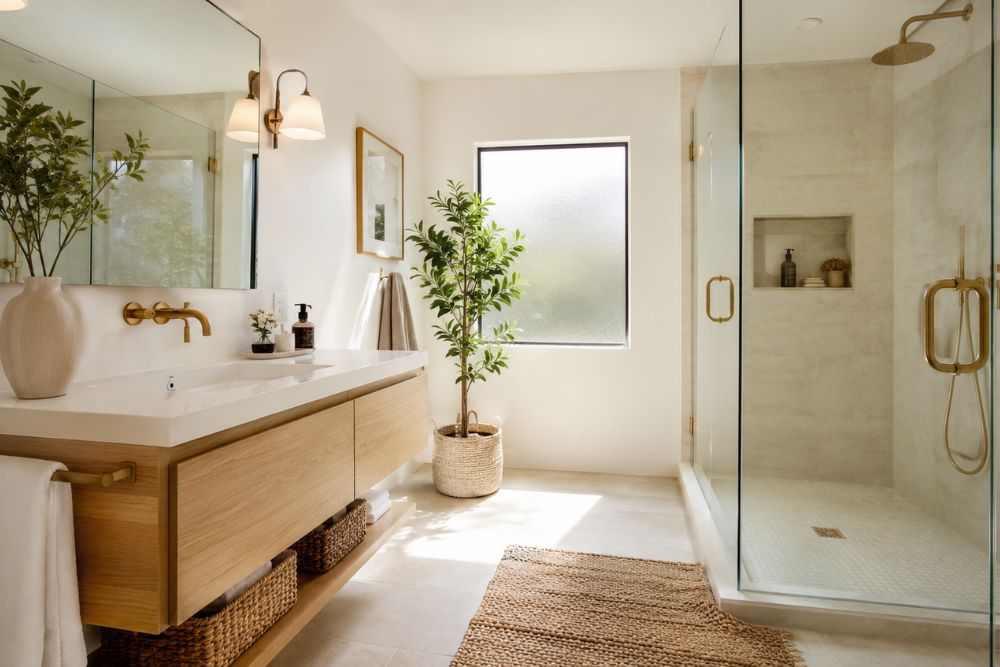
The best small bathroom ideas combine smart layouts, light paint colors, space-saving fixtures, vertical storage, and reflective surfaces to make compact spaces feel brighter and more spacious.
Whether you’re planning a complete remodel or a simple weekend refresh, choosing the right colors, lighting, vanity, and décor can transform even the smallest bathroom into a beautiful, functional retreat.
A small bathroom doesn’t have to feel cramped or uninspiring. With thoughtful interior design, practical storage solutions, carefully selected paint colors, and visually expanding design tricks, you can create a room that looks larger than it actually is while improving everyday functionality.
Why Are Small Bathrooms Worth Designing Carefully?
A bathroom may be one of the smallest rooms in a home, but it plays one of the biggest roles in daily life. It’s where your mornings begin and your evenings end. Whether you’re getting ready for work or relaxing after a long day, a thoughtfully designed bathroom improves comfort, organization, and even your home’s resale value.
According to the National Association of Realtors (NAR) Remodeling Impact Report, bathroom renovations consistently rank among the home improvement projects that homeowners enjoy the most and that buyers appreciate when purchasing a property. Likewise, remodeling studies from Remodeling Magazine’s Cost vs. Value Report regularly show bathrooms among the most valuable renovation investments.
Instead of viewing limited square footage as a disadvantage, many interior designers treat small bathrooms as opportunities to create highly functional spaces with personality, texture, and timeless style.
Comparison Table: Best Design Choices for Small Bathrooms
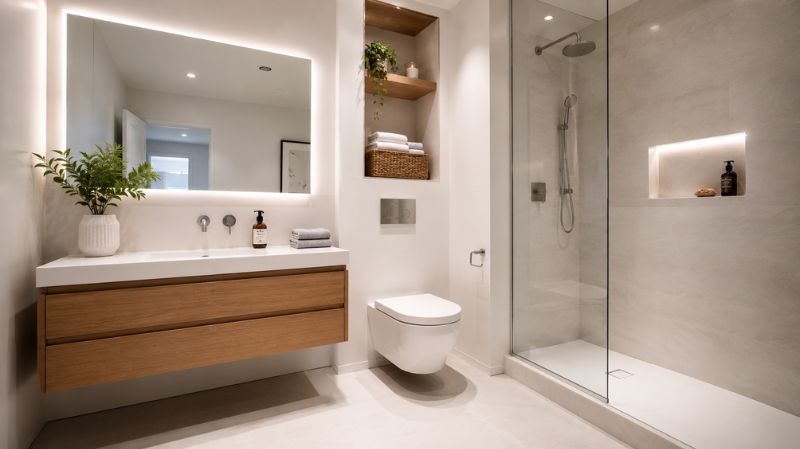
| Design Element | Best Choice | Why It Works |
| Wall Color | Warm White or Soft Greige | Reflects light and makes the room feel larger |
| Vanity | Floating Vanity | Opens floor space and improves visual flow |
| Mirror | Large Frameless Mirror | Creates depth and reflects natural light |
| Storage | Vertical Shelving | Uses unused wall space efficiently |
| Shower | Frameless Glass Enclosure | Removes visual barriers |
| Flooring | Large Format Porcelain Tile | Fewer grout lines create openness |
| Lighting | Layered LED Lighting | Eliminates shadows and brightens the room |
| Hardware | Brushed Brass or Matte Black | Adds modern character without clutter |
| Decor Style | Minimalist with Natural Textures | Keeps the room calm and organized |
| Accessories | Coordinated Towels and Storage Baskets | Creates a polished designer finish |
Why Does Small Bathroom Design Matter More Than Ever?
Modern homes, apartments, condos, and townhouses are increasingly designed with compact bathrooms. At the same time, homeowners expect these spaces to deliver comfort, style, and functionality.
Fortunately, thoughtful design can completely change how a bathroom feels without changing its footprint.
A successful small bathroom design focuses on:
- Maximizing every square inch
- Improving storage
- Increasing natural and artificial light
- Choosing colors that visually expand the room
- Reducing clutter
- Creating a relaxing atmosphere
The result is a bathroom that feels brighter, cleaner, and significantly larger.
What Are the Biggest Challenges of Small Bathrooms?
Every compact bathroom faces similar obstacles.
Limited Storage
Toiletries, towels, cleaning products, cosmetics, and daily essentials quickly consume available space.
Without proper organization, countertops become cluttered.
Poor Lighting
Many bathrooms have only one ceiling light, creating dark corners that make the room appear smaller.
Layered lighting instantly improves depth and comfort.
Limited Floor Space
Bulky cabinets, oversized vanities, and unnecessary furniture interrupt movement.
Space-saving fixtures improve circulation while making the room feel less crowded.
Visual Clutter
Too many colors, patterns, accessories, or decorative items overwhelm a compact room.
Simple, coordinated styling often creates a much larger visual impact.
How Can Design Principles Make a Small Bathroom Feel Bigger?
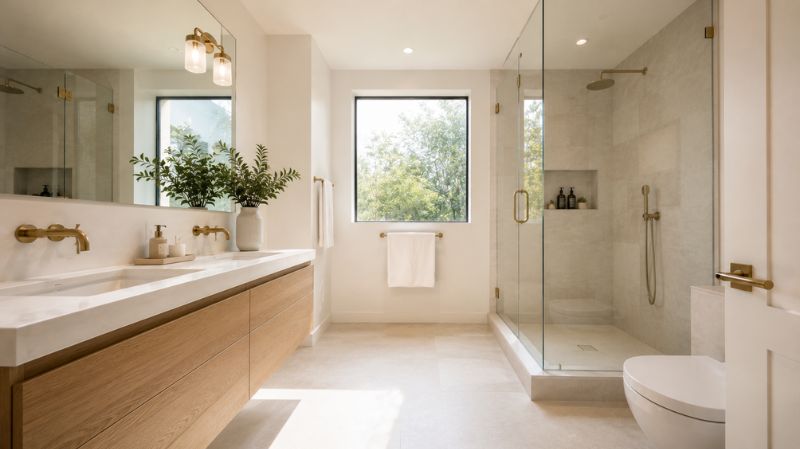
Professional interior designers rely on several visual techniques to expand compact rooms.
These principles work because they influence how the eye perceives space.
Use Light Paint Colors
Soft whites, warm neutrals, pale gray, greige, and muted blues reflect more light than darker shades.
Popular choices include:
- Warm White
- Soft Ivory
- Greige
- Pale Sage
- Light Blue
- Mist Gray
These colors create an airy backdrop that instantly enlarges a room visually.
Maximize Natural Light
If your bathroom includes a window:
- Avoid heavy curtains.
- Use frosted glass for privacy.
- Install light-filtering shades.
- Keep window areas uncluttered.
Natural daylight improves both mood and perceived space.
Reflect More Light
Mirrors remain one of the oldest yet most effective tiny bathroom ideas.
A large mirror:
- Doubles visual depth
- Reflects windows
- Brightens dark corners
- Creates openness
Installing a mirror that spans nearly the entire vanity wall often produces dramatic results.
Reduce Visual Interruptions
Continuous flooring, frameless shower glass, floating furniture, and minimal hardware allow the eye to travel uninterrupted across the room.
This creates the illusion of additional square footage.
How Do Color, Lighting, and Layout Work Together?
Interior designers rarely think about these elements separately.
Instead, they create harmony between them.
Imagine this combination:
- Soft warm white walls
- Floating oak vanity
- Frameless shower glass
- Brushed brass fixtures
- Large mirror
- Layered lighting
- Large porcelain floor tiles
Each feature supports the others.
The result is a bathroom that feels open, luxurious, and timeless despite its modest size.
This is one reason many of today’s most admired bathroom ideas emphasize cohesion over excessive decoration.
Before You Start: Small Bathroom Design Essentials
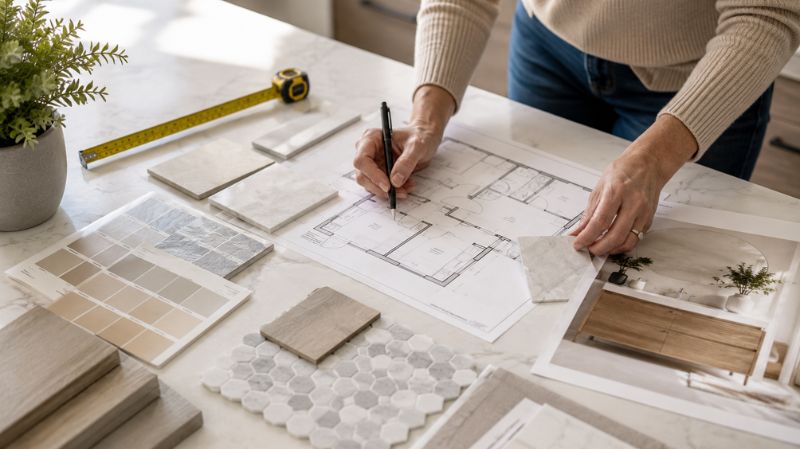
Before buying paint, tiles, or furniture, establish a clear plan.
This prevents costly mistakes later.
How Should You Measure Your Bathroom Correctly?
Measure carefully before purchasing anything.
Record:
- Wall length
- Ceiling height
- Door swing
- Window size
- Toilet clearance
- Vanity dimensions
- Shower measurements
Accurate measurements help prevent overcrowding.
Which Bathroom Style Matches Your Home?
Your bathroom should complement the rest of your home’s interior design.
Popular styles include:
Modern
- Clean lines
- Floating furniture
- Minimal accessories
- Neutral palette
Scandinavian
- White walls
- Natural wood
- Soft lighting
- Functional storage
Farmhouse
- Shiplap walls
- Matte black fixtures
- Vintage mirrors
- Warm neutral colors
Coastal
- Soft blue accents
- Sandy beige tones
- White cabinetry
- Woven textures
Contemporary Luxury
- Marble surfaces
- Large mirrors
- Brass fixtures
- Statement lighting
Choosing one cohesive style keeps the room visually calm.
How Much Should You Budget?
Not every improvement requires a full renovation.
Here’s a general guide:
Budget Refresh
- New paint
- Updated mirror
- New hardware
- Better lighting
- Decorative accessories
Mid-Range Update
- Floating vanity
- New flooring
- Frameless shower door
- Improved storage
Full Remodel
- New layout
- Plumbing relocation
- Premium tile
- Custom cabinetry
- Heated flooring
Prioritize improvements that offer the greatest visual impact first.
Why Is Storage So Important in a Small Bathroom?
Storage isn’t just about organization.
It’s also about visual simplicity.
Every item left on the countertop makes the room appear smaller.
Smart storage keeps essentials hidden while maintaining accessibility.
Consider:
- Floating shelves
- Recessed niches
- Vanity drawers
- Medicine cabinets
- Over-toilet shelving
- Built-in wall storage
15 Small Bathroom Ideas for a Beautiful and Spacious Look
1. Use Light Paint Colors to Instantly Open Up the Room
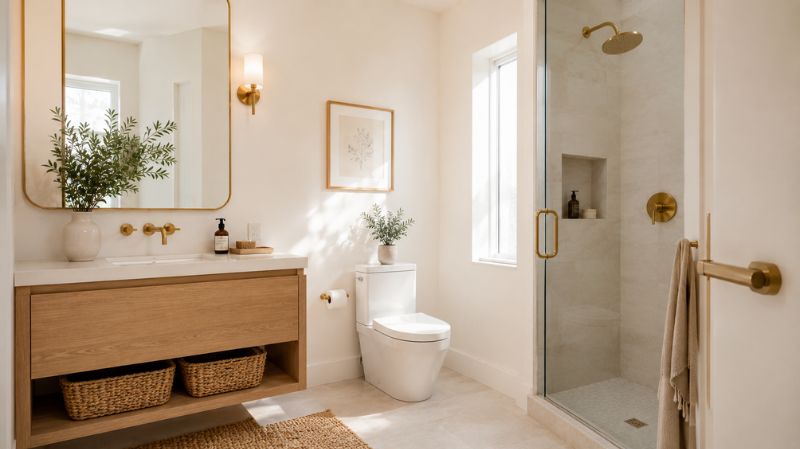
Perhaps the easiest upgrade of all is repainting.
Wall color dramatically influences how spacious a bathroom feels.
Lighter shades reflect significantly more light than darker colors, creating an airy atmosphere.
Excellent choices include:
- Warm White
- Soft Cream
- Ivory
- Greige
- Pale Gray
- Soft Sage
- Powder Blue
Designer Tip
Avoid stark bright whites in bathrooms with little natural light.
Instead, choose warm whites with subtle creamy undertones to prevent the room from feeling cold.
Best Color Pairings
- Warm White + Light Oak Vanity
- Greige + Matte Black Fixtures
- Pale Blue + White Subway Tile
- Sage Green + Brass Hardware
These combinations add personality while maintaining openness.
2. Install a Floating Vanity for More Visual Space
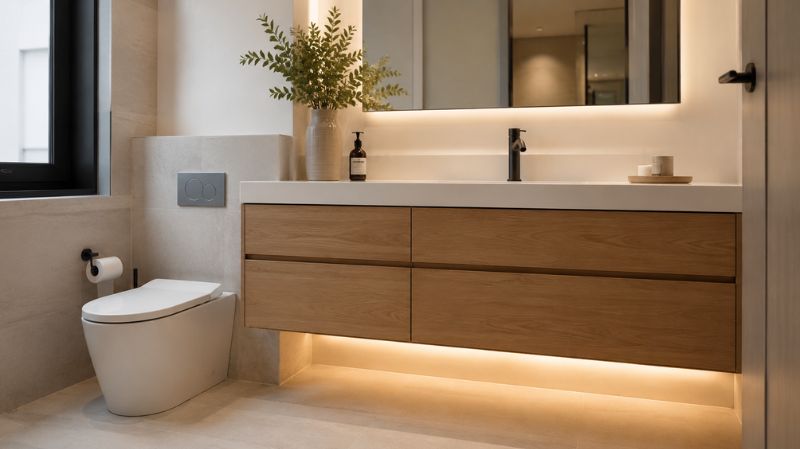
Floating vanities remain one of the smartest small bathroom ideas because they expose more floor area.
Even though the actual square footage stays the same, visible flooring creates a stronger perception of openness.
Additional benefits include:
- Easier cleaning
- Modern appearance
- Hidden storage
- Better circulation
- Cleaner sight lines
Choose slim-profile designs with soft-close drawers for maximum practicality.
3. Add an Oversized Mirror
Mirrors are one of the oldest designer tricks for making compact spaces appear larger.
Instead of matching the mirror to the vanity width, consider extending it across nearly the entire wall.
Benefits include:
- Reflecting natural light
- Increasing brightness
- Creating visual depth
- Enhancing symmetry
- Making the ceiling appear taller
Round mirrors soften modern bathrooms, while rectangular mirrors complement minimalist interiors.
4. Replace a Shower Curtain with Frameless Glass
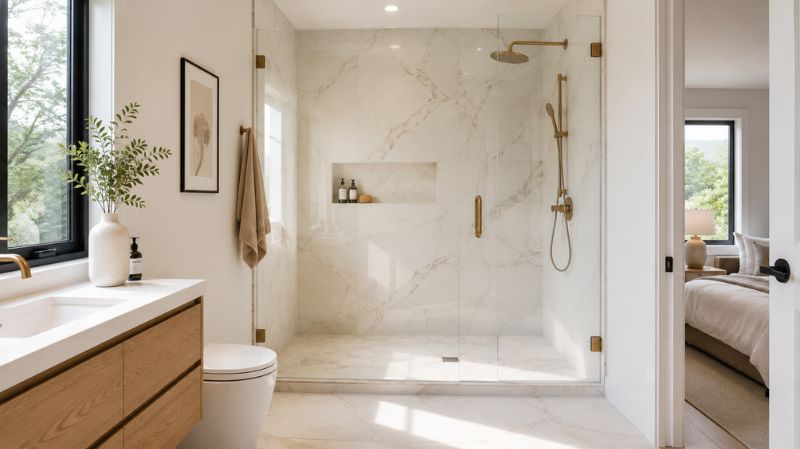
Traditional shower curtains visually divide a room.
Frameless glass keeps sightlines uninterrupted.
This simple change often makes small bathrooms appear noticeably larger.
Additional advantages include:
- Easier maintenance
- Modern appearance
- Improved resale appeal
- More natural light flow
Clear glass works especially well with large-format wall tiles.
5. Maximize Vertical Storage Instead of Floor Storage
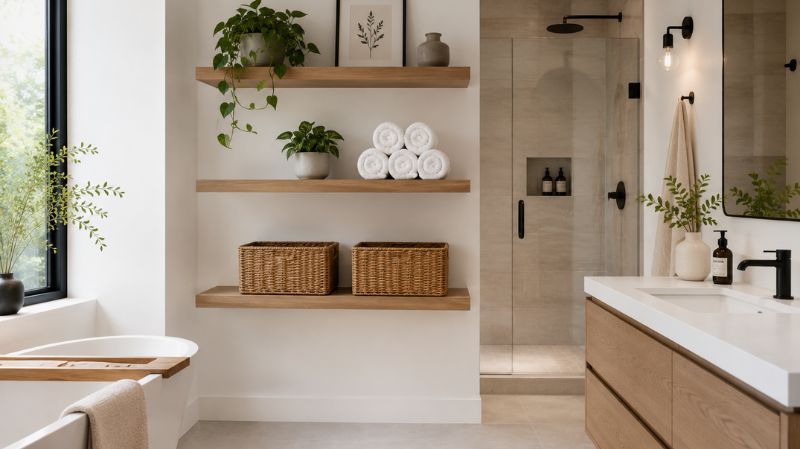
When floor space is limited, think upward.
Vertical storage makes excellent use of empty walls.
Consider installing:
- Floating wood shelves
- Recessed shower niches
- Tall linen cabinets
- Ladder shelves
- Wall hooks
- Hanging baskets
Open shelving also provides opportunities to display attractive towels, woven baskets, candles, and decorative accents without overwhelming the room.
6. Choose Large Format Tiles for a Seamless Look
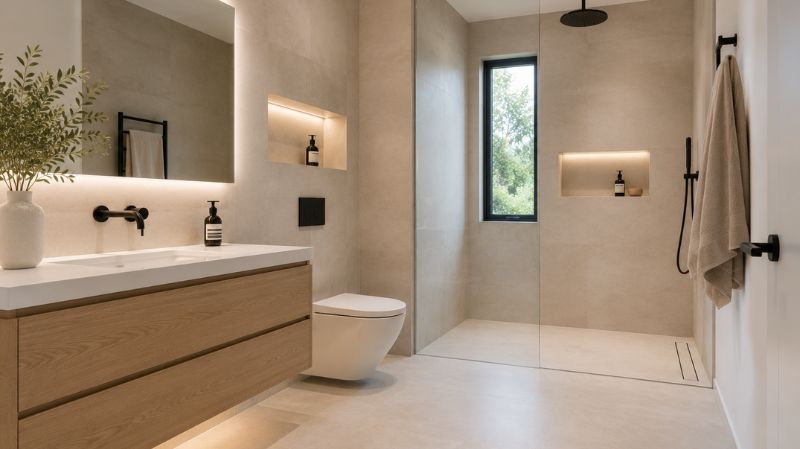
One of the easiest ways to make a small bathroom look bigger is by using large-format tiles. While many homeowners think small tiles are better for compact spaces, larger tiles actually create a cleaner and more open appearance because there are fewer grout lines. This uninterrupted look helps the floor and walls feel more spacious.
Porcelain tiles measuring 12×24 inches or larger are popular choices because they are durable, water-resistant, and easy to maintain. Marble-look porcelain tiles are another excellent option if you want a luxurious appearance without the high maintenance of natural stone.
For the best results, consider extending the same tile from the bathroom floor into the shower area. This continuous design minimizes visual breaks and creates the illusion of a larger space. Choosing light-colored tiles in shades like soft gray, warm white, beige, or greige will further brighten the room by reflecting more natural and artificial light.
Designer Tip: Use matching grout colors instead of high-contrast grout to create an even more seamless finish.
7. Improve Bathroom Lighting with Layers
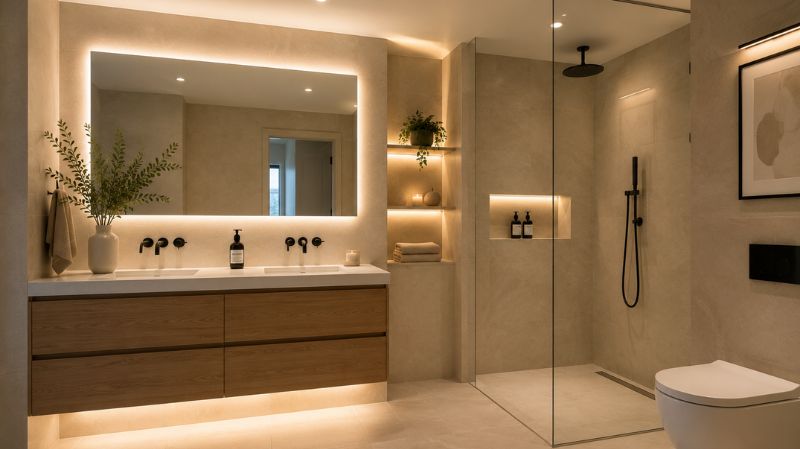
Lighting is one of the most overlooked elements of bathroom design, yet it has one of the biggest impacts on how spacious a room feels. A single ceiling light often creates shadows that make a bathroom appear smaller than it actually is.
Instead, combine different types of lighting to brighten every corner of the room.
Start with ambient lighting, such as recessed ceiling lights or a flush-mount LED fixture, to provide overall illumination. Add task lighting around the vanity with wall sconces or a backlit mirror to improve visibility for daily routines like shaving or applying makeup. Finally, include accent lighting under a floating vanity or inside a shower niche to create depth and add a modern touch.
Warm white LED bulbs with a color temperature between 2700K and 3000K create a relaxing atmosphere while still providing excellent visibility.
A well-planned lighting scheme not only makes your bathroom more functional but also helps it feel brighter, larger, and more welcoming.
8. Declutter with Smart Storage Solutions
No matter how beautiful your bathroom is, clutter can quickly make it feel cramped. One of the most practical tiny bathroom ideas is to create dedicated storage for everyday essentials so countertops remain clean and organized.
Drawer organizers help separate cosmetics, grooming tools, and toiletries. Pull-out baskets under the sink make better use of cabinet space, while medicine cabinets provide hidden storage without taking up additional room. Floating shelves above the toilet or next to the vanity are also excellent for storing towels, decorative baskets, and everyday items.
When every product has its own place, the room instantly feels more spacious and relaxing.
Homeowner Tip: Keep only the products you use every day on the countertop. Store everything else inside cabinets or drawers to maintain a clean and organized look.
9. Create Contrast with Accent Colors
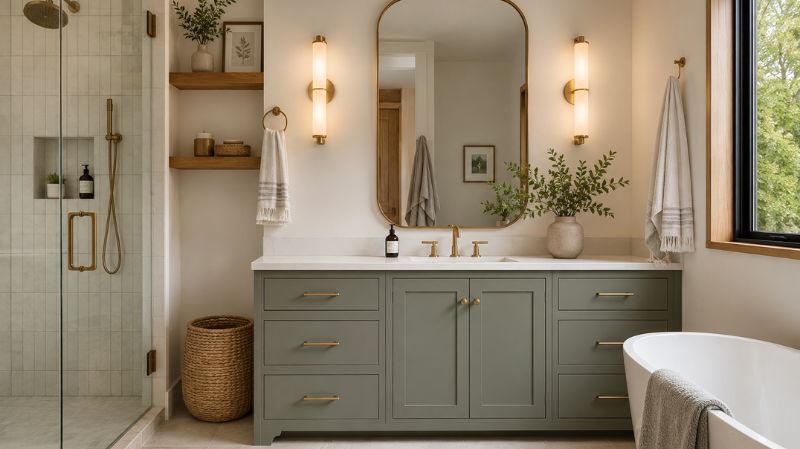
Although light colors make a room appear larger, adding a carefully chosen accent color brings personality and depth without overwhelming the space.
Popular accent colors include navy blue, sage green, charcoal gray, dusty blue, terracotta, and muted olive. These shades can be introduced through a vanity cabinet, an accent wall, shower niche tiles, towels, artwork, or decorative accessories.
Color psychology also plays an important role in bathroom design. Soft greens and blues create a peaceful, spa-like environment, while earthy colors like terracotta and warm beige make the room feel cozy and inviting.
The key is balance. Keep most of the bathroom light and neutral while using darker colors in small amounts to create visual interest.
10. Install Space-Saving Fixtures
Choosing the right fixtures is essential when designing small bathrooms. Bulky furniture and oversized fixtures can make a compact room feel crowded, while streamlined designs improve both appearance and functionality.
A wall-mounted toilet exposes more flooring, making the room feel more open. Floating vanities provide valuable storage while creating the illusion of additional floor space underneath. Corner sinks work well in narrow layouts where every inch matters, and wall-mounted faucets free up extra countertop space.
Compact bathtubs are another excellent option if you want to enjoy both a bath and a shower without sacrificing too much room.
When selecting bathroom fixtures, prioritize pieces that combine practical storage with clean, minimalist designs.
11. Decorate with Plants and Natural Materials
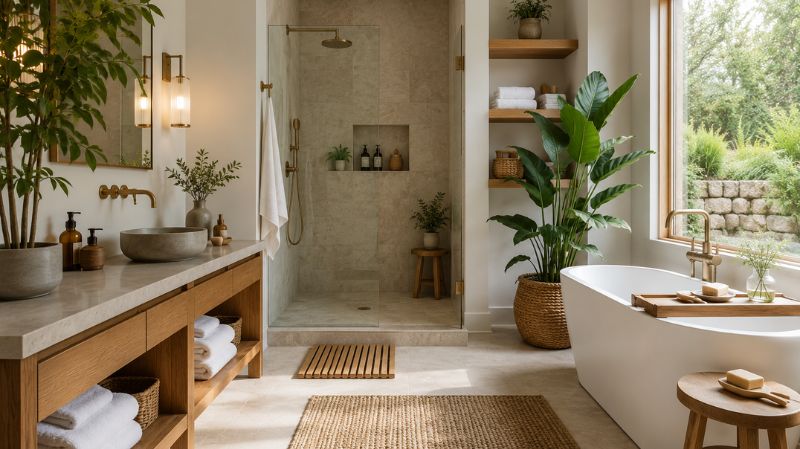
Natural elements instantly make a bathroom feel warmer, fresher, and more inviting. Adding greenery is one of the easiest bathroom ideas for bringing life into a small space.
Low-maintenance plants such as pothos, snake plants, ZZ plants, peace lilies, and ferns thrive in the humid conditions found in most bathrooms. Even a single plant placed on a floating shelf or vanity can make the room feel more relaxing.
Pair greenery with natural materials like oak shelves, woven baskets, bamboo accessories, stone trays, or linen towels. These textures soften hard surfaces such as tile, glass, and porcelain while creating a spa-inspired atmosphere.
Keeping the color palette simple allows these natural elements to become subtle focal points without making the room feel busy.
12. Use Vertical Wall Panels or Wainscoting
Vertical design elements naturally draw the eye upward, making ceilings appear taller and bathrooms feel more spacious.
Wall paneling is an excellent choice because it adds texture and architectural interest without requiring additional floor space. Popular options include tongue-and-groove paneling, beadboard, fluted wall panels, or moisture-resistant PVC wall panels designed specifically for bathrooms.
Painting the paneling in light colors such as warm white, soft sage, pale gray, or greige helps reflect more light while maintaining an elegant appearance.
For homeowners looking to add character without overwhelming a small room, vertical paneling is an affordable upgrade that offers lasting visual impact.
13. Keep Decor Minimal but Intentional
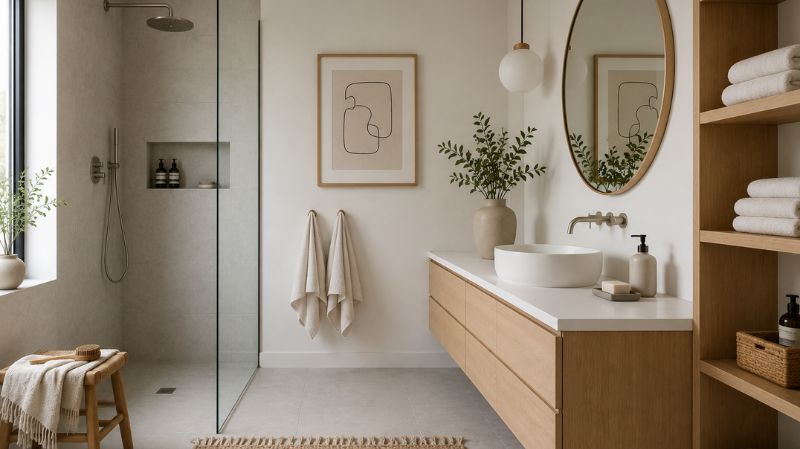
Decorating a small bathroom doesn’t mean filling every empty space. In fact, using fewer accessories often creates a more luxurious and spacious appearance.
Instead of displaying numerous decorative items, focus on a few carefully selected pieces. A framed artwork, a small plant, neatly folded towels, a decorative tray, and matching soap dispensers are often enough to complete the space.
Choosing accessories that share similar colors or materials creates a cohesive design and prevents visual clutter.
Remember, every decorative item should serve either a practical purpose, an aesthetic purpose, or ideally both.
14. Mix Textures Instead of Too Many Colors
One of the easiest ways to create an interesting bathroom without making it feel busy is by mixing textures rather than introducing many different colors.
For example, combine smooth marble-look tiles with warm wood cabinetry, matte black fixtures, woven baskets, linen towels, and glass accessories. These materials create visual depth while maintaining a calm and cohesive color palette.
Using a limited number of colors with a variety of textures helps the bathroom feel sophisticated, balanced, and timeless.
This approach works particularly well in modern, Scandinavian, coastal, and spa-inspired interiors.
15. Make Every Inch Functional
Every square inch matters in a compact bathroom. Smart planning ensures no space is wasted.
Look for opportunities to add storage behind the door, above the toilet, inside recessed wall niches, or beneath the vanity. Floating shelves, mirrored cabinets, corner shelving, and hidden drawers provide practical storage without making the room feel crowded.
A well-organized bathroom is easier to maintain and naturally appears larger because everything has its own place.
When planning your layout, think beyond floor space and make use of vertical surfaces wherever possible.
What Are the Best Paint Colors for Small Bathrooms?
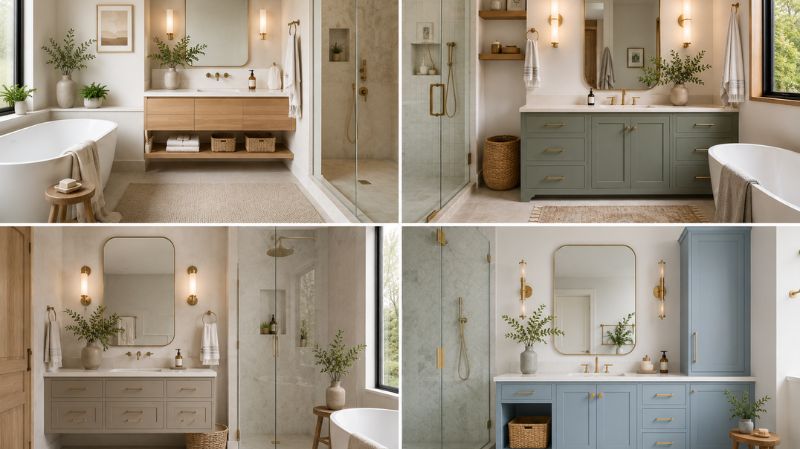
Choosing the right paint color is one of the most effective ways to make a bathroom feel brighter and larger. Light colors reflect more light, helping even windowless bathrooms appear more open.
Some of the best paint colors for small bathrooms include warm white, soft greige, pale sage green, powder blue, light gray, and creamy ivory. These shades work beautifully with natural wood, brushed brass, matte black, or chrome fixtures and suit a wide range of interior design styles.
Warm white remains the most versatile option because it creates a fresh, clean look while still feeling comfortable and inviting.
Small Bathroom Color Combinations That Make Spaces Feel Bigger
The right color combination creates harmony and enhances the feeling of openness.
Some of the most popular combinations include:
- Warm White and Natural Oak for a Scandinavian look
- Soft Greige and Matte Black for a modern design
- Sage Green and Brushed Brass for a spa-inspired bathroom
- Powder Blue and White for a coastal feel
- Light Gray and Chrome for a contemporary style
- Beige and Warm White for a timeless, classic interior
Using two or three complementary colors throughout the room creates a balanced design without overwhelming the space.
How Does Lighting Make a Small Bathroom Feel Larger?
Lighting influences how we perceive space. Bright, evenly distributed light reduces shadows and makes surfaces appear more open.
A layered lighting plan should include ceiling lighting for overall brightness, vanity lighting for everyday tasks, and accent lighting to highlight architectural details.
Avoid relying on a single ceiling fixture, as it often creates dark corners that make the room appear smaller.
Installing dimmer switches also allows you to adjust brightness throughout the day, creating both practical task lighting and a relaxing evening atmosphere.
What Flooring Works Best in Small Bathrooms?
Flooring should be durable, water-resistant, and visually cohesive.
Porcelain tile remains one of the best choices because it is highly durable, easy to clean, and available in countless styles. Marble-look porcelain offers an elegant appearance, while luxury vinyl plank provides warmth underfoot and excellent water resistance.
Large-format tiles with matching grout create a seamless appearance that makes the room feel larger. Light and medium-toned flooring generally performs better than very dark floors because it reflects more light and helps maintain an open, airy atmosphere.
Quick Designer Recap
If you’re looking for the biggest improvement with the smallest investment, focus on these three upgrades first:
- Paint the walls in a warm, light color.
- Install a large mirror above the vanity.
- Replace a bulky vanity with a floating model.
These simple changes can dramatically improve the look and functionality of your bathroom without requiring a complete renovation.
How Can You Maximize Storage in a Small Bathroom?
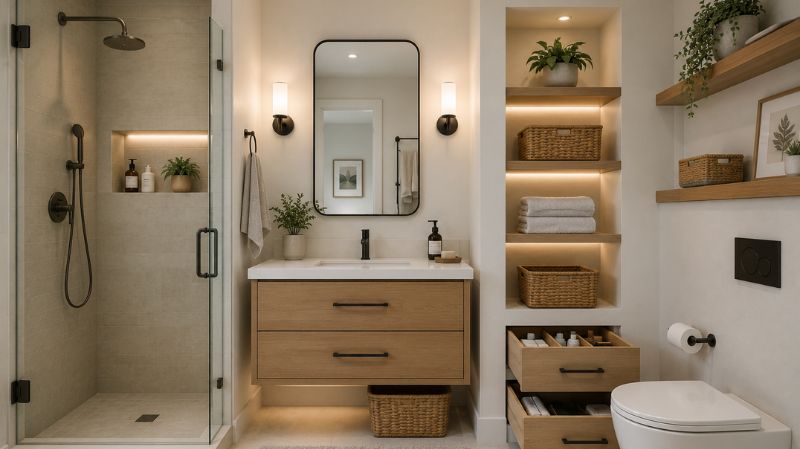
Storage is often the biggest challenge in a small bathroom. Without enough storage, countertops quickly become cluttered with toiletries, towels, and personal care products. The good news is that you don’t need a larger room—you simply need smarter storage solutions.
The goal is to make every inch work harder while maintaining a clean, organized appearance.
Install Recessed Wall Niches
Instead of placing bulky shower caddies or shelves inside the shower, build recessed wall niches between the wall studs. These niches provide storage for shampoo, conditioner, soap, and other essentials without reducing usable space.
A tiled niche that matches the shower walls also creates a sleek, custom-built appearance.
Add Floating Shelves
Floating shelves are one of the most practical tiny bathroom ideas because they use vertical wall space instead of valuable floor space.
Install shelves:
- Above the toilet
- Beside the vanity
- Above the bathroom door
- Near the shower
Use decorative baskets to organize toiletries while maintaining a neat appearance.
Choose a Vanity with Smart Storage
Instead of a pedestal sink, invest in a vanity with deep drawers or pull-out organizers.
Modern vanities often include:
- Soft-close drawers
- Built-in dividers
- Hidden electrical outlets
- Adjustable shelving
This helps keep countertops clear while storing everyday essentials within easy reach.
Use the Back of the Door
The back of the bathroom door is often overlooked.
Add:
- Towel hooks
- Hanging organizers
- Slim storage racks
- Robe hooks
These inexpensive additions increase storage without making the room feel crowded.
Keep Countertops Clutter-Free
Minimal countertops instantly make small bathrooms appear larger.
Store only daily essentials on display.
Everything else should be tucked inside drawers, baskets, or cabinets.
A clean vanity creates a calming, spa-like atmosphere.
How Can You Decorate a Small Bathroom Without Making It Feel Crowded?
Decorating a compact bathroom requires balance. Instead of filling every corner with accessories, choose a few carefully selected pieces that add warmth and personality.
Thoughtful decorating creates visual interest while preserving a spacious feel.
Modern Small Bathroom Style
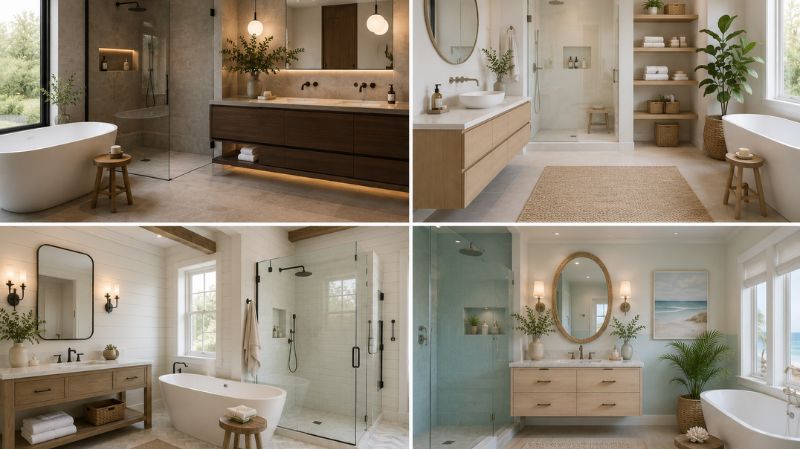
Modern bathrooms focus on clean lines and simplicity.
Features include:
- Floating vanity
- Frameless mirror
- Matte black fixtures
- Neutral paint colors
- Large-format tiles
- Minimal accessories
This style works well in apartments and contemporary homes.
Scandinavian Style
Scandinavian bathrooms are known for their bright, calming atmosphere.
Key elements include:
- White walls
- Natural wood
- Soft gray accents
- Indoor plants
- Open shelving
- Linen textiles
This style emphasizes functionality without sacrificing comfort.
Farmhouse Style
Farmhouse bathrooms blend rustic charm with modern practicality.
Popular features include:
- Shiplap walls
- Warm white paint
- Black hardware
- Vintage mirrors
- Wooden shelves
- Woven baskets
The result feels cozy, welcoming, and timeless.
Coastal Style
Coastal-inspired bathrooms bring a light, airy feel that works beautifully in compact spaces.
Use:
- Soft blue walls
- Sandy beige tones
- White cabinetry
- Natural textures
- Rope baskets
- Driftwood accents
These colors reflect the calming influence of the ocean and create a relaxing retreat.
Spa-Inspired Bathroom
If relaxation is your priority, create a spa-like environment.
Include:
- Soft green or warm white walls
- Natural stone accessories
- Bamboo trays
- Plush white towels
- Scented candles
- Live plants
Keeping the color palette soft and neutral enhances the peaceful atmosphere.
What Are the Biggest Small Bathroom Mistakes to Avoid?
Even beautiful bathrooms can feel cramped if common design mistakes aren’t avoided.
Here are some of the most frequent problems homeowners encounter.
Using Dark Colors Everywhere
Dark paint can be dramatic, but covering every wall in deep shades often makes a compact room feel enclosed.
Instead, use darker colors as accents while keeping most surfaces light.
Choosing Oversized Furniture
A large vanity or oversized storage cabinet can dominate a small room.
Always select furniture that fits the available space while leaving enough room to move comfortably.
Ignoring Vertical Space
Many homeowners focus only on floor storage.
Walls provide valuable opportunities for shelves, hooks, cabinets, and decorative storage.
Think upward whenever possible.
Poor Lighting
A single overhead fixture rarely provides enough light.
Layering ambient, task, and accent lighting creates a brighter and more inviting room.
Too Many Decorations
Displaying too many decorative items creates visual clutter.
Instead, choose a few high-quality accessories that complement the room’s color palette.
Skipping Ventilation
Bathrooms naturally generate moisture.
Proper ventilation helps prevent mold, protects paint, and extends the life of cabinetry and finishes.
A high-quality exhaust fan is an essential investment.
What Should You Prioritize During a Small Bathroom Remodel?
A remodel doesn’t always require changing the entire layout.
Focus on upgrades that deliver the greatest visual impact and long-term value.
Budget-Friendly Updates
If you’re working with a limited budget, consider:
- Repainting the walls
- Replacing cabinet hardware
- Installing a new mirror
- Updating lighting
- Adding floating shelves
- Refreshing accessories
These improvements provide noticeable results without major construction.
Mid-Range Renovations
For homeowners with a larger budget:
- Install a floating vanity
- Replace outdated flooring
- Upgrade to frameless shower glass
- Add recessed storage niches
- Replace old faucets and fixtures
These improvements significantly enhance both appearance and functionality.
Luxury Bathroom Remodel
If you’re planning a complete renovation, consider:
- Heated flooring
- Custom cabinetry
- Walk-in shower
- Premium porcelain or natural stone tile
- Smart mirrors with built-in lighting
- Luxury brass fixtures
These upgrades create a high-end bathroom while increasing property value.
What Are the Latest Small Bathroom Design Trends?
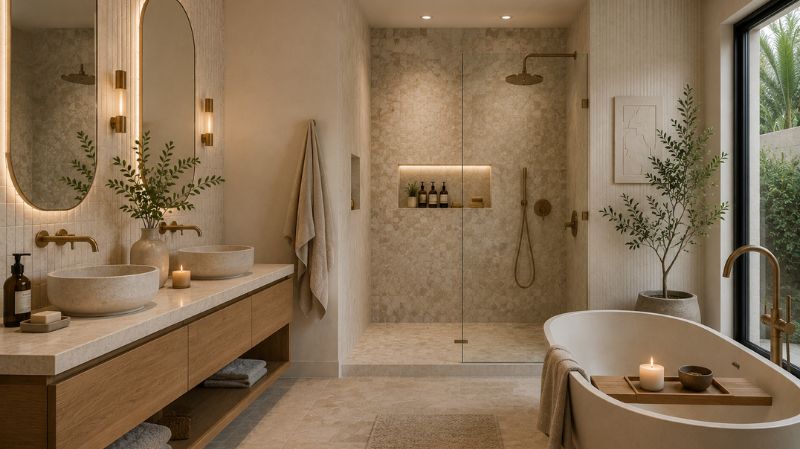
Bathroom design continues to evolve toward warm, comfortable, and highly functional spaces.
Some of today’s most popular trends include:
Organic Modern Design
A blend of clean lines, natural wood, warm whites, and textured materials.
Floating Vanities
Wall-mounted vanities remain one of the most requested upgrades because they improve both storage and visual space.
Warm Neutral Paint Colors
Bright white bathrooms are gradually giving way to warmer tones such as:
- Cream
- Ivory
- Greige
- Mushroom
- Warm beige
These colors create a softer, more welcoming environment.
Textured Tiles
Instead of glossy subway tiles alone, designers are increasingly using:
- Fluted tiles
- Handmade-look ceramics
- Zellige tiles
- Stone textures
These finishes add depth without overwhelming the room.
Mixed Metals
Combining brushed brass with matte black or polished chrome creates a layered, custom-designed appearance.
The key is maintaining consistency throughout the room.
Smart Storage Solutions
Hidden storage continues to grow in popularity.
Examples include:
- Mirror cabinets
- Toe-kick drawers
- Pull-out organizers
- Built-in niches
- Floating cabinets
These solutions help homeowners maximize every square inch.
Designer Tips for Making a Small Bathroom Look Expensive
Professional designers often rely on a few timeless principles to elevate compact bathrooms.
Here are some of their favorite techniques:
- Choose one cohesive color palette throughout the room.
- Invest in high-quality faucets and hardware.
- Use large mirrors to reflect light.
- Hang curtains or window treatments higher to create the illusion of taller ceilings.
- Incorporate natural materials like wood and stone.
- Display only a few carefully selected decorative pieces.
- Use matching containers for soap, cotton balls, and toiletries.
- Keep towels folded neatly for a hotel-inspired look.
Luxury isn’t always about spending more—it’s often about creating a clean, coordinated, and intentional design.
Life Example: A Small Bathroom Transformation
Sarah, a homeowner living in a two-bedroom apartment, wanted to update her outdated bathroom without changing the layout. The room measured just 45 square feet and felt dark because of its beige walls, bulky vanity, and limited lighting.
Instead of starting a costly renovation, she focused on a few strategic improvements. She painted the walls a warm white, installed a floating oak vanity, replaced the shower curtain with a frameless glass panel, added a large mirror above the vanity, and introduced layered LED lighting. Floating shelves and woven baskets provided additional storage while keeping the countertops clear.
The transformation was remarkable. Although the bathroom’s size didn’t change, it felt brighter, more organized, and significantly larger. Friends and family often assumed the room had been expanded during the remodel. This example shows that thoughtful design decisions can dramatically improve both the appearance and functionality of a compact bathroom without requiring major structural changes.
Authority Insight: What Research Says About Bathroom Renovations
Bathroom improvements consistently rank among the most valuable home upgrades. According to the National Association of Realtors (NAR) Remodeling Impact Report, homeowners report a high level of satisfaction after completing bathroom renovation projects because these spaces improve daily comfort and functionality.
Additionally, the Remodeling Magazine Cost vs. Value Report regularly identifies bathroom remodeling as one of the renovation projects that can help enhance a home’s resale appeal. While returns vary by market and project scope, improvements such as updated lighting, efficient storage, modern fixtures, and timeless finishes are widely recognized by designers and real estate professionals as smart long-term investments.
These findings reinforce an important principle: successful bathroom ideas are not only about appearance. Thoughtful layouts, durable materials, efficient storage, and timeless color choices contribute to a bathroom that serves homeowners well for years while supporting overall property value.
Conclusion
Designing a beautiful bathroom isn’t about having more square footage—it’s about making smarter design decisions. Whether you’re updating a powder room, renovating a family bathroom, or searching for practical tiny bathroom ideas, thoughtful planning can completely transform how your space looks and functions.
Whether your decorating style is modern, Scandinavian, farmhouse, coastal, or spa-inspired, every homeowner can create a space that reflects their personality while making the most of every square inch. By focusing on smart storage, cohesive color palettes, quality lighting, and carefully chosen décor, you can transform even the smallest bathroom into one of the most impressive rooms in your home.
If you’re planning your next home improvement project, save these bathroom ideas for inspiration and use them as a guide to create a stylish, functional, and timeless space that you’ll enjoy every day. With the right combination of design, color, storage, and décor, your small bathroom can become one of the most beautiful and valuable spaces in your home.
FAQs
1. What are the best small bathroom ideas to make a bathroom look bigger?
The best small bathroom ideas focus on maximizing light, minimizing clutter, and improving functionality. Use light paint colors, install a floating vanity, choose large-format tiles, add a frameless glass shower, incorporate vertical storage, and use a large mirror to reflect natural light. These design strategies create the illusion of a more open and spacious room without increasing its actual size.
2. What paint colors make a small bathroom look larger?
Light-reflective colors are the best choice for compact bathrooms. Popular options include warm white, soft greige, pale gray, creamy beige, powder blue, and soft sage green. These shades bounce light around the room, making it feel brighter and more spacious while creating a timeless interior design.
3. Is a floating vanity better for a small bathroom?
Yes. A floating vanity is one of the most recommended upgrades for small bathrooms because it exposes more floor space, making the room appear larger. It also offers practical storage while creating a clean, modern look that works well in contemporary, Scandinavian, and minimalist interiors.
4. What flooring works best in a tiny bathroom?
Porcelain tile is one of the best flooring materials for a small bathroom because it is durable, water-resistant, and available in many styles. Large-format tiles with matching grout lines create a seamless appearance that visually expands the room. Luxury vinyl flooring is another excellent option for homeowners seeking warmth, comfort, and easy maintenance.
5. Should I use dark colors in a small bathroom?
Dark colors can add drama and personality when used thoughtfully. Instead of painting every wall in a dark shade, use darker colors as accents on a vanity, feature wall, or accessories while keeping the majority of the room light. This approach adds contrast without making the bathroom feel enclosed.
6. How can I add storage to a small bathroom without remodeling?
You can increase storage by installing floating shelves, over-the-toilet cabinets, recessed wall niches, mirrored medicine cabinets, door-mounted hooks, and woven storage baskets. These space-saving solutions improve organization without requiring major renovations.
7. What type of lighting is best for a small bathroom?
Layered lighting provides the best results. Combine ambient ceiling lighting with vanity task lighting and accent lighting to eliminate shadows and brighten the space. Warm white LED bulbs between 2700K and 3000K create a comfortable, welcoming atmosphere while maintaining excellent visibility.
8. Are mirrors really effective in making a bathroom look bigger?
Absolutely. Mirrors reflect both natural and artificial light, increasing brightness and creating the illusion of greater depth. A large mirror placed above the vanity or across an entire wall is one of the simplest and most effective ways to make a compact bathroom feel significantly larger.
9. What are the biggest mistakes people make when designing small bathrooms?
Common mistakes include choosing oversized furniture, using too many dark colors, neglecting storage, relying on a single ceiling light, overcrowding the room with accessories, and ignoring vertical wall space. Avoiding these issues creates a bathroom that feels open, organized, and functional.
10. What is the most affordable way to update a small bathroom?
Painting the walls, replacing cabinet hardware, upgrading the mirror, improving lighting, adding floating shelves, and refreshing towels and accessories are among the most affordable improvements. These simple updates can dramatically transform the appearance of a bathroom without requiring a complete remodel.