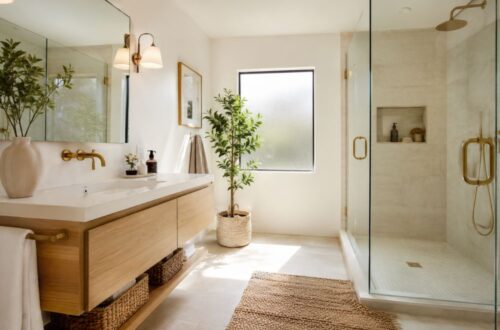
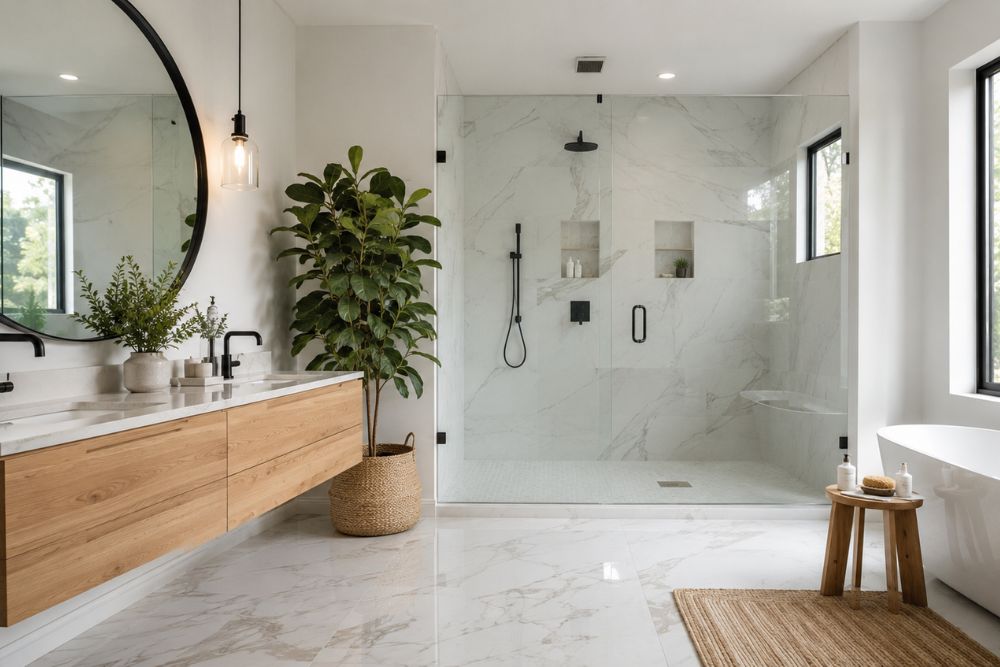
The best bathroom remodel ideas combine functionality, comfort, and timeless design to create a space that looks beautiful and works better every day. Upgrading your shower, vanity, paint colors, lighting, storage, and finishes can dramatically improve your bathroom while increasing your home’s value and enhancing your daily routine.
Whether you’re planning a luxury renovation or looking for affordable bathroom remodeling ideas, the right design choices can make even the smallest bathroom feel brighter, larger, and more inviting.
A bathroom should be more than just a functional room. It should be a comfortable, organized, and relaxing retreat that complements the rest of your home’s interior design.
Today’s homeowners are moving beyond basic upgrades. They’re embracing bathroom remodeling ideas that improve storage, maximize natural light, introduce calming color palettes, and create spa-inspired spaces without sacrificing practicality.
Bathroom Remodel at a Glance
| Remodel Idea | Difficulty | Budget | Best For | Value Added |
| White minimalist makeover | Easy | $$ | Small & modern bathrooms | ⭐⭐⭐⭐ |
| Walk-in shower | High | $$$$ | Accessibility & luxury | ⭐⭐⭐⭐⭐ |
| Vanity upgrade | Medium | $$$ | Storage & style | ⭐⭐⭐⭐⭐ |
| New paint colors | Easy | $ | Budget makeovers | ⭐⭐⭐⭐ |
| Feature wall | Medium | $$ | Visual impact | ⭐⭐⭐⭐ |
| Floating shelves | Easy | $ | Small bathrooms | ⭐⭐⭐ |
| Statement lighting | Medium | $$ | Ambience | ⭐⭐⭐⭐ |
| Large-format tiles | High | $$$$ | Luxury appearance | ⭐⭐⭐⭐⭐ |
| Modern fixtures | Easy | $$ | Quick refresh | ⭐⭐⭐⭐ |
| Spa-inspired accessories | Easy | $ | Everyday comfort | ⭐⭐⭐ |
Why Are Bathroom Remodels Worth the Investment?
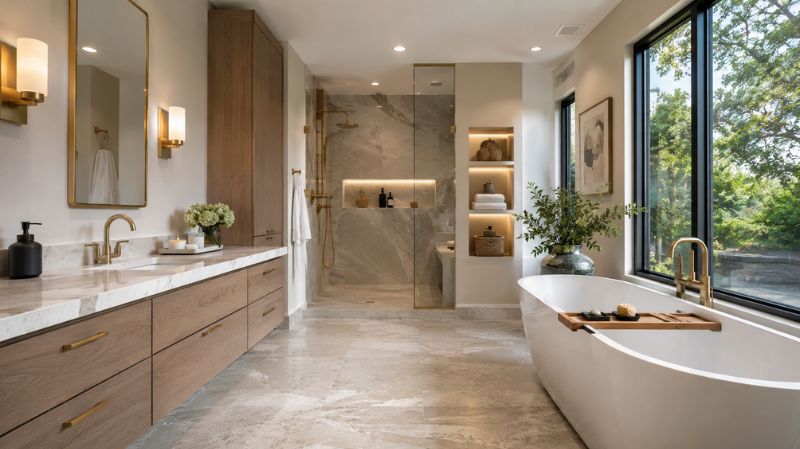
Bathrooms are among the most frequently used rooms in any home, making them one of the smartest spaces to renovate. A thoughtfully planned remodel not only improves comfort and organization but can also increase resale value, reduce maintenance, and make daily routines more enjoyable.
According to the National Association of Realtors (NAR) and the Remodeling Impact Report, bathroom renovations consistently rank among the home improvement projects that homeowners value most because they improve livability while offering strong buyer appeal.
Instead of chasing short-lived design trends, focus on timeless layouts, moisture-resistant materials, durable finishes, efficient storage, quality lighting, and carefully selected paint colors that continue looking attractive for years.
Why Should You Remodel Your Bathroom?
Increase Your Home’s Value
A well-designed bathroom is one of the first features buyers notice during home tours.
Modern fixtures, quality cabinetry, updated flooring, and attractive lighting make the space feel newer while giving potential buyers confidence that the home has been well maintained.
Even if you aren’t planning to sell soon, remodeling now allows you to enjoy the improvements every day.
Improve Daily Functionality
Older bathrooms often suffer from:
- Limited storage
- Poor lighting
- Outdated plumbing fixtures
- Inefficient layouts
- Lack of counter space
- Moisture problems
A remodel solves these issues while making everyday routines smoother and more enjoyable.
Create a More Relaxing Environment
Modern bathrooms have become wellness spaces.
Soft lighting, calming paint colors, natural materials, textured finishes, and clutter-free storage contribute to lower visual stress and create an atmosphere similar to a luxury spa.
Color psychology also plays an important role.
For example:
- Soft whites create openness.
- Sage green encourages relaxation.
- Pale blue promotes calmness.
- Warm greige feels welcoming.
- Sand beige adds warmth without overwhelming the room.
Save Water and Energy
Today’s plumbing fixtures are significantly more efficient than older models.
Installing WaterSense-certified toilets, faucets, and showerheads can reduce water usage while lowering monthly utility bills.
LED lighting also consumes considerably less electricity than traditional bulbs while lasting much longer.
Things to Consider Before Starting a Bathroom Remodel
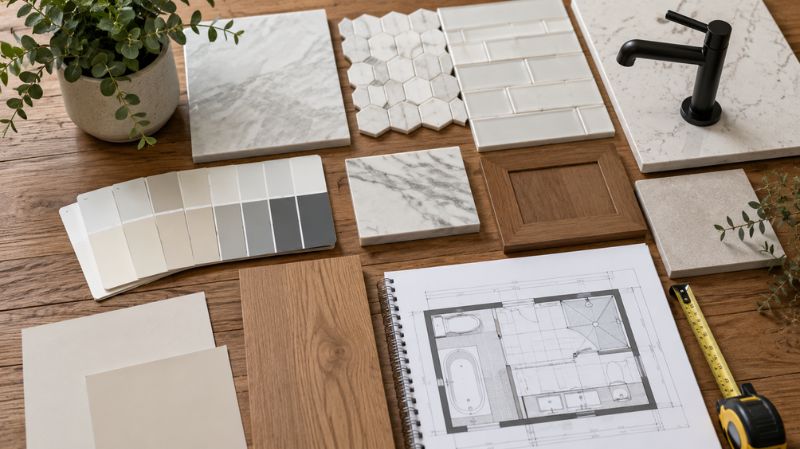
What Budget Should You Set?
Every successful remodel begins with a realistic budget.
Rather than focusing only on cosmetic upgrades, prioritize investments that improve long-term durability.
Typical budget allocation:
| Category | Recommended Budget Share |
| Cabinetry & Vanity | 25–30% |
| Labor | 20–30% |
| Plumbing Fixtures | 15% |
| Tile & Flooring | 15% |
| Lighting | 5–10% |
| Paint & Finishing | 5% |
| Décor & Accessories | Remaining |
Always keep an additional 10–15% contingency for unexpected repairs hidden behind walls or beneath flooring.
Which Bathroom Style Matches Your Home?
Choosing a consistent design style creates visual harmony throughout your home.
Popular choices include:
Modern
- Clean lines
- Floating vanities
- Frameless glass
- Neutral palettes
- Minimal hardware
Scandinavian
- Bright whites
- Natural wood
- Organic textures
- Soft lighting
- Functional storage
Farmhouse
- Shiplap walls
- Warm wood finishes
- Matte black hardware
- Vintage-inspired lighting
Coastal
- White walls
- Soft blues
- Sand-colored accents
- Woven baskets
- Natural textures
Contemporary
- Bold contrast
- Geometric shapes
- Mixed materials
- Statement lighting
How Important Are Paint Colors?
Paint is often the highest-impact, lowest-cost upgrade.
The right wall color changes how large, bright, and welcoming your bathroom feels.
Some of today’s favorite bathroom paint colors include:
- Warm White
- Soft Greige
- Misty Gray
- Sage Green
- Dusty Blue
- Light Taupe
- Creamy Beige
Choose moisture-resistant satin or semi-gloss finishes for better durability and easier cleaning.
Should You Hire Professionals or DIY?
Some bathroom remodeling tips are beginner-friendly, while others require licensed professionals.
DIY-Friendly Projects
- Painting
- Installing mirrors
- Replacing hardware
- Decorating
- Floating shelves
- Wallpaper installation
Professional Projects
- Plumbing relocation
- Electrical work
- Tile installation
- Structural changes
- Waterproofing
- Window replacement
Hiring professionals for technical work reduces the risk of expensive repairs later.
Why Is Storage Planning So Important?
Beautiful bathrooms quickly become frustrating when storage is overlooked.
Think beyond vanity drawers.
Consider incorporating:
- Built-in shower niches
- Linen cabinets
- Floating shelves
- Medicine cabinets
- Under-sink organizers
- Pull-out drawers
- Vertical cabinets
Well-planned storage keeps countertops clutter-free while making the room feel larger.
15 Bathroom Remodel Ideas That Will Transform Your Space
1. Embrace White Minimalism for a Timeless Bathroom
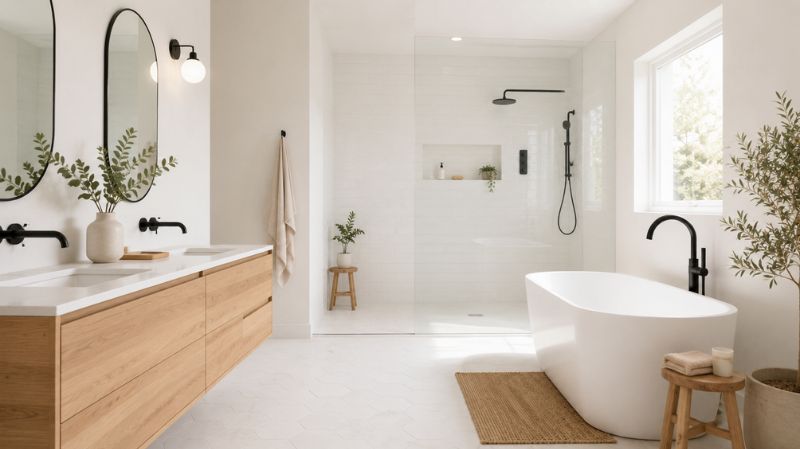
White continues to dominate modern bathroom design because it creates an open, bright, and luxurious appearance without feeling trendy.
Unlike bold color schemes that may fall out of fashion, white provides a timeless backdrop that works with almost every decorating style.
A minimalist bathroom isn’t about making the room empty.
It’s about removing unnecessary visual clutter while allowing high-quality materials and thoughtful details to stand out.
Why homeowners love white bathrooms
- Reflects more natural light
- Makes small bathrooms appear larger
- Pairs with every decorating style
- Increases perceived cleanliness
- Creates a relaxing spa atmosphere
Designer Tips
Instead of using only one shade of white, layer multiple textures.
Combine:
- Matte porcelain tile
- Glossy subway tile
- White quartz countertops
- Painted cabinetry
- Linen shower curtains
- Textured towels
The subtle differences prevent the room from feeling flat.
Best Accent Colors
White works beautifully with:
- Natural oak vanities
- Walnut cabinetry
- Matte black fixtures
- Brushed brass hardware
- Charcoal flooring
- Sage green plants
These accents introduce warmth while maintaining a clean, sophisticated look.
Best Paint Colors for White Bathrooms
Some timeless options include:
- Sherwin-Williams Alabaster
- Sherwin-Williams Pure White
- Benjamin Moore White Dove
- Benjamin Moore Chantilly Lace
- Behr Polar Bear
Warm whites generally feel more inviting than cool whites, especially in bathrooms with limited natural light.
Real-Life Example
A homeowner remodeled a dated 60-square-foot guest bathroom by replacing dark cabinetry with a floating oak vanity, repainting the walls in a warm white, installing a frameless mirror, and switching to brushed brass fixtures.
Although no walls were moved, the bathroom immediately felt larger, brighter, and significantly more luxurious simply through improved color selection and material coordination.
2. Create a Stunning Feature Wall
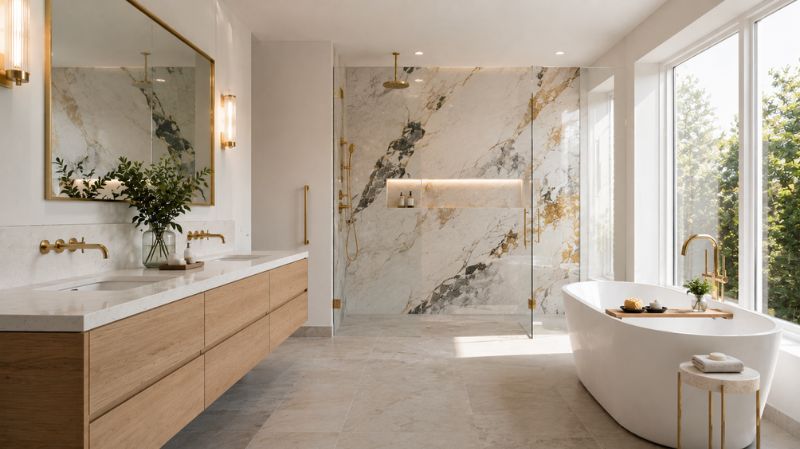
One statement wall can completely transform your bathroom without dramatically increasing your remodeling budget.
A feature wall naturally draws attention while adding texture, personality, and architectural interest.
Popular locations include:
- Behind the vanity
- Inside the shower
- Behind a freestanding tub
- Opposite the entrance
Best Materials
- Large-format marble tile
- Vertical wood slats
- Waterproof wallpaper
- Fluted panels
- Natural stone
- Textured porcelain tile
Color Pairing Ideas
| Feature Wall | Pair With |
| Navy Blue | White vanity & brass fixtures |
| Sage Green | Light oak cabinetry |
| Marble Look Tile | Black hardware |
| Charcoal Tile | White walls |
| Warm Wood Panels | Soft greige paint |
Professional Advice
Keep the remaining walls simple.
Too many bold patterns compete for attention and make bathrooms feel visually smaller.
One focal wall is usually enough.
3. Upgrade to a Modern Vanity
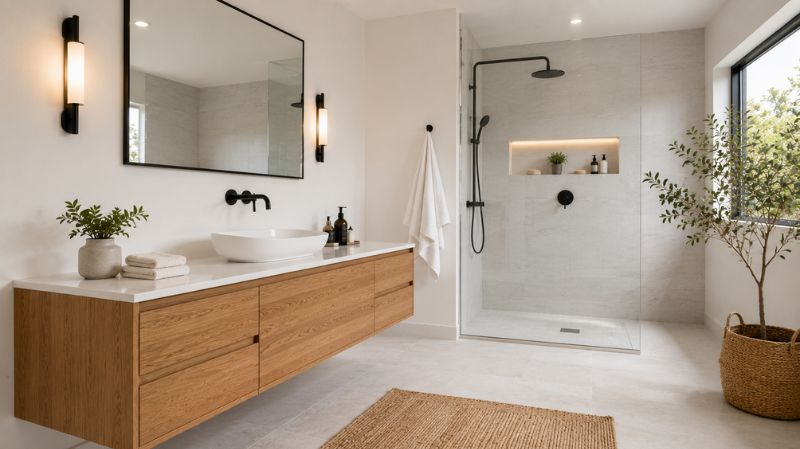
Your vanity is often the centerpiece of the bathroom.
Replacing an outdated vanity instantly modernizes the entire room while improving storage and functionality.
Today’s vanities offer:
- Soft-close drawers
- Quartz countertops
- Floating designs
- Hidden organizers
- Integrated sinks
- Durable finishes
A floating vanity is especially effective in smaller bathrooms because exposing more floor area creates the illusion of additional space.
4. Refresh Your Bathroom with the Right Paint Colors
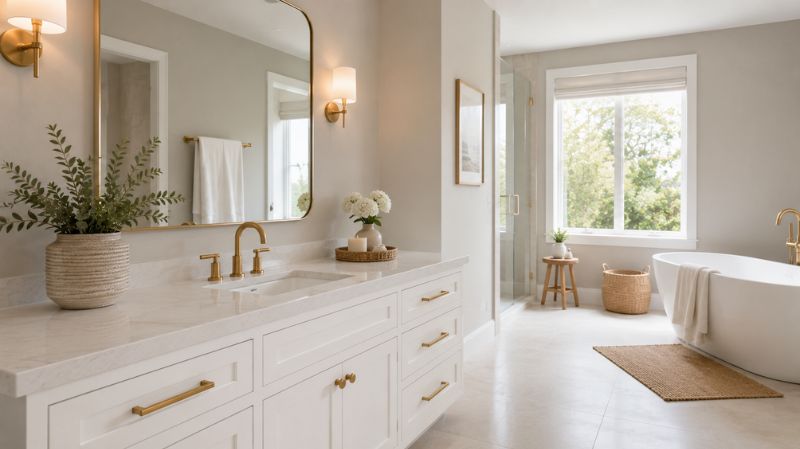
One of the easiest and most affordable bathroom remodeling ideas is giving the walls, ceiling, vanity, or cabinetry a fresh coat of paint. While replacing tile or plumbing fixtures can be expensive, paint offers one of the highest returns on investment because it instantly changes the mood, brightness, and perceived size of the room.
Interior designers often say that paint is the foundation of every successful bathroom renovation. Before choosing mirrors, lighting, hardware, or décor, selecting the right wall color creates a cohesive palette that ties every design element together.
Whether you’re planning a complete bathroom renovation or simply updating an older space, choosing the right paint color can make your bathroom feel cleaner, brighter, and significantly more luxurious.
Why Does Paint Matter So Much?
Bathrooms usually have fewer windows than other rooms in the home. Because of this, wall colors have a much bigger influence on how spacious and inviting the room feels.
The right paint color can:
- Reflect available light
- Make a small bathroom appear larger
- Create a relaxing spa atmosphere
- Highlight beautiful tile work
- Complement cabinetry and countertops
- Coordinate with flooring and fixtures
- Hide minor wall imperfections
Paint is also one of the simplest upgrades to refresh an outdated bathroom without changing the layout.
Best Bathroom Paint Colors for Every Style
| Bathroom Style | Recommended Wall Colors |
| Modern | Pure White, Soft Gray, Greige |
| Scandinavian | Warm White, Light Beige |
| Farmhouse | Cream, Sage Green |
| Coastal | Sea Salt, Misty Blue |
| Luxury | Marble White, Soft Taupe |
| Traditional | Ivory, Warm Gray |
| Contemporary | Charcoal Accent with White |
Understanding Color Psychology
The colors you choose influence how the bathroom feels every day.
White
Creates cleanliness, openness, and simplicity.
Soft Gray
Feels calm, balanced, and elegant.
Sage Green
Brings a connection to nature while reducing visual stress.
Dusty Blue
Creates a peaceful, spa-inspired atmosphere.
Warm Beige
Makes bathrooms feel cozy and welcoming.
Greige
Offers warmth without looking yellow and works beautifully with modern interiors.
Designer Tips for Choosing Paint
- Test paint samples in morning and evening light.
- Use satin or semi-gloss paint in humid areas.
- Coordinate wall colors with flooring.
- Match undertones throughout the room.
- Paint ceilings a lighter version of the wall color for added height.
- Consider repainting cabinetry instead of replacing it.
Popular Paint Pairings
- Warm White + Oak Vanity
- Greige + Matte Black Hardware
- Soft Blue + White Marble
- Sage Green + Brass Fixtures
- Ivory + Walnut Cabinets
Real-Life Example
A family wanted to modernize their guest bathroom without replacing expensive tile. Instead, they painted the walls a warm greige, refinished the vanity in crisp white, replaced chrome hardware with brushed brass, and installed a new mirror.
The project cost less than replacing cabinetry, yet guests often assumed the entire bathroom had been renovated.
5. Upgrade Your Bathroom Lighting Like a Designer
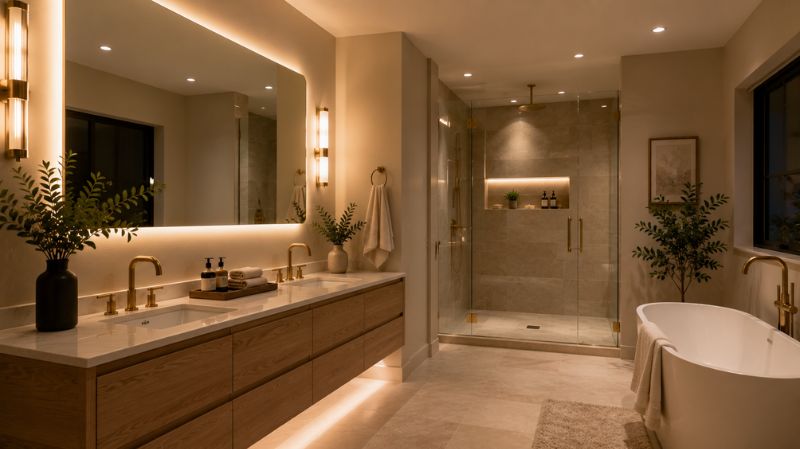
Lighting is one of the most overlooked aspects of bathroom design.
Even expensive tile, premium countertops, and beautiful cabinetry can look ordinary under poor lighting.
Professional designers treat lighting as layers rather than relying on a single ceiling fixture.
The goal is to balance functionality with atmosphere.
Why Is Bathroom Lighting So Important?
Proper lighting helps with:
- Shaving
- Makeup application
- Hair styling
- Cleaning
- Relaxation
- Safety
It also highlights textures, wall colors, and architectural details that might otherwise go unnoticed.
The Three Essential Lighting Layers
Ambient Lighting
This is the primary light source that illuminates the entire room.
Examples include:
- Flush ceiling fixtures
- Semi-flush fixtures
- Recessed lighting
Task Lighting
Task lighting provides focused illumination around the vanity.
Popular options include:
- Vertical sconces
- LED mirrors
- Vanity light bars
Proper task lighting minimizes shadows on the face, making grooming much easier.
Accent Lighting
Accent lighting adds warmth and luxury.
Ideas include:
- Under-vanity LED strips
- Shower niche lighting
- Floating shelf lighting
- Toe-kick lighting
- Ceiling cove lighting
These subtle details help transform an ordinary bathroom into a spa-like retreat.
Choosing the Right Color Temperature
| Kelvin Rating | Appearance | Best Use |
| 2700K | Warm White | Relaxing bathrooms |
| 3000K | Soft White | Most bathrooms |
| 3500K | Neutral White | Contemporary bathrooms |
| 4000K | Cool White | Task lighting |
Interior designers often recommend 3000K because it provides flattering illumination while maintaining a warm atmosphere.
Best Lighting Fixtures
Modern bathroom remodels frequently include:
- LED backlit mirrors
- Matte black sconces
- Globe pendant lights
- Waterproof recessed lights
- Floating vanity lighting
- Smart dimmable switches
Lighting Mistakes to Avoid
Avoid these common problems:
- Only using one ceiling light
- Installing fixtures that create facial shadows
- Mixing warm and cool bulbs
- Ignoring natural daylight
- Choosing decorative fixtures that don’t provide enough brightness
Pro Tip
Install dimmer switches whenever possible.
Bright lighting is perfect for morning routines, while dimmed lighting creates a relaxing atmosphere during evening baths.
6. Install Floating Shelves for Stylish Storage
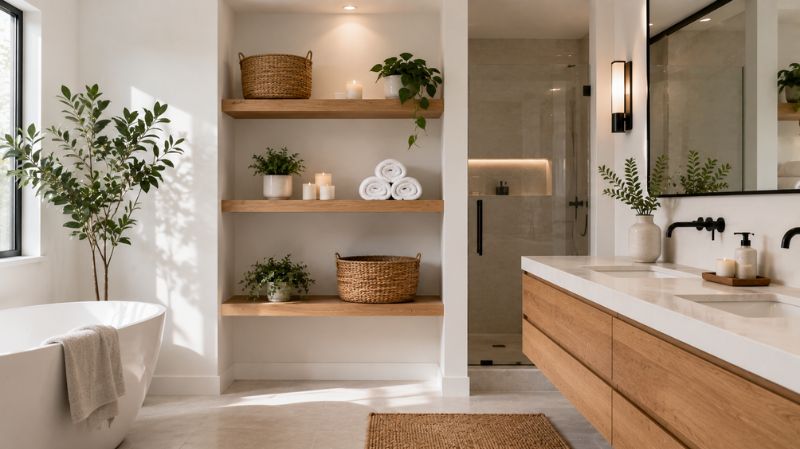
Storage is one of the biggest challenges in bathroom design.
Many homeowners focus entirely on appearance while overlooking practical organization.
Floating shelves provide the perfect balance of storage and decoration.
Unlike bulky cabinets, they keep essentials accessible while maintaining an open, airy appearance.
Why Are Floating Shelves So Popular?
Floating shelves make bathrooms feel larger because they expose more wall space while offering practical storage.
Benefits include:
- Easy installation
- Budget-friendly
- Decorative display opportunities
- Better organization
- Improved accessibility
- Visual openness
Best Places to Install Floating Shelves
Strategic placement maximizes both functionality and aesthetics.
Popular locations include:
- Above the toilet
- Beside the vanity
- Over a bathtub
- Near the shower entrance
- Inside recessed niches
- Empty wall corners
What Should You Display?
Avoid overcrowding the shelves.
Instead, combine functional storage with decorative accessories.
Great styling ideas include:
- Rolled white towels
- Glass storage jars
- Woven baskets
- Small indoor plants
- Scented candles
- Decorative trays
- Bath salts
- Minimal artwork
Following the “less is more” principle helps maintain a clean, designer-inspired look.
Best Shelf Materials for Bathrooms
Because bathrooms experience constant humidity, choose moisture-resistant materials.
Good options include:
| Material | Advantages |
| Sealed Oak | Warm and timeless |
| Walnut | Rich luxury appearance |
| Tempered Glass | Contemporary and easy to clean |
| Powder-Coated Steel | Industrial style and highly durable |
| PVC Composite | Excellent moisture resistance |
Styling Tip
Group accessories in odd numbers.
For example:
- One plant
- Three rolled towels
- One candle
This simple decorating principle creates visual balance while preventing shelves from looking cluttered.
Common Mistakes
Avoid:
- Overloading shelves
- Installing shelves too high
- Using untreated wood
- Mixing too many decorative styles
- Displaying everyday clutter
7. Replace Old Fixtures for an Instant Modern Upgrade
One of the easiest bathroom remodeling tips is replacing outdated fixtures.
You don’t always need to replace cabinets or flooring.
Simply upgrading faucets, towel bars, showerheads, cabinet handles, and accessories can completely modernize the room.
These smaller updates create a coordinated, high-end appearance while remaining budget-friendly.
Which Fixtures Should You Replace?
Consider upgrading:
- Bathroom faucet
- Showerhead
- Sink drain
- Cabinet hardware
- Toilet paper holder
- Towel bars
- Robe hooks
- Shower controls
- Soap dispensers
- Toilet flush plate
Replacing all visible hardware with matching finishes instantly makes the bathroom look professionally designed.
Popular Hardware Finishes
Today’s most popular finishes include:
| Finish | Best Style |
| Matte Black | Modern |
| Brushed Brass | Luxury |
| Brushed Nickel | Transitional |
| Chrome | Traditional |
| Oil-Rubbed Bronze | Rustic |
| Gunmetal | Contemporary |
Choose one finish and repeat it throughout the room for a cohesive appearance.
Why Consistency Matters
Matching finishes create visual harmony.
For example:
- Matte black faucet
- Matte black showerhead
- Matte black towel bar
- Matte black mirror frame
Repeating the same finish throughout the room makes the design feel intentional rather than random.
Water Efficiency Benefits
Modern fixtures often include water-saving technology without sacrificing performance.
Low-flow faucets and showerheads reduce water consumption while lowering utility bills—making them a smart addition to any bathroom renovation.
8. Install Large-Format Tiles for a Luxury Finish
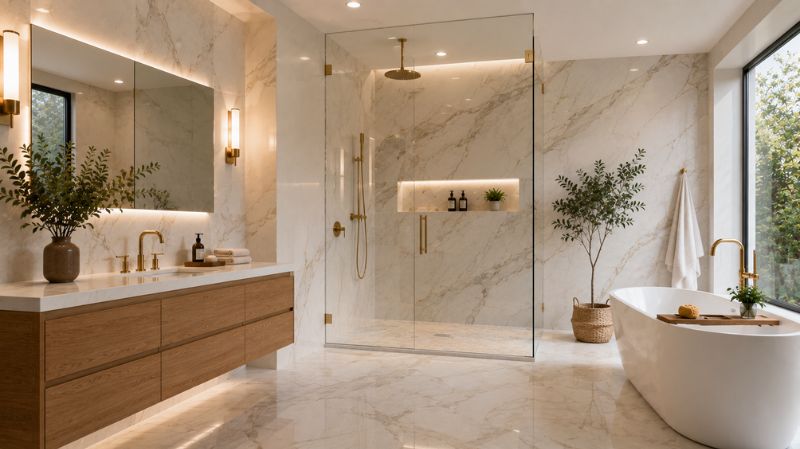
Tile has one of the greatest visual impacts in a bathroom.
Large-format tiles have become increasingly popular because they create a cleaner, more seamless appearance with fewer grout lines.
Whether used on floors, walls, or inside the shower, they instantly elevate the overall design.
Why Choose Large-Format Tiles?
Benefits include:
- Fewer grout lines
- Easier cleaning
- More spacious appearance
- Modern luxury aesthetic
- Better visual continuity
In smaller bathrooms, fewer grout joints help reduce visual interruptions, making the room feel larger than it actually is.
Best Tile Sizes
Popular dimensions include:
- 12″ × 24″
- 24″ × 24″
- 24″ × 48″
- 30″ × 60″
Larger tiles are especially effective in contemporary and minimalist bathrooms.
Popular Tile Materials
Choose materials that balance beauty, durability, and maintenance.
Top options include:
- Porcelain
- Ceramic
- Marble-look porcelain
- Natural stone
- Quartz slabs
Porcelain remains one of the most recommended choices because it resists moisture, stains, and daily wear.
Design Tip
Extend the same tile from the bathroom floor into the shower walls whenever possible.
This uninterrupted surface creates a cohesive look and enhances the sense of space.
9. Turn Your Bathroom into a Spa Retreat
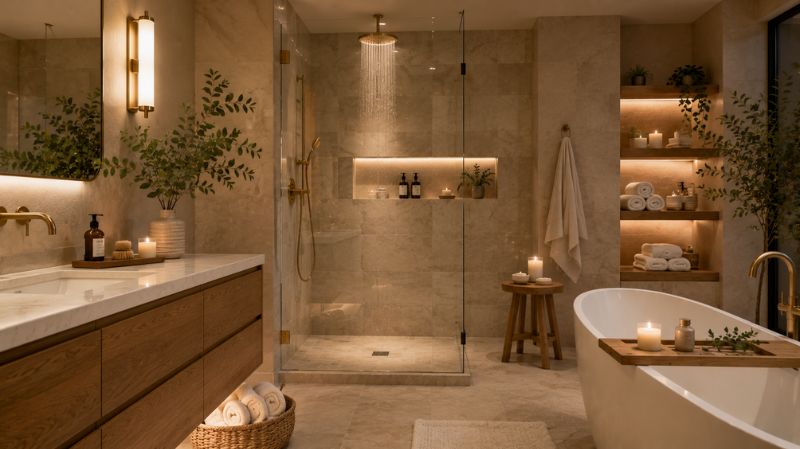
Today’s homeowners increasingly want bathrooms that offer more than functionality—they want a place to relax and recharge.
A spa-inspired remodel focuses on comfort, natural textures, soothing colors, and sensory experiences.
You don’t need a luxury budget to achieve this effect. Simple additions like soft towels, layered lighting, calming paint colors, and natural materials can dramatically elevate the atmosphere.
Elements of a Spa Bathroom
- Neutral color palette
- Warm wood accents
- Plush towels
- Rainfall showerhead
- Aromatherapy candles
- Indoor plants
- Soft ambient lighting
- Minimal décor
Designer Advice
Stick to two or three calming colors throughout the space. Too many contrasting shades can make the bathroom feel busy rather than relaxing.
Practical Benefit
A spa-inspired bathroom encourages slower, more intentional routines, making it a worthwhile investment in both home comfort and everyday well-being.
10. Improve Ventilation for a Healthier Bathroom
Beautiful finishes won’t last if moisture isn’t properly managed.
Excess humidity can lead to peeling paint, warped cabinetry, mold growth, and unpleasant odors. Upgrading your ventilation system is one of the most practical bathroom remodeling ideas because it protects your investment while improving indoor air quality.
Signs Your Bathroom Needs Better Ventilation
- Mirrors stay foggy for long periods
- Paint bubbles or peels
- Musty smells linger
- Mold appears around grout or ceilings
- Condensation forms on windows
Ventilation Upgrades to Consider
- High-efficiency exhaust fan
- Humidity-sensing fan
- Quiet, energy-efficient models
- Timed ventilation switches
- Operable windows where possible
Pro Tip
Run your exhaust fan for at least 20–30 minutes after showering to help remove excess moisture and extend the life of your paint, cabinetry, and finishes.
11. Add a Statement Mirror to Elevate the Entire Bathroom
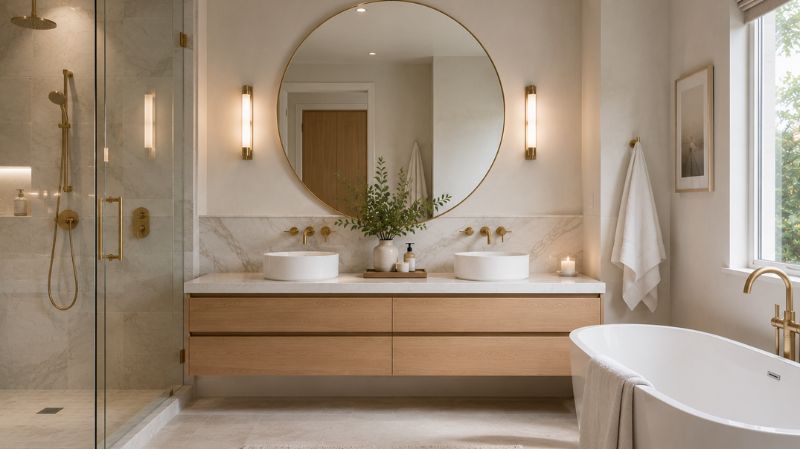
A mirror is much more than a functional necessity—it is one of the most impactful design features in any bathroom. The right mirror reflects light, creates the illusion of more space, and serves as a focal point that ties the entire room together.
If your vanity still has a builder-grade mirror glued directly to the wall, replacing it with a framed, backlit, or uniquely shaped mirror can instantly modernize the space without requiring a major renovation.
For homeowners looking for affordable bathroom remodeling ideas, a mirror upgrade offers one of the highest visual returns for the investment.
Why Should You Replace Your Bathroom Mirror?
A modern mirror can:
- Make a small bathroom appear larger
- Reflect more natural and artificial light
- Improve your daily grooming routine
- Create a luxurious focal point
- Complement your vanity and lighting
- Increase the perceived value of the room
Because mirrors occupy a large portion of the wall above the vanity, changing them dramatically alters the room’s appearance.
Popular Bathroom Mirror Styles
Round Mirrors
Perfect for:
- Scandinavian bathrooms
- Coastal bathrooms
- Farmhouse bathrooms
They soften hard edges and create a balanced appearance.
Rectangular Mirrors
The most versatile choice.
Best for:
- Double vanities
- Modern bathrooms
- Transitional interiors
Arched Mirrors
One of today’s biggest interior design trends.
Arched mirrors introduce architectural elegance while making bathrooms feel taller.
Backlit LED Mirrors
Ideal for:
- Contemporary homes
- Luxury bathrooms
- Makeup application
- Energy efficiency
Built-in lighting also eliminates harsh shadows.
Choosing the Right Mirror Size
Interior designers generally recommend:
- Mirror width = approximately 70–90% of vanity width.
- Leave a few inches between the mirror and vanity edges.
- Position the mirror at eye level for the primary users.
A properly sized mirror creates better visual balance.
Mirror Frame Ideas
Choose frames that complement your hardware finishes.
Examples:
| Mirror Frame | Matches Best With |
| Matte Black | Industrial, Modern |
| Natural Oak | Scandinavian |
| Brushed Brass | Luxury Bathrooms |
| Walnut | Traditional |
| Frameless | Minimalist |
Designer Tip
If your bathroom has limited natural light, install a large mirror opposite a window whenever possible.
This simple trick reflects daylight throughout the room, making the bathroom feel brighter and more spacious.
12. Bring Nature Indoors with Plants and Organic Materials
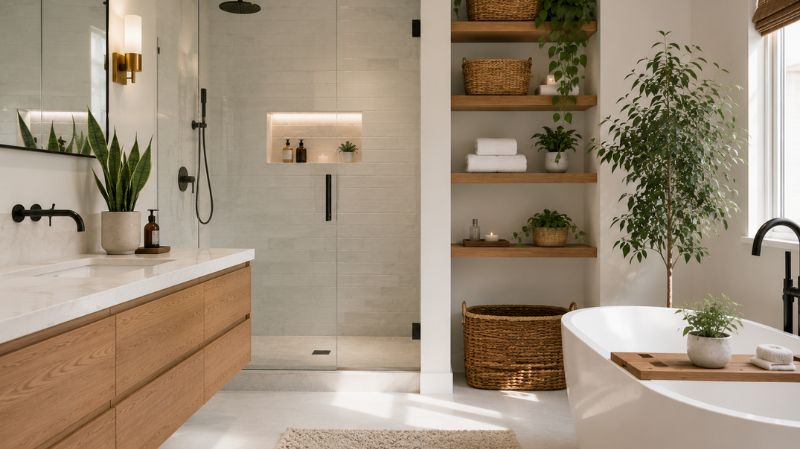
Modern interior design increasingly focuses on biophilic design—the practice of connecting indoor spaces with nature.
Bathrooms are excellent places for plants because many species thrive in humid environments.
Adding greenery introduces color, texture, and life while softening hard surfaces like tile, glass, and stone.
Benefits of Bathroom Plants
Indoor plants can help:
- Make the bathroom feel welcoming
- Add natural texture
- Create spa-inspired styling
- Improve visual balance
- Complement neutral color palettes
Even one carefully placed plant can completely change the atmosphere.
Best Bathroom Plants
Some excellent low-maintenance options include:
- Snake Plant
- ZZ Plant
- Pothos
- Boston Fern
- Peace Lily
- Spider Plant
- Bamboo
Many of these tolerate humidity extremely well.
Real vs Artificial Plants
| Real Plants | Artificial Plants |
| Improve atmosphere | Zero maintenance |
| Natural appearance | Ideal for windowless bathrooms |
| Require watering | No watering required |
| Grow over time | Always look identical |
If your bathroom receives little sunlight, high-quality artificial plants can still achieve the desired aesthetic.
Other Natural Materials
Plants aren’t the only way to introduce warmth.
Consider adding:
- Oak shelving
- Bamboo accessories
- Stone soap trays
- Woven baskets
- Linen towels
- Wooden stools
These materials create contrast against tile and porcelain while adding visual comfort.
Designer Styling Tips
Group natural materials together.
For example:
- White towels
- Small olive tree
- Wooden tray
- Ceramic soap dispenser
This combination immediately creates a luxury spa atmosphere.
13. Install a Walk-In Shower with Frameless Glass
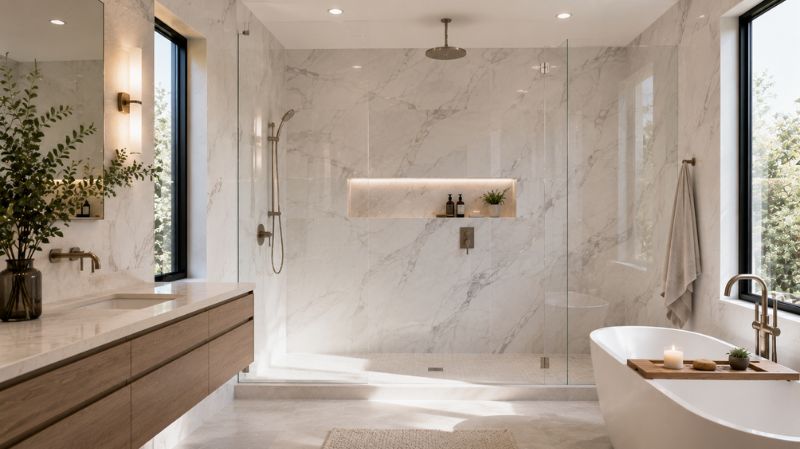
Few upgrades transform a bathroom as dramatically as replacing an old shower enclosure with a walk-in shower.
Walk-in showers have become one of the most desirable modern bathroom remodel ideas because they improve accessibility, increase visual openness, and create a high-end appearance.
Even compact bathrooms benefit from the openness created by frameless glass panels.
Why Are Walk-In Showers So Popular?
Homeowners appreciate walk-in showers because they:
- Make bathrooms feel larger
- Improve accessibility
- Eliminate bulky shower curtains
- Increase natural light flow
- Require less visual maintenance
- Enhance resale appeal
Many luxury hotels use this design because it creates an open, elegant experience.
Frameless vs Framed Shower Doors
| Frameless | Framed |
| Modern appearance | Traditional look |
| Easier to clean | More frame maintenance |
| Better light flow | Slightly lower cost |
| Minimalist style | More visible hardware |
Frameless glass remains the preferred option for contemporary interiors.
Shower Design Features Worth Adding
Enhance functionality with:
- Built-in niches
- Linear drains
- Rainfall showerheads
- Handheld sprayers
- Bench seating
- Large-format wall tile
- Recessed lighting
Each feature improves both convenience and appearance.
Best Tile Choices
For shower walls:
- Marble-look porcelain
- Natural stone
- Textured porcelain
- Large-format ceramic
For floors:
- Mosaic tile
- Slip-resistant porcelain
- Pebble stone flooring
Always prioritize slip resistance for safety.
Accessibility Benefits
Walk-in showers are an excellent long-term investment because they accommodate:
- Aging homeowners
- Children
- Individuals with mobility challenges
Barrier-free entries also future-proof your home.
Real-Life Example
A couple renovating their primary bathroom replaced a traditional tub-shower combination with a frameless walk-in shower featuring large marble-look porcelain tiles and a rainfall showerhead.
Although the bathroom footprint remained unchanged, removing the visual barrier of the shower curtain made the room appear significantly larger while creating a luxury hotel feel.
14. Upgrade Your Bathroom Flooring
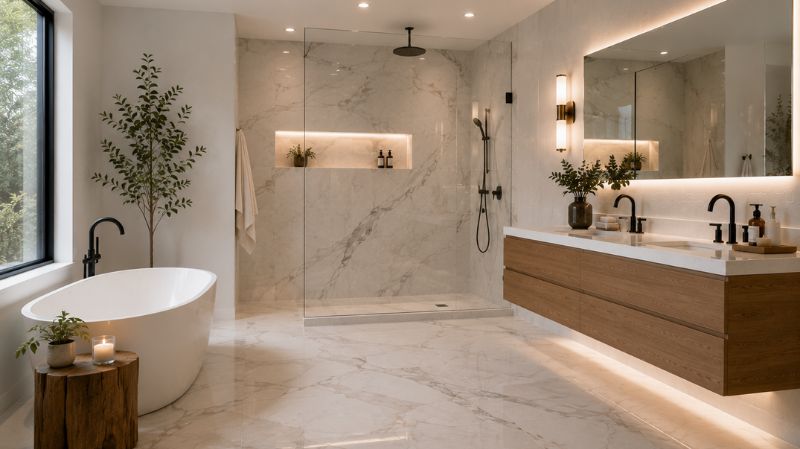
Flooring affects nearly every aspect of bathroom design.
It influences comfort, durability, maintenance, and visual flow.
Because bathrooms experience constant moisture, selecting waterproof materials should always take priority over appearance alone.
What Flooring Works Best?
Porcelain Tile
One of the most recommended materials.
Benefits:
- Waterproof
- Durable
- Easy maintenance
- Wide style selection
Luxury Vinyl Plank (LVP)
An increasingly popular option.
Advantages:
- Softer underfoot
- Water-resistant
- Affordable
- Wood appearance
Natural Stone
Creates unmatched luxury.
Popular choices include:
- Marble
- Slate
- Travertine
Requires periodic sealing but offers timeless beauty.
Ceramic Tile
Budget-friendly while remaining highly durable.
Available in thousands of colors and patterns.
Heated Flooring
Radiant heating systems are becoming more common during bathroom renovations.
Benefits include:
- Warm floors during winter
- Improved comfort
- Even heating
- Energy efficiency
- Increased home value
Many homeowners consider heated floors one of the most appreciated luxury upgrades after living with them.
Flooring Color Recommendations
For smaller bathrooms:
- Light gray
- Warm white
- Soft beige
For larger bathrooms:
- Charcoal
- Walnut-look tile
- Marble
- Slate
Maintaining consistent flooring throughout the bathroom improves visual continuity.
15. Create a Spa-Like Bathroom with Smart Accessories
Luxury isn’t always created through expensive remodeling.
Sometimes it’s the finishing touches that elevate a bathroom from ordinary to exceptional.
Thoughtfully selected accessories complete the design while improving daily comfort.
Must-Have Spa Accessories
Consider adding:
- Heated towel rack
- Plush cotton towels
- Wooden bath tray
- Essential oil diffuser
- Decorative candles
- Ceramic dispensers
- Matching storage containers
- Linen baskets
These additions create a cohesive, relaxing environment.
Keep Countertops Clutter-Free
Instead of displaying dozens of products, use:
- Decorative trays
- Drawer organizers
- Glass jars
- Closed cabinetry
Minimal surfaces always appear cleaner and more luxurious.
Layer Different Textures
Luxury bathrooms rarely rely on color alone.
Instead, designers layer:
- Stone
- Glass
- Wood
- Cotton
- Linen
- Metal
- Ceramic
Texture adds richness without overwhelming the room.
Scent Matters Too
The experience of a bathroom extends beyond appearance.
Subtle scents such as:
- Eucalyptus
- Lavender
- Cedarwood
- Vanilla
help reinforce a calming atmosphere.
Bathroom Remodel Ideas by Bathroom Size
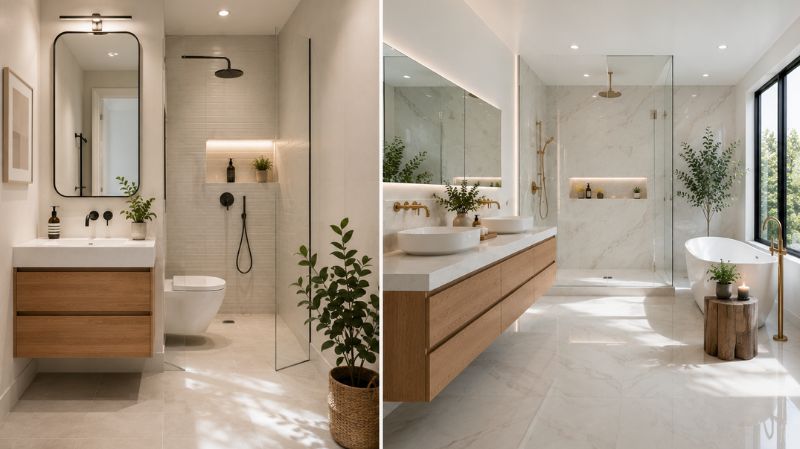
Small Bathroom Remodel Ideas
The Small bathrooms require thoughtful planning to maximize every square foot.
Best Upgrades
- Floating vanity
- Large mirror
- Frameless shower
- Pocket door
- Light paint colors
- Recessed shelving
- Wall-mounted toilet
- Large-format tiles
Designer Tip
Choose one dominant wall color throughout the room to minimize visual breaks and create a more open feel.
Medium Bathroom Remodel Ideas
Medium-sized bathrooms offer greater flexibility.
Consider adding:
- Double sinks
- Walk-in shower
- Freestanding tub
- Built-in linen cabinet
- Decorative lighting
- Accent wall
- Mixed textures
This size allows homeowners to balance functionality with aesthetics.
Large Bathroom Remodel Ideas
Large bathrooms provide opportunities for luxury features.
Popular additions include:
- Double walk-in shower
- Makeup vanity
- Dressing area
- Sitting bench
- Fireplace
- Heated floors
- Statement chandelier
- Oversized mirrors
Focus on creating defined zones to prevent the space from feeling empty.
Best Bathroom Color Schemes for Every Style
Choosing the right color palette ensures every design element works together harmoniously.
White + Natural Wood
Creates:
- Warmth
- Simplicity
- Scandinavian appeal
Perfect with oak vanities and matte black fixtures.
Sage Green + Cream
Produces a peaceful, nature-inspired atmosphere.
Pairs beautifully with:
- Brass hardware
- Marble countertops
- White subway tile
Navy Blue + Gold
A timeless luxury combination.
Works particularly well in larger bathrooms with excellent lighting.
Greige + White
One of today’s most versatile combinations.
Greige complements:
- Wood flooring
- Quartz countertops
- Black hardware
- Chrome fixtures
Soft Blue + White
Ideal for coastal homes.
Creates freshness without overwhelming the room.
Charcoal + Warm Wood
Perfect for contemporary bathrooms seeking dramatic contrast while maintaining warmth.
How to Choose the Right Vanity, Cabinets & Storage
The vanity is often the largest furniture piece in the bathroom, making it one of the biggest contributors to both functionality and style.
Floating vs Traditional Vanities
| Floating Vanity | Traditional Vanity |
| Modern appearance | Classic style |
| Easier floor cleaning | More storage capacity |
| Makes room feel larger | Hides plumbing completely |
| Great for small bathrooms | Better for family bathrooms |
Best Vanity Colors
Popular finishes include:
- White
- Soft Gray
- Natural Oak
- Walnut
- Sage Green
- Navy Blue
- Charcoal
Choose colors that coordinate with wall paint rather than competing with it.
Countertop Materials
Top recommendations:
- Quartz (best overall)
- Granite
- Marble
- Solid Surface
Quartz remains one of the most popular choices because it requires minimal maintenance while resisting stains and moisture.
Smart Storage Solutions
Maximize organization with:
- Pull-out drawers
- Built-in dividers
- Medicine cabinets
- Floating shelves
- Tall linen cabinets
- Hidden electrical outlets
- Under-sink organizers
A well-organized bathroom not only functions better but also appears larger, cleaner, and more luxurious.
Bathroom Remodel Material Guide
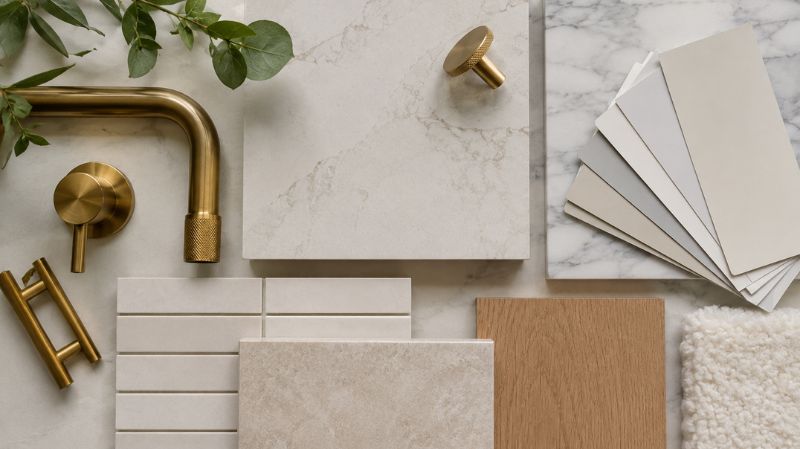
Choosing high-quality materials is just as important as selecting the right layout or color palette. Bathrooms experience constant humidity, water exposure, temperature changes, and daily wear, so investing in durable, moisture-resistant materials helps your remodel last longer while reducing maintenance.
Rather than selecting finishes based solely on appearance, think about durability, cleaning requirements, long-term value, and how each material complements your overall interior design.
Which Countertop Material Is Best for a Bathroom?
The countertop is one of the hardest-working surfaces in the room. It should resist moisture, stains, and daily use while complementing your vanity and wall colors.
| Material | Pros | Cons | Best For |
| Quartz | Non-porous, stain-resistant, low maintenance | Higher upfront cost | Most homeowners |
| Granite | Natural beauty, heat resistant | Requires sealing | Luxury bathrooms |
| Marble | Elegant, timeless | Can stain and scratch | Premium designs |
| Solid Surface | Seamless appearance, repairable | Less heat resistant | Modern bathrooms |
Designer Recommendation: Quartz remains one of the best all-around choices because it combines beauty with exceptional durability.
What Flooring Material Lasts the Longest?
Bathroom flooring must withstand water, humidity, and heavy foot traffic.
Top choices include:
- Porcelain tile
- Luxury Vinyl Plank (LVP)
- Ceramic tile
- Natural stone
For households with children or older adults, choose flooring with slip-resistant finishes for added safety.
Which Cabinet Materials Perform Best?
Cabinets should resist swelling, peeling, and moisture damage.
Recommended options include:
- Marine-grade plywood
- Solid wood with proper sealing
- Moisture-resistant MDF
- PVC cabinetry for high-humidity environments
Avoid untreated particleboard in bathrooms whenever possible, as prolonged exposure to moisture can shorten its lifespan.
What Hardware Finishes Stay Stylish?
Popular finishes that continue to perform well in modern homes include:
- Matte Black
- Brushed Nickel
- Brushed Brass
- Chrome
- Oil-Rubbed Bronze
For a cohesive look, use the same finish on faucets, shower fixtures, cabinet hardware, towel bars, and mirror frames.
Bathroom Remodeling Mistakes to Avoid
Even beautiful bathrooms can become frustrating if common remodeling mistakes are overlooked. Careful planning helps prevent expensive repairs and design regrets.
1. Ignoring Storage Needs
A bathroom with insufficient storage quickly becomes cluttered.
Plan for:
- Vanity drawers
- Linen cabinets
- Floating shelves
- Shower niches
- Medicine cabinets
Good storage improves both functionality and appearance.
2. Choosing Style Over Function
Trendy finishes may look attractive today, but practical features should always come first.
Prioritize:
- Waterproof materials
- Easy-to-clean surfaces
- Comfortable layouts
- Adequate lighting
- Efficient storage
Timeless design almost always outperforms short-lived trends.
3. Poor Lighting Planning
One ceiling fixture is rarely enough.
Instead, layer:
- Ambient lighting
- Task lighting
- Accent lighting
This creates a bathroom that feels brighter, safer, and more inviting.
4. Selecting the Wrong Paint Finish
Flat paint absorbs moisture and stains easily.
Bathrooms perform best with:
- Satin finish
- Semi-gloss finish
These finishes are easier to clean and better suited to humid conditions.
5. Forgetting Proper Ventilation
Without adequate airflow, even expensive renovations can suffer from:
- Mold
- Mildew
- Peeling paint
- Warped cabinetry
Always install an appropriately sized exhaust fan.
6. Overlooking Electrical Planning
Think about future convenience.
Consider adding:
- Extra GFCI outlets
- USB charging ports
- Heated floor controls
- Smart lighting
- Mirror defoggers
Planning ahead avoids costly changes later.
7. Following Every Trend
Some design trends fade quickly.
Instead, build your bathroom around timeless elements such as:
- Neutral wall colors
- Quality cabinetry
- Durable flooring
- Classic fixtures
Then update accessories as styles evolve.
Bathroom Remodel Cost Breakdown
One of the most common questions homeowners ask is, “How much does a bathroom remodel cost?”
The answer depends on bathroom size, materials, labor, and the scope of the renovation.
| Remodel Type | Estimated Cost |
| Cosmetic Refresh | $1,500–$5,000 |
| Budget Remodel | $5,000–$10,000 |
| Mid-Range Remodel | $10,000–$25,000 |
| Luxury Remodel | $25,000–$60,000+ |
Typical Budget Allocation
- Labor: 25–35%
- Cabinets & Vanity: 20–25%
- Plumbing Fixtures: 10–15%
- Tile & Flooring: 15–20%
- Lighting: 5–10%
- Paint & Finishes: 5%
- Accessories & Décor: Remaining budget
Money-Saving Tip: If your plumbing layout already works well, keeping fixtures in the same locations can significantly reduce renovation costs.
Typical Bathroom Remodel Timeline
Every project is different, but most full bathroom renovations follow a similar sequence.
| Phase | Estimated Time |
| Planning & Design | 1–3 Weeks |
| Material Selection | 1–2 Weeks |
| Demolition | 2–5 Days |
| Plumbing & Electrical | 3–7 Days |
| Flooring & Tile Installation | 5–10 Days |
| Painting | 2–3 Days |
| Fixture Installation | 3–5 Days |
| Final Styling & Inspection | 1–2 Days |
Planning materials in advance helps avoid delays caused by backorders or shipping issues.
Before-and-After Bathroom Styling Tips
Once construction is complete, thoughtful styling brings the room to life. Small decorative updates can make a freshly remodeled bathroom feel polished and welcoming.
Add Soft Textiles
Introduce comfort with:
- Plush towels
- Cotton bath mats
- Linen shower curtains
Choose colors that coordinate with your wall paint and accessories.
Decorate with Purpose
Rather than filling every surface, display only a few carefully selected items.
Ideas include:
- Ceramic vases
- Scented candles
- Decorative trays
- Small artwork
- Glass storage jars
Minimal décor keeps the bathroom feeling calm and uncluttered.
Layer Texture
Professional designers create visual interest by combining different materials.
Examples:
- Stone countertops
- Wooden stools
- Woven baskets
- Glass accessories
- Soft cotton towels
- Matte metal hardware
Texture adds depth without overwhelming the space.
Incorporate Greenery
A small indoor plant instantly softens hard surfaces and introduces a natural, refreshing element.
Bathroom Remodel Ideas for Different Interior Styles
Modern Bathroom
Features:
- Floating vanity
- Frameless shower
- Large-format tiles
- Neutral palette
- Matte black fixtures
Farmhouse Bathroom
Features:
- Shiplap walls
- Rustic wood vanity
- Vintage mirrors
- Black hardware
- Warm white paint
Scandinavian Bathroom
Features:
- Natural wood
- Bright whites
- Minimal décor
- Open shelving
- Functional storage
Coastal Bathroom
Features:
- Soft blues
- Sandy beige
- White cabinetry
- Woven textures
- Light oak furniture
Traditional Bathroom
Features:
- Marble countertops
- Framed mirrors
- Elegant lighting
- Chrome fixtures
- Timeless cabinetry
Industrial Bathroom
Features:
- Concrete finishes
- Black steel accents
- Exposed lighting
- Wood shelving
- Dark color palette
Sustainable Bathroom Remodeling Tips
Eco-friendly remodeling reduces environmental impact while lowering long-term utility costs.
Simple upgrades include:
- WaterSense-certified faucets and toilets
- Low-flow showerheads
- LED lighting
- VOC-free paint
- Recycled glass countertops
- Sustainably sourced wood cabinetry
- Energy-efficient exhaust fans
These improvements benefit both homeowners and the environment.
Conclusion
A successful bathroom remodel is about more than replacing old fixtures or following the latest trends—it’s about creating a space that improves your daily routine while adding lasting value to your home. Whether you’re planning a simple refresh with new paint and lighting or a complete transformation featuring a walk-in shower, custom vanity, and premium finishes, thoughtful design decisions will always deliver the best results.
The most effective bathroom remodeling ideas combine timeless aesthetics with practical functionality. Focus on durable materials, layered lighting, efficient storage, calming color palettes, and cohesive finishes to create a bathroom that feels beautiful today and remains relevant for years to come. Small upgrades such as replacing fixtures, introducing natural textures, or selecting the right wall colors can often have just as much visual impact as larger renovations.
Ready to transform your bathroom?
Start by identifying the upgrades that will have the greatest impact—whether it’s choosing a fresh paint color, installing a modern vanity, improving lighting, or planning a complete renovation. Save your favorite ideas, create a realistic budget, and build a design plan that reflects your lifestyle and complements the rest of your home.
With thoughtful planning and the right materials, your dream bathroom is closer than you think.
Frequently Asked Questions
1. What is the average cost of a bathroom remodel?
Most homeowners spend between $10,000 and $25,000 for a mid-range bathroom remodel, although smaller cosmetic updates can cost much less and luxury renovations can exceed $60,000.
2. Which bathroom remodel adds the most value?
Upgrading the vanity, walk-in shower, lighting, storage, and moisture-resistant finishes typically provides the best combination of everyday functionality and resale appeal.
3. Can I remodel a bathroom on a budget?
Yes. Painting walls, replacing hardware, upgrading mirrors, installing floating shelves, refreshing lighting, and updating accessories are affordable bathroom remodeling ideas that can dramatically improve the appearance of your space.
4. What paint colors make a bathroom look bigger?
Soft white, warm greige, pale gray, light beige, and muted blue reflect more light, helping small bathrooms feel larger and more open.
5. What flooring is best for bathrooms?
Porcelain tile remains one of the best options because it is waterproof, durable, easy to maintain, and available in a wide range of styles.
6. How long does a bathroom renovation usually take?
Most complete bathroom renovations take two to six weeks, depending on the complexity of the project, material availability, and contractor schedules.
7. Should I replace my bathtub with a walk-in shower?
If you rarely use your bathtub and prioritize accessibility or a modern appearance, a walk-in shower can be an excellent investment. However, homes with only one bathroom often benefit from retaining at least one bathtub for resale appeal.
8. Which lighting is best for bathrooms?
Layered lighting works best. Combine ambient ceiling lighting, task lighting around the vanity, and accent lighting to create a functional and inviting space.
9. How do I make a small bathroom feel more spacious?
Use light paint colors, large mirrors, floating vanities, frameless glass showers, large-format tiles, and streamlined storage to maximize the perception of space.
10. What are the biggest bathroom remodeling trends today?
Some of the most popular trends include bathroom renovation ideas such as walk-in showers, floating vanities, large-format tiles, spa-inspired interiors, warm neutral paint colors, sustainable materials, smart storage, and energy-efficient fixtures.