
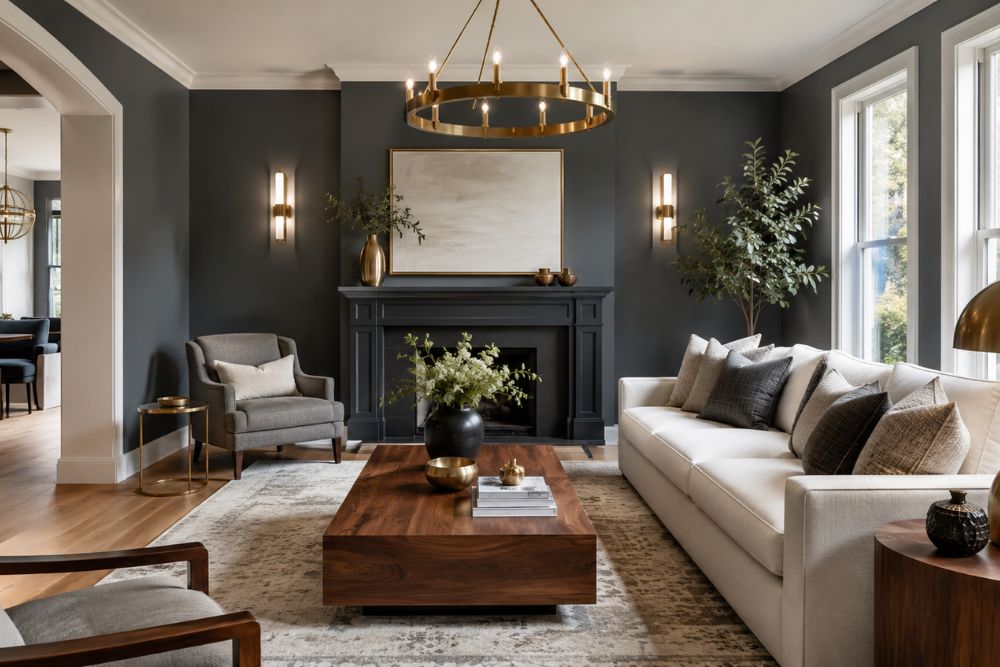
Charcoal color is a rich, dark gray shade with subtle black undertones. If you’re wondering what does the color charcoal look like, picture a deep, sophisticated gray that brings depth and timeless appeal to both interiors and exteriors. Homeowners commonly use charcoal on walls, kitchen cabinets, front doors, and exterior siding because it pairs effortlessly with white trim, natural wood, stone, and modern décor styles.
Whether you’re designing a cozy bedroom, a dramatic living room, or a striking home exterior, charcoal gray offers one of the most versatile and designer-approved neutral palettes available today.
Dark neutrals continue to dominate residential design trends, and charcoal remains one of the most searched paint categories due to its ability to feel both contemporary and classic. Unlike pure black, charcoal delivers contrast without overwhelming a space, making it a practical choice for modern homes.
What Is Charcoal Color?
Charcoal color is a deep shade of gray inspired by the appearance of burned wood charcoal. It typically contains black, blue, or subtle brown undertones depending on the paint manufacturer and lighting conditions.
In interior design, charcoal has become a favorite because it acts as a “soft black”—adding drama while remaining highly livable.
Common Charcoal Color Specifications
| Feature | Details |
| Color Family | Gray |
| Common HEX Code | #36454F |
| RGB | 54, 69, 79 |
| Approximate LRV | 5–10 |
| Undertones | Blue, Green, Brown, Neutral |
| Best Uses | Walls, Cabinets, Doors, Exteriors |
| Design Styles | Modern, Industrial, Farmhouse, Contemporary |
| Pairs With | White, Beige, Wood, Brass, Sage |
Is Charcoal Gray or Black?
This is one of Google’s most frequently asked questions.
Charcoal Gray sits between dark gray and black. It appears black in dim lighting but reveals its gray undertones in daylight. That subtle distinction is why designers often choose charcoal over black for residential spaces.
Think of it this way:
- Black creates maximum contrast.
- Charcoal creates softer contrast.
- Dark gray creates subtle contrast.
For most homes, charcoal strikes the perfect balance.
What Does Charcoal Color Look Like?
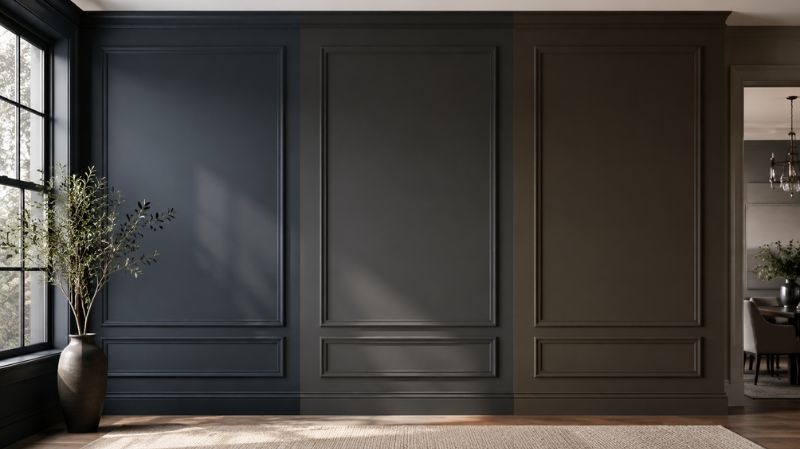
Charcoal looks like a smoky, deep gray with a slightly muted appearance. Depending on undertones, it may appear:
- Cool and blue-gray.
- Warm with brown hints.
- Neutral and balanced.
- Nearly black in shadowed spaces.
Natural light dramatically affects charcoal paint. South-facing rooms often make charcoal appear lighter, while north-facing rooms emphasize cooler undertones.
Designer Tip: Always test charcoal paint on multiple walls before committing. Observe it during morning, afternoon, and evening hours.
Quick Comparison Table: Charcoal vs Similar Colors
| Color | Appearance | Best Use |
| Charcoal | Dark gray with depth | Walls, exteriors |
| Black | Deepest neutral | Accent pieces |
| Graphite | Cooler gray | Offices |
| Slate | Blue-gray | Bathrooms |
| Iron Ore | Warm charcoal | Exteriors |
| Kendall Charcoal | Classic dark gray | Living rooms |
| Graphic Charcoal Paint | Rich neutral gray | Feature walls |
Why Is Charcoal Color So Popular in Interior Design?
Charcoal’s popularity isn’t accidental.
According to annual paint trend reports from major brands such as Sherwin-Williams, Benjamin Moore, and Behr, dark neutrals have consistently remained among the top choices for homeowners over the past decade. Designers appreciate charcoal because it complements both traditional and modern aesthetics.
Why Homeowners Love Charcoal
- Timeless appearance.
- Works with warm and cool palettes.
- Adds visual depth.
- Enhances architectural details.
- Hides minor wall imperfections.
- Creates luxury without excessive cost.
A gallon of premium charcoal paint can completely transform a room for less than the cost of replacing furniture, making it one of the highest-return home improvement projects.
What Does Charcoal Color Mean?
Color psychology plays a significant role in how a room feels.
Charcoal is associated with:
- Sophistication.
- Stability.
- Strength.
- Mystery.
- Elegance.
- Confidence.
Unlike bright colors that energize a room, charcoal creates a sense of calm and groundedness.
How Does Charcoal Affect Mood?
When used correctly, charcoal can make spaces feel:
- Cozy.
- Relaxing.
- Luxurious.
- Intimate.
- Welcoming.
This is why charcoal is increasingly used in:
- Bedrooms.
- Reading nooks.
- Home offices.
- Dining rooms.
- Media rooms.
Psychologically, darker colors help create visual enclosure, which many people perceive as comforting.
Is Charcoal a Warm or Cool Color?
The answer depends on undertones.
| Undertone | Appearance |
| Blue | Cool and modern |
| Brown | Warm and inviting |
| Green | Earthy and balanced |
| Neutral | Versatile and timeless |
Sherwin-Williams Iron Ore, for example, leans warm, while some slate-inspired charcoals feel noticeably cooler.
Understanding undertones is essential when selecting:
- Flooring.
- Furniture.
- Wall art.
- Cabinet finishes.
- Lighting.
Authority Corner: What Experts Say About Dark Paint Colors
Several studies in environmental psychology suggest that darker environments can promote feelings of comfort, focus, and relaxation when balanced with sufficient lighting and contrasting materials.
Additionally, reports from leading paint manufacturers continue to highlight dark neutrals among their best-selling categories for residential applications. The growing popularity of modern farmhouse, Scandinavian, industrial, and contemporary architecture has further increased demand for charcoal-based palettes.
Design professionals frequently recommend using dark paint strategically rather than excessively. Pairing charcoal with natural wood, layered textures, and reflective surfaces helps prevent interiors from feeling heavy.
This approach aligns with current home design trends emphasizing:
- Warm minimalism.
- Organic modern design.
- Layered neutrals.
- Sustainable materials.
- High-contrast interiors.
What Colors Go With Charcoal?
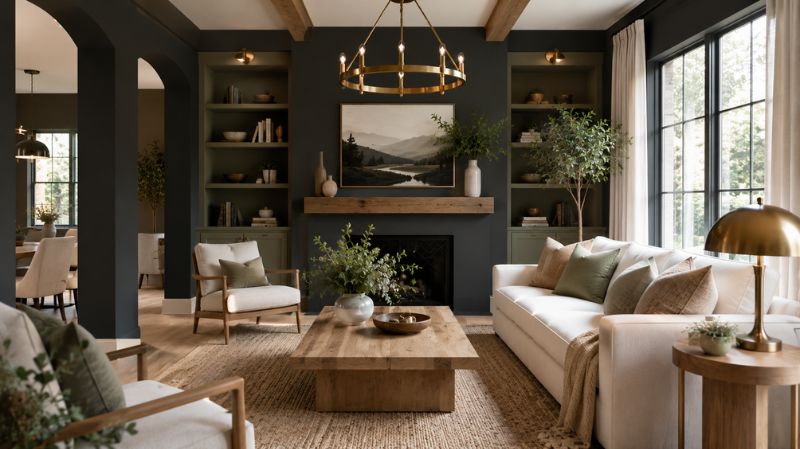
One reason charcoal paint color continues to rank among homeowner favorites is its exceptional versatility.
Charcoal and White
This is arguably the most timeless combination.
Examples include:
- Charcoal walls with white trim.
- Charcoal exteriors with white windows.
- White furniture against charcoal backgrounds.
The contrast feels clean, elegant, and universally appealing.
Charcoal and Natural Wood
Wood introduces warmth and texture.
Best wood pairings include:
- White oak.
- Walnut.
- Cedar.
- Maple.
- Reclaimed wood.
This combination works particularly well in:
- Farmhouse homes.
- Scandinavian interiors.
- Coastal spaces.
- Transitional designs.
Charcoal and Sage Green
Sage green softens charcoal’s boldness while introducing a connection to nature.
Popular applications include:
- Sage sofas.
- Indoor plants.
- Painted cabinetry.
- Decorative pillows.
Charcoal and Beige
Beige creates balance.
Together, they produce an inviting palette that feels both modern and approachable.
Charcoal and Brass
Brass accents continue to trend in kitchens and bathrooms.
Consider adding:
- Brass cabinet pulls.
- Pendant lighting.
- Picture frames.
- Faucets.
The metallic warmth creates a luxury-inspired aesthetic.
Best Charcoal Color Combinations for Homes
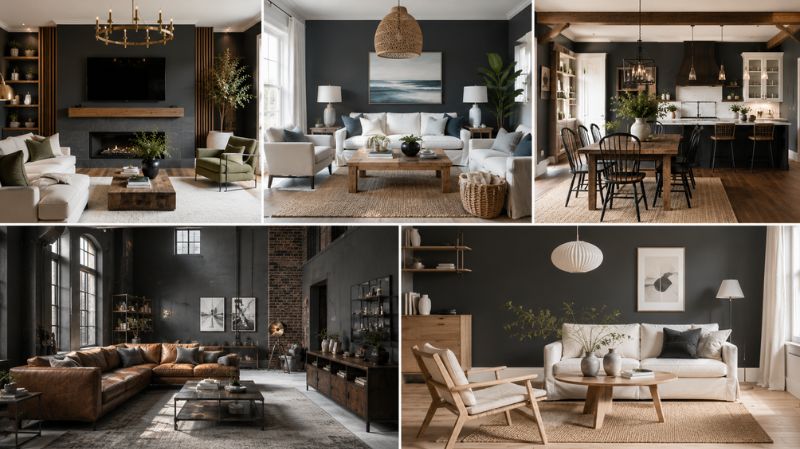
Modern Palette
- Charcoal
- Pure White
- Black
- Walnut
- Brass
Coastal Palette
- Charcoal Gray
- Soft White
- Seafoam Green
- Light Oak
- Sandy Beige
Farmhouse Palette
- Charcoal Paint Color
- Cream
- Reclaimed Wood
- Matte Black
- Linen
Industrial Palette
- Graphic Charcoal Paint
- Concrete Gray
- Steel
- Leather Brown
- Matte Black
Scandinavian Palette
- Charcoal
- White Oak
- Warm White
- Taupe
- Soft Gray
Which Colors Should You Avoid With Charcoal?
Although charcoal works with most colors, some combinations can feel overwhelming.
Avoid using too much:
- Dark navy.
- Deep purple.
- Dark brown.
- Multiple blacks.
- Heavy maroons.
Without contrast, rooms may feel visually smaller and less inviting.
Better Alternatives
Instead of pairing charcoal with another dark shade, consider:
- Cream.
- Ivory.
- Pale gray.
- Natural wood.
- Muted greens.
- Soft blues.
Real-Life Example: A Charcoal Living Room Transformation
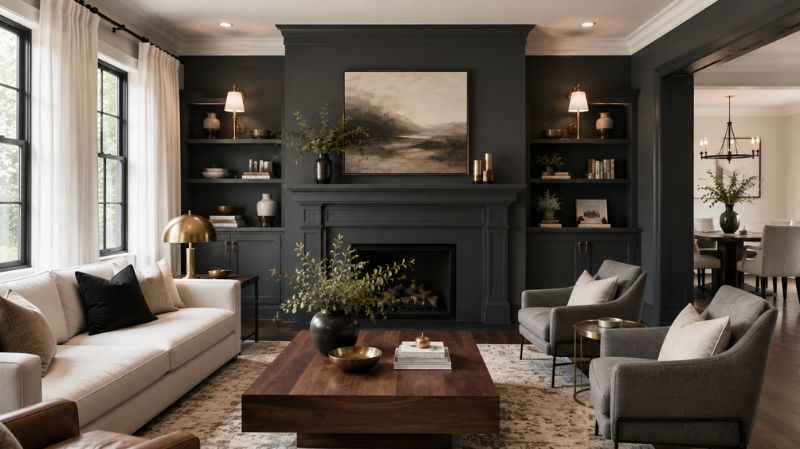
A homeowner renovating a 1990s suburban home wanted to modernize their living room without replacing existing furniture.
The room originally featured beige walls, dark hardwood floors, and white trim. Rather than investing thousands in new furnishings, they painted the fireplace wall in charcoal and added:
- Two brass sconces.
- White linen curtains.
- A walnut coffee table.
- Neutral textured pillows.
The result was dramatic.
For less than $500 in paint and accessories, the room gained a more contemporary and luxurious appearance. Guests frequently assumed the entire space had undergone a full renovation.
This example illustrates why charcoal remains one of the most cost-effective upgrades in residential design.
What Are the Best Uses for Charcoal Walls?
Charcoal walls have become increasingly popular because they add depth without sacrificing versatility. Unlike lighter neutrals, charcoal creates an intentional design statement and instantly elevates a room.
The key is balance.
Interior designers typically recommend pairing dark walls with:
- White ceilings.
- Adequate lighting.
- Layered textures.
- Reflective surfaces.
- Natural materials.
When these elements work together, charcoal feels sophisticated rather than overwhelming.
Should You Paint an Entire Room Charcoal?
Yes—but only under the right conditions.
A room painted entirely in charcoal can feel:
- Cozy.
- Dramatic.
- Luxurious.
- Intimate.
However, consider these factors first:
| Room Feature | Recommendation |
| Large Windows | Excellent choice |
| Small Room | Use one accent wall |
| Low Ceilings | Pair with white ceilings |
| Dark Flooring | Add lighter furniture |
| Minimal Natural Light | Use carefully |
For many homeowners, an accent wall provides the best introduction to charcoal.
Which Rooms Look Best With Charcoal Walls?
Charcoal performs exceptionally well in:
- Living rooms.
- Bedrooms.
- Dining rooms.
- Home offices.
- Entryways.
- Powder rooms.
- Media rooms.
Spaces that benefit from warmth and intimacy are ideal candidates for darker paint colors.
Designer Tip: North-facing rooms often make charcoal appear cooler. Test paint samples before painting an entire room.
How Do You Decorate a Living Room With Charcoal Walls?
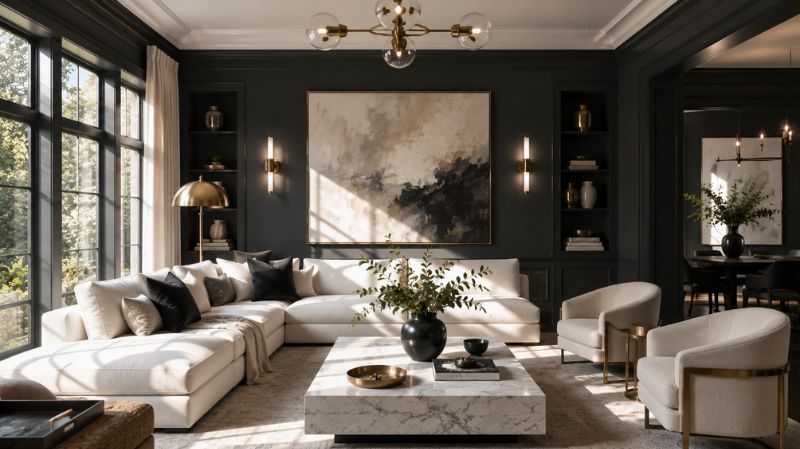
The living room is one of the most popular spaces for charcoal paint.
Dark walls naturally draw attention to:
- Fireplaces.
- Artwork.
- Built-in shelving.
- Architectural molding.
- Large windows.
This is why many designers use charcoal around fireplace surrounds or entertainment centers.
Best Furniture for Charcoal Living Rooms
Furniture choices can make or break a charcoal space.
Recommended Furniture Colors
- White.
- Ivory.
- Camel leather.
- Light gray.
- Beige.
- Walnut.
- Oak.
Materials That Work Best
- Linen.
- Velvet.
- Leather.
- Wood.
- Marble.
- Brass.
A charcoal backdrop allows furniture to become more prominent without competing for attention.
Charcoal Living Room Styling Ideas
Modern Style
- Charcoal accent wall.
- White sectional.
- Black metal coffee table.
- Minimal artwork.
Farmhouse Style
- Charcoal Gray walls.
- Reclaimed wood mantel.
- Cream upholstery.
- Woven baskets.
Contemporary Style
- Matte black lighting.
- Walnut furniture.
- White drapery.
- Brass accents.
Industrial Style
- Exposed brick.
- Graphic Charcoal Paint.
- Steel shelving.
- Leather seating.
What Is the Best Lighting for Charcoal Walls?
Lighting is critical when using dark paint.
Experts recommend layering:
- Ambient lighting.
- Task lighting.
- Accent lighting.
Some excellent choices include:
- Wall sconces.
- Pendant lights.
- Recessed lighting.
- Floor lamps.
- Picture lights.
Warm LED bulbs (2700K–3000K) generally produce the most flattering appearance on charcoal walls.
Is Charcoal a Good Color for Bedrooms?
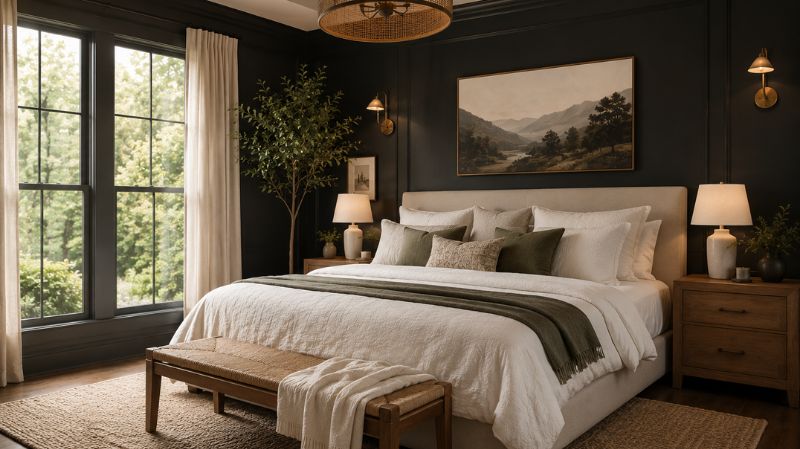
Absolutely, bedrooms are naturally suited to darker colors because they are intended to promote relaxation and rest.
Charcoal creates a cocoon-like effect that many homeowners find calming.
Benefits of Charcoal Bedrooms
- Improved visual comfort.
- Greater sense of warmth.
- Enhanced contrast.
- Better sleep environment.
- Luxurious appearance.
Dark colors also soften harsh daylight, particularly in rooms with large windows.
How Can You Style a Charcoal Bedroom?
A successful charcoal bedroom relies heavily on texture.
Consider incorporating:
- Chunky knit throws.
- Linen bedding.
- Upholstered headboards.
- Layered rugs.
- Wood furniture.
Recommended Bedding Colors
| Wall Color | Best Bedding |
| Charcoal | White |
| Charcoal | Ivory |
| Charcoal | Taupe |
| Charcoal | Soft Blue |
| Charcoal | Sage Green |
White bedding against charcoal walls remains one of the most timeless combinations in residential design.
What Design Styles Work Best in Charcoal Bedrooms?
Organic Modern
- Oak furniture.
- Neutral textiles.
- Minimal décor.
- Indoor plants.
Scandinavian
- White bedding.
- Light wood.
- Simple artwork.
- Soft textures.
Luxury Contemporary
- Brass lighting.
- Velvet pillows.
- Marble side tables.
- Dark wood flooring.
Minimalist
- Monochromatic palette.
- Limited décor.
- Clean lines.
- Hidden storage.
Can You Use Charcoal in Small Bedrooms?
Yes, this is one of the biggest misconceptions about dark paint.
While many assume dark colors make rooms feel smaller, well-designed charcoal rooms often feel more intentional and expansive.
To maximize space:
- Use white ceilings.
- Install mirrors.
- Keep furniture streamlined.
- Introduce layered lighting.
- Limit clutter.
Many designers intentionally use dark paint to blur room boundaries, creating visual depth.
Why Is Charcoal Popular in Kitchens?
Kitchens have shifted dramatically over the past decade.
All-white kitchens remain popular, but homeowners increasingly want contrast.
Enter charcoal.
Charcoal Paint Color works beautifully on:
- Cabinets.
- Islands.
- Walls.
- Open shelving.
- Pantry doors.
It provides sophistication while remaining practical.
Are Charcoal Kitchen Cabinets a Good Idea?
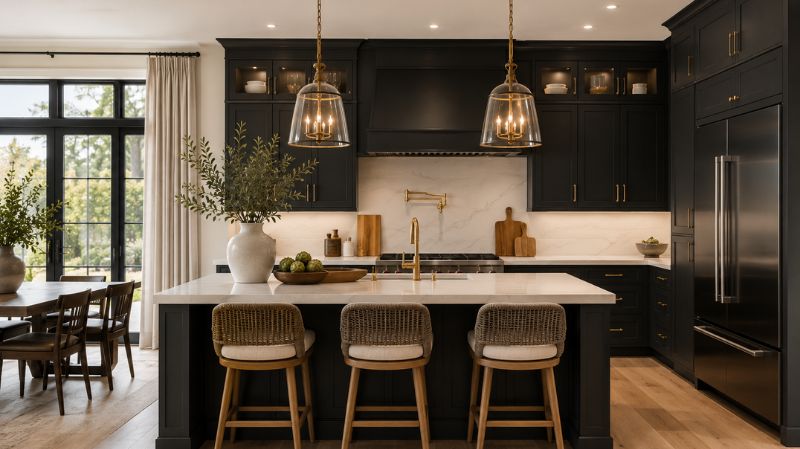
Yes, especially when paired with lighter elements.
Best Pairings for Charcoal Cabinets
- White quartz.
- Marble countertops.
- Brass hardware.
- Light oak flooring.
- White subway tile.
This combination creates a balanced kitchen that feels modern and timeless.
Top Cabinet Colors That Pair With Charcoal
| Cabinet Color | Countertop Recommendation |
| Charcoal | White Quartz |
| Charcoal | Marble |
| Charcoal | Butcher Block |
| Charcoal | Light Granite |
Sherwin-Williams Iron Ore and Behr’s Graphic Charcoal Paint continue to be among the most popular cabinet choices for homeowners seeking a bold yet neutral appearance.
Should You Paint a Kitchen Island Charcoal?
If you’re hesitant about dark cabinets, start with the island.
A charcoal island serves as:
- A focal point.
- A visual anchor.
- A statement piece.
Popular island combinations include:
- White perimeter cabinets.
- Charcoal island.
- Brass pendants.
- Quartz countertops.
This approach introduces contrast without overwhelming the room.
How Does Graphic Charcoal Paint Perform in Kitchens?
Graphic Charcoal Paint has gained popularity due to its balanced undertones and versatility.
Homeowners frequently use it on:
- Kitchen islands.
- Lower cabinets.
- Pantry doors.
- Accent walls.
Its muted appearance works especially well with:
- Matte finishes.
- Natural wood.
- Black fixtures.
- White countertops.
Many designers recommend matte or eggshell finishes for walls and satin finishes for cabinetry to improve durability.
Can You Use Charcoal in Bathrooms?
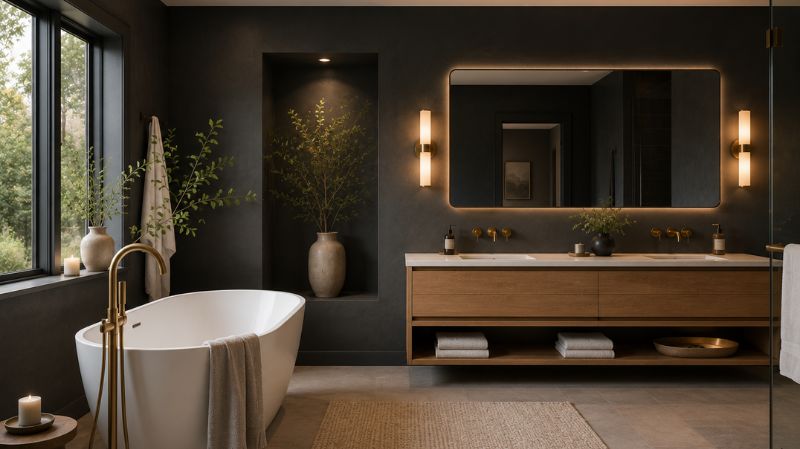
Bathrooms are one of the most underrated spaces for charcoal.
Smaller spaces can handle darker colors exceptionally well because they naturally create intimacy.
Charcoal works beautifully with:
- White tile.
- Brass fixtures.
- Floating vanities.
- Glass shower doors.
- Stone countertops.
Best Charcoal Bathroom Ideas
Spa-Inspired Bathroom
- Charcoal walls.
- White freestanding tub.
- Natural wood vanity.
- Soft lighting.
Modern Bathroom
- Matte black fixtures.
- Charcoal Gray walls.
- Frameless mirrors.
- Concrete accents.
Transitional Bathroom
- White subway tile.
- Charcoal vanity.
- Brass hardware.
- Marble countertop.
Is Charcoal Good for Small Bathrooms?
Yes, powder rooms are particularly well suited to bold paint choices.
Because these spaces are used for shorter periods, homeowners can comfortably experiment with dramatic colors.
To make a small bathroom feel larger:
- Use oversized mirrors.
- Install bright sconces.
- Choose floating vanities.
- Incorporate glass elements.
Can Charcoal Work in Open Floor Plans?
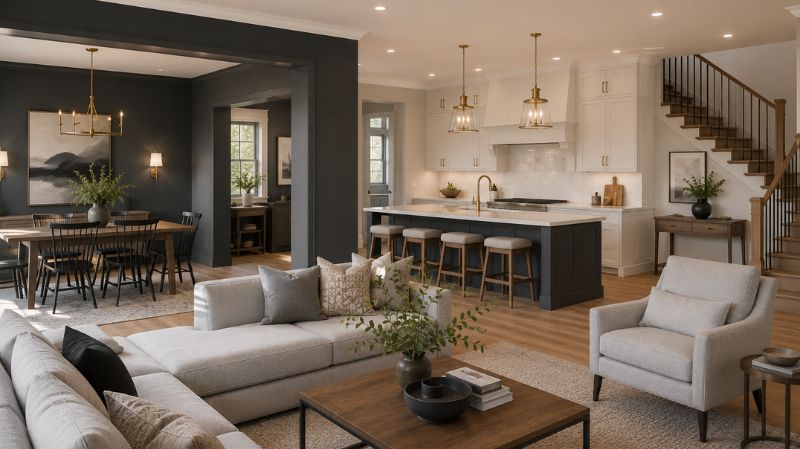
Open floor plans benefit significantly from strategic use of charcoal.
Rather than painting every wall the same color, use charcoal to define individual spaces.
Examples Include
- Dining room walls.
- Kitchen islands.
- Reading corners.
- Fireplace surrounds.
- Built-in shelving.
This technique creates subtle visual separation while maintaining flow.
How Should You Use Charcoal in Open Spaces?
A popular strategy involves combining:
- Charcoal.
- Soft gray.
- Warm white.
- Natural wood.
- Black accents.
For example:
| Area | Suggested Color |
| Kitchen | Warm White |
| Dining Area | Charcoal |
| Living Room | Light Gray |
| Entryway | Charcoal Accent |
| Hallway | Soft White |
This layered approach keeps open-concept homes visually interesting.
Room-by-Room Charcoal Checklist
Before committing to charcoal, ask yourself:
Living Room
- Do I have enough natural light?
- Will my furniture provide contrast?
Bedroom
- Am I aiming for a cozy atmosphere?
- Do I have layered lighting?
Kitchen
- Will my countertops brighten the space?
- Are my cabinets receiving enough light?
Bathroom
- Can mirrors increase brightness?
- Is ventilation adequate?
Exterior
- Will charcoal complement my roof and landscaping?
Answering these questions can help homeowners avoid costly repainting mistakes.
Is Charcoal a Good Exterior House Color?
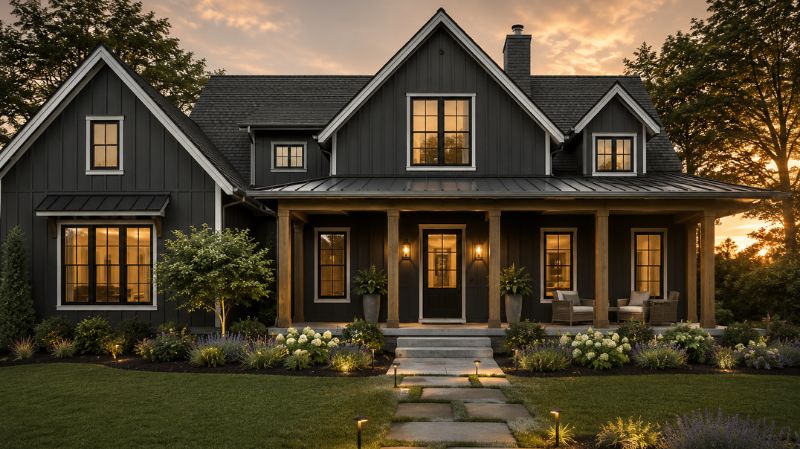
Yes. Charcoal has become one of the most desirable exterior paint colors because it offers a sophisticated appearance that complements nearly every architectural style.
From modern farmhouses to contemporary homes, charcoal creates curb appeal while maintaining a timeless aesthetic.
According to industry trend reports from leading paint manufacturers, dark exterior colors have consistently remained among the fastest-growing residential paint categories over the last several years. Homeowners are increasingly choosing dark neutrals over traditional beige and tan exteriors because they provide stronger contrast and a more custom appearance.
Which Home Styles Work Best With Charcoal?
Charcoal exteriors work particularly well on:
- Modern homes
- Farmhouses
- Craftsman homes
- Scandinavian-inspired homes
- Industrial-style homes
- Transitional homes
- Coastal homes with white trim
A charcoal exterior can feel bold without appearing trendy, making it a safe long-term investment for homeowners.
What Are the Best Charcoal Exterior Color Combinations?
The secret to a successful charcoal exterior is contrast.
Charcoal + White Trim
This remains the most popular combination because it creates a clean and timeless appearance.
Best for:
- Farmhouses
- Colonial homes
- Contemporary architecture
Charcoal + Natural Wood
Natural cedar and oak soften the darkness of charcoal and introduce warmth.
Examples include:
- Cedar porch columns
- Wood garage doors
- Natural shutters
- Timber beams
Charcoal + Stone
Stone adds texture and visual interest.
Popular choices include:
- Limestone
- Stacked stone
- Slate
- Fieldstone
Charcoal + Black Accents
For a modern look, combine charcoal siding with:
- Black windows
- Matte black lighting
- Black gutters
Pro Tip: Add landscaping with ornamental grasses and evergreen shrubs to soften a dark exterior palette.
Should You Paint Your Front Door Charcoal?
Absolutely, If painting your entire home feels like too much commitment, start with the front door.
A charcoal front door:
- Adds instant curb appeal.
- Works with brick and siding.
- Hides dirt better than white.
- Creates a modern focal point.
Graphic Charcoal Paint is particularly well-suited for front doors because of its rich neutral undertones.
Front Door Color Pairings
| Exterior Color | Door Recommendation |
| White | Charcoal |
| Brick Red | Charcoal |
| Beige | Charcoal |
| Navy | Charcoal |
| Light Gray | Charcoal |
What Are the Best Charcoal Paint Colors?
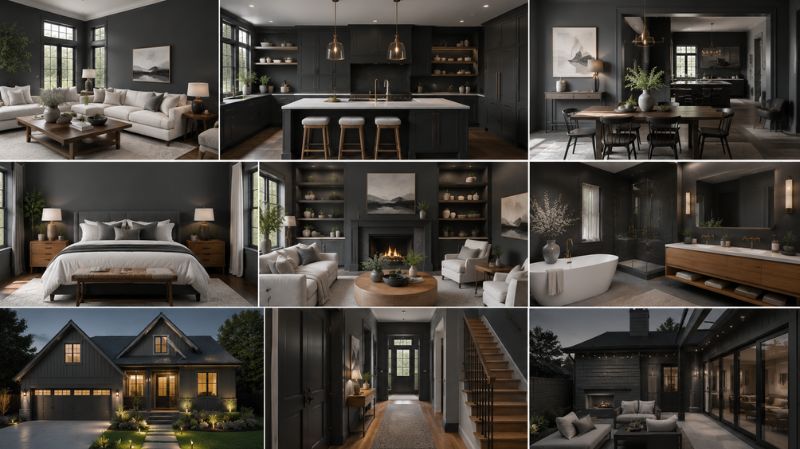
Not all charcoal paints are created equal.
Undertones vary significantly between brands, making sample testing essential.
Sherwin-Williams
Iron Ore (SW 7069)
- Warm charcoal.
- Excellent for exteriors.
- Popular for cabinets.
Peppercorn (SW 7674)
- Balanced charcoal.
- Great for accent walls.
- Works in modern homes.
Cyberspace (SW 7076)
- Deep blue-charcoal.
- Ideal for dramatic interiors.
Benjamin Moore
Kendall Charcoal (HC-166)
- Classic dark gray.
- Timeless appeal.
- Suitable for living rooms.
Wrought Iron (2124-10)
- Near-black appearance.
- Popular for front doors.
- Exceptional on cabinetry.
Behr
Graphic Charcoal Paint (N500-6)
Graphic Charcoal Paint has become a favorite among homeowners because it captures the feeling of a cool evening while maintaining enough softness to remain inviting.
Its strengths include:
- Balanced undertones.
- Excellent versatility.
- Strong contrast with white trim.
- Compatibility with wood tones.
Best applications:
- Entryways
- Hallways
- Fireplace walls
- Bedrooms
- Kitchen cabinets
- Front doors
Cracked Pepper
- One of Behr’s trending dark colors.
- Slightly softer than black.
- Excellent for modern interiors.
Charcoal vs Similar Colors: What’s the Difference?
Many homeowners confuse charcoal with other dark neutrals.
Charcoal vs Graphite
| Feature | Charcoal | Graphite |
| Undertones | Neutral | Cool |
| Appearance | Softer | Slightly metallic |
| Best Use | Homes | Offices |
Charcoal vs Slate
Slate tends to have stronger blue undertones, making it ideal for bathrooms and coastal interiors.
Charcoal is more versatile and works throughout the home.
Charcoal vs Black
Black:
- Maximum contrast.
- More dramatic.
- Less forgiving.
Charcoal:
- Softer appearance.
- Easier to decorate with.
- Better for large surfaces.
Charcoal vs Dark Gray
Dark gray is a broad category.
Charcoal is a specific subset of dark gray characterized by its smoky, almost-black appearance.
Is Charcoal Still in Style in 2026?
Without question.
Design trends continue to evolve, but charcoal remains remarkably resilient because it functions as a foundational neutral.
Why Charcoal Continues to Trend
- Supports modern design.
- Complements natural materials.
- Works indoors and outdoors.
- Pairs with trending colors.
- Offers timeless appeal.
Current trends favor:
- Organic modern interiors.
- Warm minimalism.
- Layered neutrals.
- Sustainable materials.
- High-contrast exteriors.
Charcoal fits naturally into each of these categories.
What Mistakes Should You Avoid When Using Charcoal?
Even the best paint color can fail if used incorrectly.
Mistake 1: Ignoring Lighting
Always test samples throughout the day.
Charcoal can appear:
- Blue.
- Brown.
- Green.
- Nearly black.
Mistake 2: Using Too Many Dark Elements
Balance is essential.
Avoid combining:
- Charcoal walls.
- Black furniture.
- Dark floors.
- Heavy curtains.
Instead, introduce:
- White accents.
- Mirrors.
- Natural textures.
Mistake 3: Forgetting Texture
Texture prevents charcoal rooms from feeling flat.
Add:
- Linen.
- Velvet.
- Wood.
- Woven baskets.
- Rugs.
Mistake 4: Skipping Paint Samples
Paint swatches are inexpensive compared to repainting an entire room.
Most designers recommend testing at least three charcoal options before making a final decision.
Conclusion
Charcoal is more than just a paint color—it’s a design tool capable of transforming ordinary spaces into sophisticated environments. Its versatility allows it to move seamlessly from cozy bedrooms and dramatic living rooms to statement-making kitchens and timeless exteriors.
Whether you choose Charcoal Gray for an accent wall, Graphic Charcoal Paint for cabinetry, or a classic charcoal exterior with white trim, this dark neutral delivers elegance without feeling overpowering. It adapts to changing trends, complements virtually every decorating style, and provides homeowners with an affordable way to elevate their spaces.
The most successful charcoal interiors balance darkness with warmth through thoughtful use of lighting, texture, furniture, and natural materials. When paired with wood tones, layered textiles, and contrasting accents, charcoal becomes one of the most livable and enduring colors available.
Before committing to any paint color, purchase samples and observe them throughout the day. Morning, afternoon, and evening light can dramatically influence how charcoal appears in your home.
Start small if you’re hesitant:
- Paint a fireplace wall.
- Update a front door.
- Refresh a kitchen island.
- Transform a powder room.
- Add charcoal cabinetry.
Frequently Asked Questions
1. Is charcoal a warm or cool color?
Charcoal can be either warm or cool depending on its undertones. Blue undertones feel cooler, while brown undertones feel warmer.
2. Does charcoal go with white?
Yes. Charcoal and white are one of the most timeless and popular color combinations in residential design.
3. Is Charcoal Gray darker than graphite?
Typically, yes. Charcoal Gray often appears deeper and softer than graphite.
4. Is charcoal good for exterior siding?
Absolutely. Charcoal performs exceptionally well on siding, particularly when paired with white trim and natural wood accents.
5. Which paint brand makes the best charcoal color?
Sherwin-Williams Iron Ore, Benjamin Moore Kendall Charcoal, and Graphic Charcoal Paint by Behr are among the most recommended options.
6. Can charcoal make a room look smaller?
It can, but proper lighting, mirrors, and contrast can actually make rooms feel more intentional and spacious.
7. What flooring works best with charcoal walls?
Light oak, white oak, walnut, and natural wood flooring pair beautifully with charcoal interiors.
8. Is charcoal replacing black in interior design?
Many designers prefer charcoal because it provides similar drama while feeling softer and more approachable.
9. What trim color works best with charcoal?
White, cream, and soft off-white trim remain the most popular choices.
10. Is Graphic Charcoal Paint suitable for cabinets?
Yes. Graphic Charcoal Paint performs exceptionally well on kitchen cabinets, islands, and bathroom vanities.


