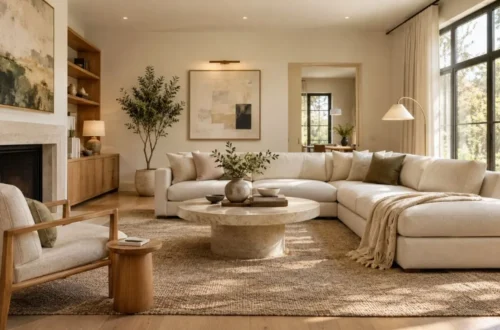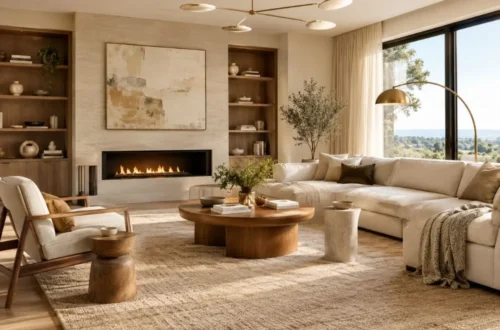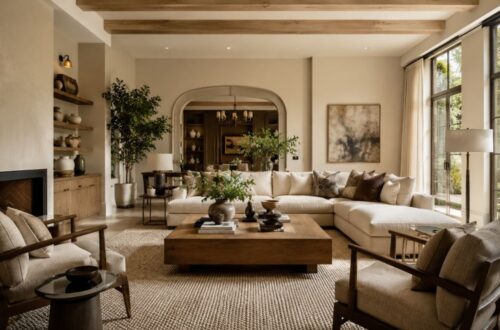
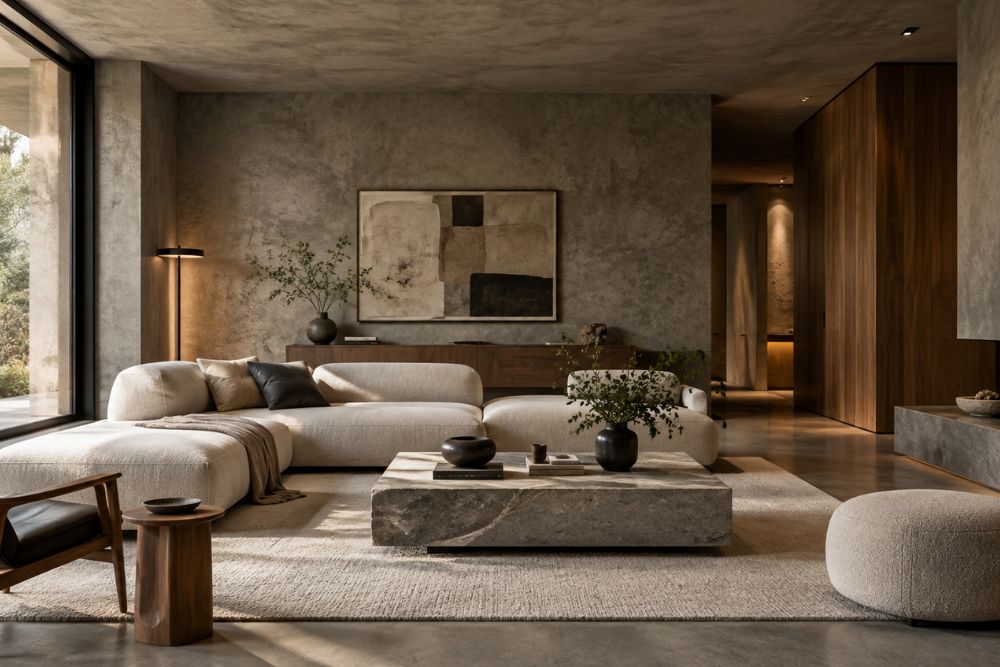
Brutalist interior design brings raw materials, bold geometric forms, sculptural furniture, and restrained colors into the home to create spaces that feel architectural rather than overly decorated. While concrete is strongly associated with the style, a successful modern brutalist interior also uses wood, stone, metal, textiles, natural light, and carefully chosen wall colors to make the space comfortable and livable.
To create a brutalist interior, focus on exposed or concrete-look surfaces, strong geometric furniture, natural stone, blackened metal, muted wall colors, architectural lighting, and plenty of negative space. For a warmer residential look, balance concrete and steel with walnut or oak, linen, wool, leather, plants, and warm lighting.
What Is Brutalist Interior Design?
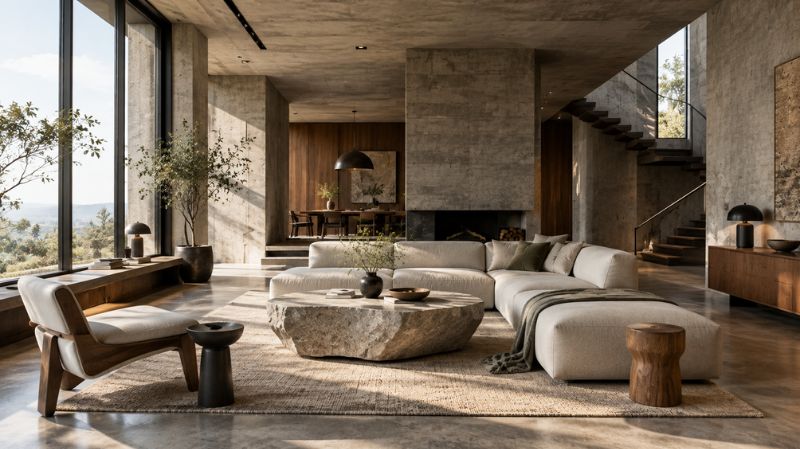
Brutalist interior design takes inspiration from Brutalist architecture, a movement that developed after World War II and became particularly associated with raw concrete, expressive structure, geometric forms, and an emphasis on materials and construction. The Royal Institute of British Architects traces important early developments to Le Corbusier’s late-1940s work and the Smithsons’ use of the term “New Brutalism” in the 1950s.
The word is connected with the French béton brut, meaning raw concrete. However, Brutalism is not simply a decorating style based on gray walls. Historically, it involved a broader architectural attitude toward structure, materials, function, scale, and construction.
In a home, that philosophy can translate into raw concrete, stone, timber, steel, textured plaster, sculptural furniture, and restrained decoration. The goal is to let materials, proportions, light, and form create visual interest instead of relying on layers of ornament.
Modern residential interpretations are often softer than their architectural predecessors. Warm wood, natural textiles, earthy colors, plants, and layered lighting can make a brutalist home interior feel comfortable without losing its distinctive character.
15 Brutalist Interior Design Ideas for a Modern Home
1. Create a Concrete or Concrete-Look Feature Wall
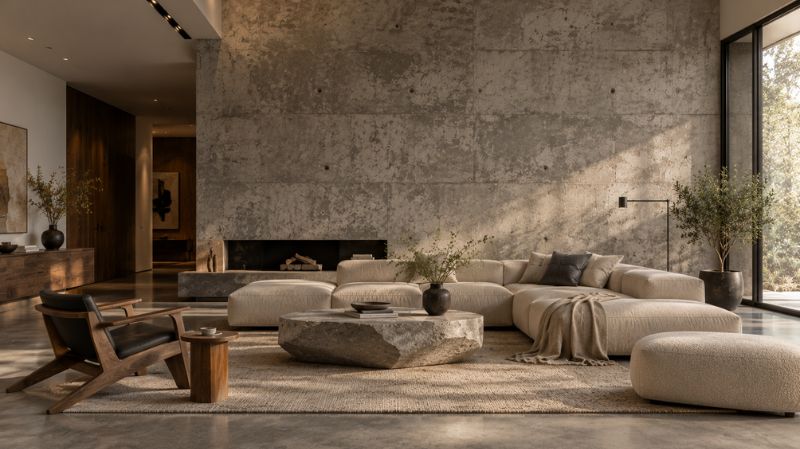
A concrete wall is one of the quickest ways to establish a brutalist foundation. If your home already has exposed concrete, allow its natural texture, seams, and imperfections to remain visible.
For a conventional home, you don’t need to undertake structural work. Microcement, concrete-look plaster, textured finishes, or appropriately installed decorative panels can create a similar visual effect.
Design tip: Use the treatment on one important wall rather than covering every surface. A living-room media wall, bedroom headboard wall, or entryway can provide enough architectural weight.
2. Build a Restrained Brutalist Color Palette
Color in a brutalist interior should support the architecture rather than compete with it. Traditional interpretations commonly use concrete gray, black, white, and other muted tones, while contemporary residential schemes often introduce warmer neutrals and earthy accents.
| Color family | Best use | Effect |
| Concrete gray | Main walls | Architectural and calm |
| Warm greige | Living areas | Softer than cool gray |
| Charcoal | Accent wall or cabinetry | Strong contrast |
| Off-white | Ceilings and lighter walls | Prevents heaviness |
| Taupe | Bedrooms and seating | Adds warmth |
| Olive | Accessories or upholstery | Organic contrast |
| Rust/terracotta | Small accents | Adds controlled warmth |
Instead of painting every wall gray, combine wall color with the natural colors of wood, stone, leather, and metal.
3. Balance Concrete With Natural Wood
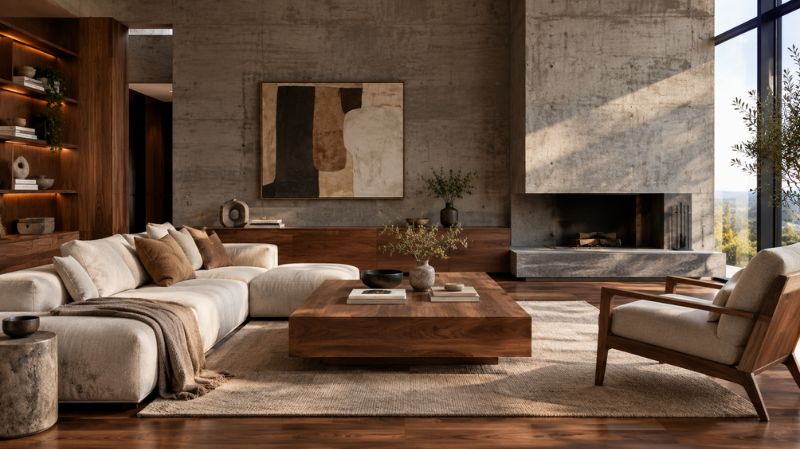
Concrete and timber create one of the most effective contrasts in modern brutalist interiors.
Cool gray concrete can look significantly warmer beside walnut, oak, ash, or other natural wood tones. Use timber flooring, a dining table, cabinetry, shelving, stools, or a substantial coffee table to introduce organic texture.
This is particularly useful in a residential setting because wood gives the eye a warmer visual resting point without undermining the minimalist character.
4. Choose Sculptural, Low-Profile Furniture
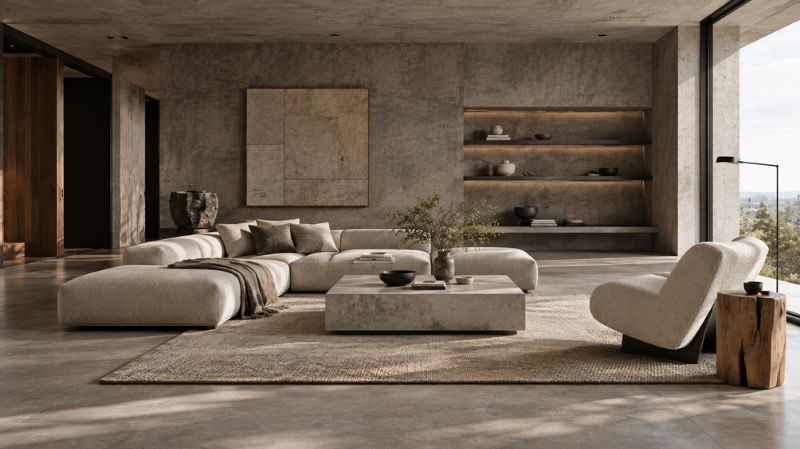
Furniture should look substantial without making the room feel crowded.
Look for:
- Low-profile sofas
- Block-style coffee tables
- Plinth furniture
- Chunky wooden tables
- Geometric lounge chairs
- Simple platform beds
- Architectural shelving
Brutalist furniture traditionally favors strong geometry, heavy forms, functionality, and minimal ornamentation.
However, don’t interpret “heavy” as “fill the room with oversized furniture.” One sculptural sofa or table can make a stronger statement than five competing pieces.
5. Make Stone a Major Design Element
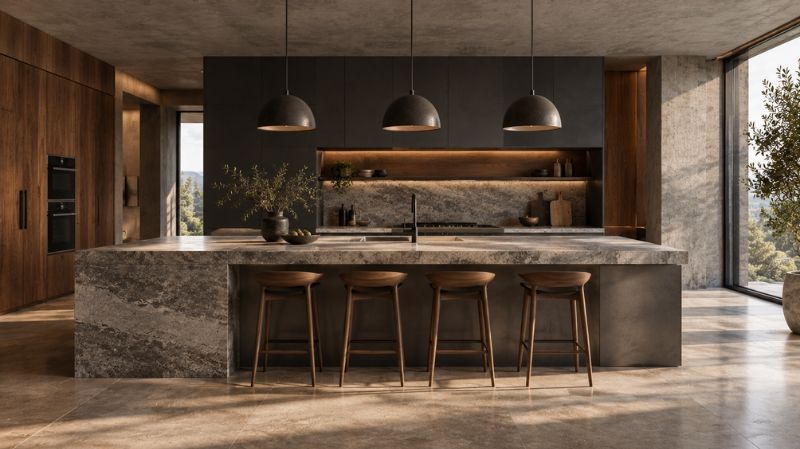
Stone adds the weight and permanence associated with brutalist interiors without requiring every surface to be concrete.
Consider:
- Travertine coffee tables
- Limestone floors
- Slate accents
- Honed stone countertops
- Stone bathroom vanities
- Thick stone fireplace surrounds
Choose honed or naturally textured finishes rather than highly polished surfaces when you want a quieter, more architectural appearance.
Home improvement tip: A substantial stone island can become the focal point of a kitchen while keeping cabinetry comparatively simple.
6. Add Blackened Metal and Industrial Details
Metal provides definition against concrete, plaster, and natural wood.
Try matte-black or dark metal for:
- Pendant lights
- Window frames
- Shelving
- Cabinet hardware
- Coffee tables
- Stair railings
- Console bases
There is an important distinction between Brutalist and industrial interiors. Industrial design often references factories through exposed pipes, brick, ductwork, and eclectic materials. Brutalism tends to be more architectural and sculptural, emphasizing mass, geometry, raw surfaces, and disciplined composition.
7. Use Warm, Layered Lighting to Soften Hard Surfaces
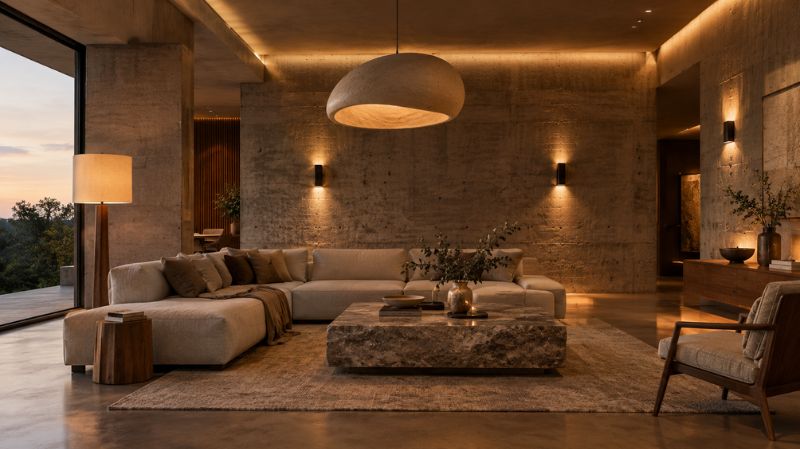
Lighting can completely change how a brutalist room feels.
Large windows and directional daylight can emphasize texture and create dramatic shadows across concrete, stone, and plaster. Artificial lighting should then provide a softer layer after sunset.
Use a combination of:
- Ambient ceiling lighting
- Floor lamps
- Wall sconces
- Pendant lights
- Accent lighting
- Task lighting
Avoid relying on one harsh overhead fixture. A room built around hard surfaces generally benefits from multiple softer sources.
Designer tip: Aim accent lighting at textured walls, artwork, stone, or architectural features rather than simply flooding the entire room with equal illumination.
8. Embrace Textured Walls and Imperfect Finishes
Brutalist interiors don’t need busy wallpaper or decorative patterns to create interest. Texture can do the visual work instead.
Consider:
- Limewash
- Textured plaster
- Board-formed concrete
- Microcement
- Mineral finishes
- Rough stone
- Handmade tiles
Historically, board-marked concrete could retain patterns created by the wooden formwork used during construction, making the construction process itself part of the visual language.
For a painted room, choose a matte or low-sheen finish where appropriate and let subtle changes in tone and texture provide depth.
9. Design a Brutalist Living Room
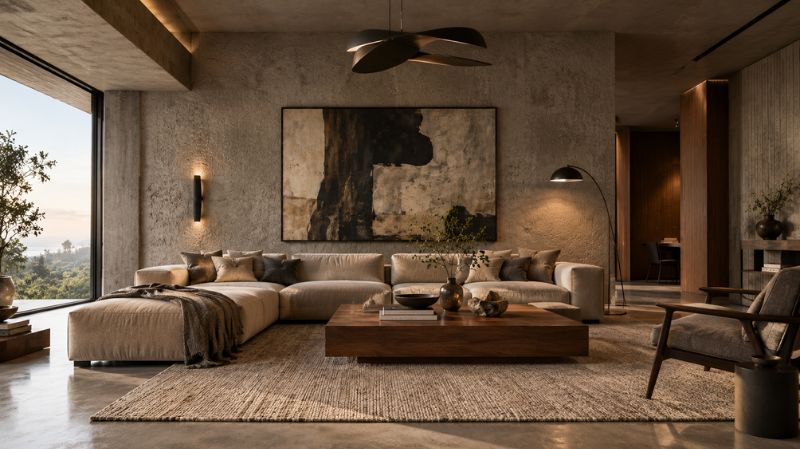
A brutalist living room works best when you establish one strong architectural anchor.
For example:
Concrete-look wall + low neutral sofa + walnut coffee table + textured rug + sculptural lighting
Keep the surrounding furniture relatively quiet so the main elements have room to breathe.
A warm gray or taupe wall can also achieve the mood without actual concrete. Add charcoal furniture, natural wood, linen cushions, and a large abstract artwork for a softer residential interpretation.
10. Create a Calm Brutalist Bedroom
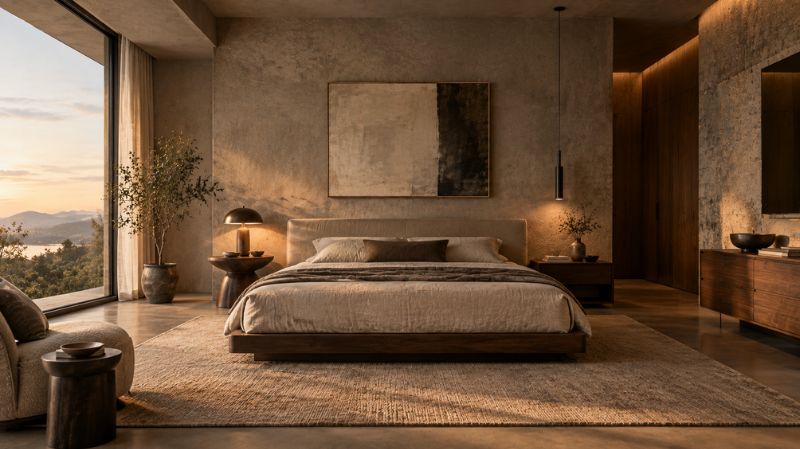
Bedrooms need more softness than public or entertaining spaces.
Start with a restrained wall color such as:
- Warm gray
- Mushroom
- Taupe
- Soft greige
- Muted brown
Then introduce a simple platform bed, linen bedding, dark wood, a sculptural bedside table, and warm bedside lighting.
Avoid turning the room into a concrete box. Brutalist bedroom design works best when architectural strength is balanced with tactile comfort.
11. Give the Kitchen a Monolithic Focal Point
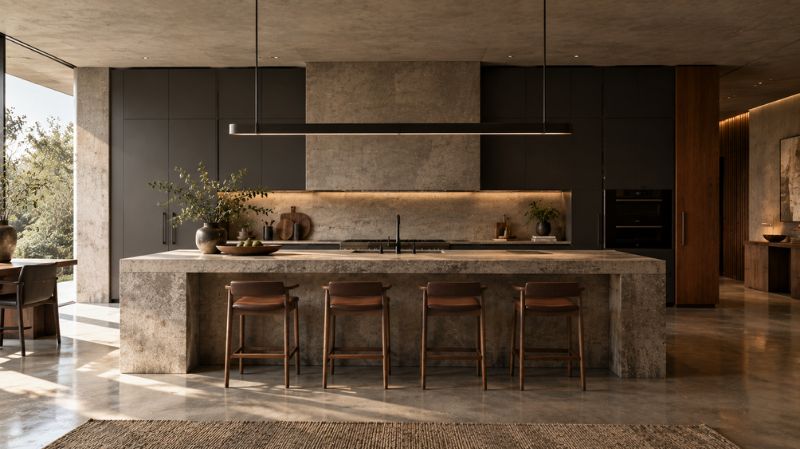
A Brutalist kitchen can use a substantial island, concrete-look countertop, stone backsplash, or flat-panel cabinetry as its primary architectural feature.
For example:
| Element | Brutalist choice | Warming alternative |
| Cabinets | Matte charcoal | Natural walnut |
| Countertop | Concrete | Warm stone |
| Hardware | Black metal | Aged bronze |
| Walls | Gray plaster | Warm greige |
| Flooring | Stone | Natural oak |
| Seating | Black metal | Leather or wood |
This approach keeps the kitchen visually disciplined while ensuring it still feels like a practical family space.
12. Bring Brutalism Into the Bathroom
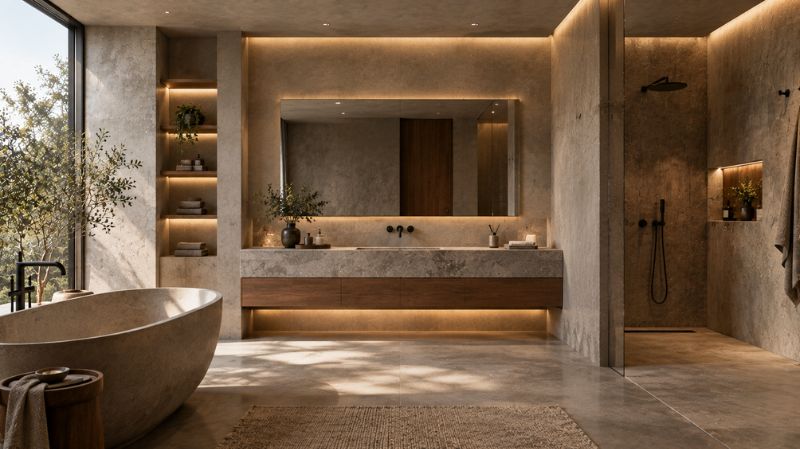
Bathrooms are naturally suited to the style because stone, concrete-look surfaces, metal, and simple geometric fixtures already work well together.
Try:
- Microcement-style walls
- Large-format stone
- Floating vanity
- Matte black fixtures
- Simple mirrors
- Minimal open shelving
- Warm integrated lighting
A bathroom doesn’t need actual structural concrete to achieve the aesthetic. The combination of texture + geometry + restrained color is often more important.
13. Use Oversized Artwork as a Focal Point
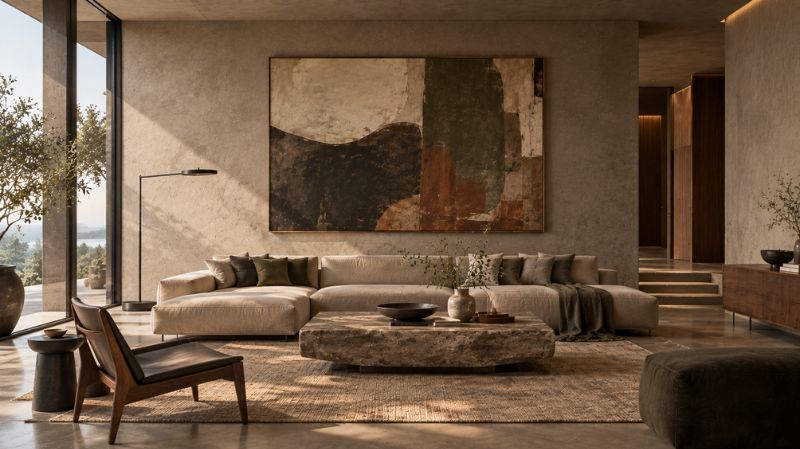
A minimalist room can support larger artwork because the surrounding environment isn’t competing for attention.
Choose:
- Abstract paintings
- Black-and-white photography
- Graphic artwork
- Architectural photography
- Sculptural wall pieces
One large piece can be more effective than a gallery wall filled with small frames.
For a particularly restrained room, select artwork containing one of the existing colors in the space—such as charcoal, taupe, rust, olive, or warm white—so the piece feels connected rather than randomly added.
14. Add Organic Elements for Soft Brutalism
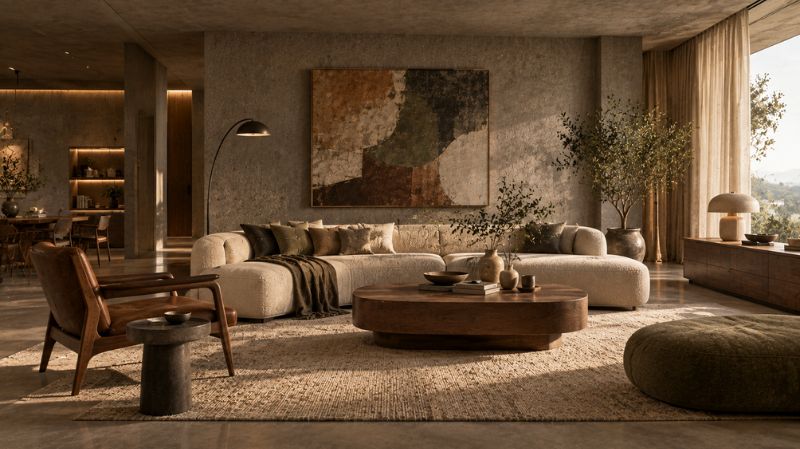
This is where contemporary modern brutalist interior design differs from the coldest interpretations of the style.
Introduce:
- Linen curtains
- Wool rugs
- Bouclé upholstery
- Leather seating
- Oak or walnut
- Indoor plants
- Curved furniture
- Handcrafted ceramics
Recent residential guides increasingly describe this warmer approach as soft Brutalism, where concrete, stone, timber, textiles, and warm lighting work together rather than allowing hard materials to dominate the room.
The result can retain Brutalist character while feeling much more appropriate for everyday family life.
15. Let Natural Light and Negative Space Shape the Room
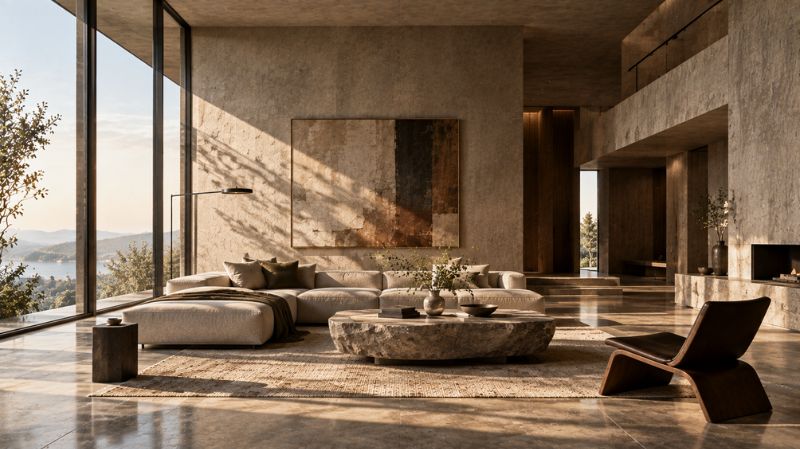
Brutalism is as much about space and proportion as it is about materials.
Don’t place furniture against every wall simply because there is available floor area. Leave breathing room around substantial pieces.
Large windows, open circulation paths, restrained window treatments, and carefully positioned furniture allow light and shadow to become part of the design.
This principle is especially useful in apartments: instead of adding more decoration to create interest, allow one textured wall, one sculptural furniture piece, and natural daylight to do more of the work.
What Paint Colors Work Best in a Brutalist Interior?
A Brutalist palette doesn’t have to mean cool gray everywhere.
For residential rooms, consider a progression from cool mineral neutrals toward warmer greiges, taupes, charcoal, clay, olive, and brown.
For bright rooms
Use:
- Warm gray
- Greige
- Soft taupe
- Mineral white
These colors can preserve the restrained aesthetic while preventing excessive visual hardness.
For darker rooms
Use carefully selected warm neutrals rather than automatically choosing deep charcoal. Test large samples because the same paint can appear noticeably different under changing daylight and artificial lighting.
For accent walls
Charcoal, deep olive, muted brown, or a mineral-inspired gray can create a dramatic backdrop for lighter furniture and natural wood.
The important principle is tonal variation rather than flat repetition. Contemporary Brutalist schemes often use several closely related neutrals so texture and materials remain visible.
How Do You Make a Brutalist Interior Feel Warm?
The easiest approach is to create contrast between hard and soft materials.
| Hard element | Balance it with |
| Concrete | Oak, walnut, linen |
| Black steel | Warm wood |
| Stone | Wool or bouclé |
| Gray walls | Taupe upholstery |
| Geometric furniture | Curved accessories |
| Large architectural forms | Plants |
| Dark palette | Warm lighting |
Think of the room as a composition rather than a collection of Brutalist products.
If everything is concrete, black metal, and cool gray, the room can become visually severe. Add only a few warm elements and their impact becomes much stronger.
Brutalist Interior Ideas by Room
Living Room
Focus on one architectural focal point, a low sofa, natural wood, textured flooring, and layered lighting.
Bedroom
Use warmer wall colors, tactile bedding, dark wood, simple furniture, and softer lighting.
Kitchen
Combine a monolithic island or stone surface with flat cabinetry and warm timber accents.
Bathroom
Use stone or microcement-style finishes, simple fixtures, and carefully controlled lighting.
Home Office
Choose a substantial desk, sculptural task light, restrained shelving, and a neutral wall color.
Entryway
An entryway is a good place for a small Brutalist statement: a stone console, textured wall, oversized mirror, and black metal lighting can establish the style without overwhelming the home.
Brutalist vs. Industrial Interior Design
| Feature | Brutalist | Industrial |
| Main influence | Architecture | Factories/warehouses |
| Typical forms | Monolithic and sculptural | Utilitarian and mechanical |
| Materials | Concrete, stone, steel, timber | Brick, steel, wood, exposed services |
| Color | Restrained and tonal | Often broader |
| Furniture | Heavy, geometric | Functional, often vintage-inspired |
| Decoration | Minimal | Can be more eclectic |
| Overall feeling | Architectural | Urban/industrial |
Both styles can overlap, but Brutalism generally places more emphasis on mass, geometry, material honesty, and architectural presence.
How to Add Brutalist Style Without Renovating Your Home
You don’t need exposed structural concrete or a Brutalist building to introduce the aesthetic.
Start with inexpensive or reversible changes:
- Paint one wall a mineral gray, taupe, or charcoal.
- Add a substantial wood or stone-look coffee table.
- Replace decorative lighting with a sculptural fixture.
- Introducing black metal shelving.
- Add a large abstract artwork.
- Use linen, wool, or textured upholstery.
- Reduce unnecessary decorative objects.
- Add one large indoor plant.
For renters, removable wall treatments, freestanding furniture, rugs, lighting, artwork, and accessories can create much of the visual language without permanent construction.
Common Brutalist Interior Design Mistakes to Avoid
Making Every Surface Gray
Gray-on-gray can quickly become flat. Use wood, stone, textiles, or earthy accents to create tonal contrast.
Using Too Much Concrete
Concrete should have room to make an impact. One or two major applications can be more effective than covering every available surface.
Choosing Furniture That Is Too Bulky
Brutalist furniture can be substantial, but the room still needs circulation space and visual breathing room.
Ignoring Lighting
Hard surfaces reveal harsh lighting. Layer light sources and use architectural features to create shadows and depth.
Confusing Brutalism With Industrial Decor
Adding exposed pipes, factory-style signs, and miscellaneous metal accessories doesn’t automatically create a Brutalist interior.
Forgetting Comfort
A room can look dramatic and still be uncomfortable. Prioritize practical seating, appropriate storage, usable lighting, and tactile materials.
Treating Minimalism as Emptiness
Minimal decoration doesn’t mean an empty room. The architecture, materials, furniture, art, and lighting should each have a clear role.
Is Brutalist Interior Design Suitable for a Normal Home?
Yes, but the residential version should be adapted rather than copied directly from monumental architecture.
A family living room, apartment, bedroom, or kitchen generally needs comfort, storage, practical circulation, and appropriate lighting. That means using Brutalist principles selectively.
A homeowner might use a concrete-look feature wall, walnut furniture, warm gray paint, linen curtains, and black lighting rather than attempting to recreate an entire concrete building.
That balance is what makes brutalist home interior design practical for everyday living.
Final Thoughts
The most successful Brutalist interiors aren’t simply rooms filled with concrete and black furniture. They are carefully composed spaces where material, proportion, light, texture, and function work together.
Start small. Choose one architectural focal point, such as a concrete-look wall or stone table. Add sculptural furniture, a restrained wall color, natural wood, tactile textiles, and layered lighting. Then allow plenty of negative space around those elements.
Whether you’re redesigning a living room, updating a bedroom, renovating a kitchen, or simply changing your home decor, Brutalist principles can provide a strong foundation for a modern, distinctive interior without sacrificing comfort.
Ready to bring raw beauty into your home? Start with one room, choose your material palette, test your wall colors in the actual lighting, and build the space around a few purposeful pieces rather than decorating every surface.
FAQs
What is Brutalist interior design?
Brutalist interior design is an architectural-inspired style that emphasizes raw materials, strong geometric forms, functional furniture, restrained decoration, and expressive textures. Concrete is common, but stone, timber, metal, brick, and textured finishes also play important roles.
What colors are used in Brutalist interiors?
Common choices include concrete gray, charcoal, black, off-white, taupe, greige, brown, and other muted earth tones. Contemporary versions may also introduce restrained olive, rust, clay, or bronze accents.
What materials are used in Brutalist interior design?
Common materials include concrete, stone, steel, brick, natural wood, plaster, leather, linen, and wool. The emphasis is generally on visible texture and material character rather than decorative coverings.
How can I make Brutalist interiors feel warmer?
Pair hard materials with natural wood, warm neutrals, wool, linen, leather, plants, and layered lighting. Keeping concrete as a feature rather than using it on every surface can also make a room feel more comfortable.
Is Brutalist design the same as industrial design?
No. They overlap in their use of materials such as steel and concrete, but Brutalism is more strongly associated with monolithic forms, architectural mass, geometric composition, and material expression. Industrial interiors more directly reference factories and utilitarian spaces.
Can Brutalist interior design work in a small apartment?
Yes. The style’s emphasis on restrained decoration, purposeful furniture, and negative space can work in compact rooms. Choose fewer substantial pieces rather than filling the space with small decorative objects.
What furniture works best in a Brutalist interior?
Low-profile sofas, block-style tables, sculptural chairs, solid-wood furniture, simple platform beds, and geometric storage work particularly well. Choose pieces that have strong forms without compromising everyday comfort.
Can I create a Brutalist look without exposed concrete?
Absolutely. Concrete-look paint, microcement-style finishes, textured plaster, stone, dark wood, black metal, sculptural furniture, and restrained colors can establish the aesthetic without structural renovation.
What is soft Brutalism?
Soft Brutalism is a contemporary residential interpretation that keeps Brutalist characteristics such as strong forms and raw materials while introducing warmer wood, textiles, earthy colors, plants, and softer lighting. Recent design coverage increasingly uses this approach to describe more livable Brutalist spaces.
Is Brutalist interior design a good choice for a bedroom?
It can work particularly well when the harder architectural elements are balanced with warm wall colors, wood, linen bedding, rugs, upholstered furniture, and soft lighting. The goal should be a calm, tactile bedroom rather than an overly stark space.