
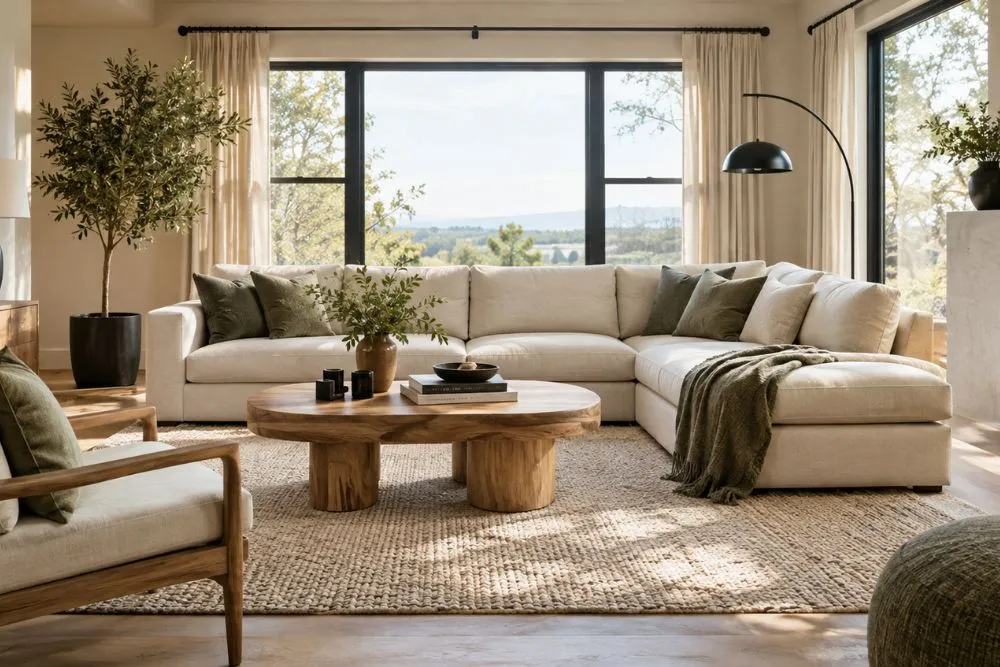
Living room inspiration can help you turn an ordinary room into a welcoming, stylish space with the right paint colors, furniture, lighting, and home décor. Whether you prefer modern minimalism, cozy traditional interiors, or bold contemporary styling, these 35 living room ideas offer practical ways to refresh your home without exceeding your budget.
Fast Answer: How Can You Transform Your Living Room?
The easiest way to transform a living room is to establish a cohesive color palette, arrange furniture around a clear focal point, layer lighting, introduce comfortable textures, and personalize the space with artwork and accessories. Start with changes that make the biggest difference, such as rearranging furniture, repainting a wall, or updating curtains and cushions, before investing in expensive renovations.
Modern and Contemporary Living Room Inspiration
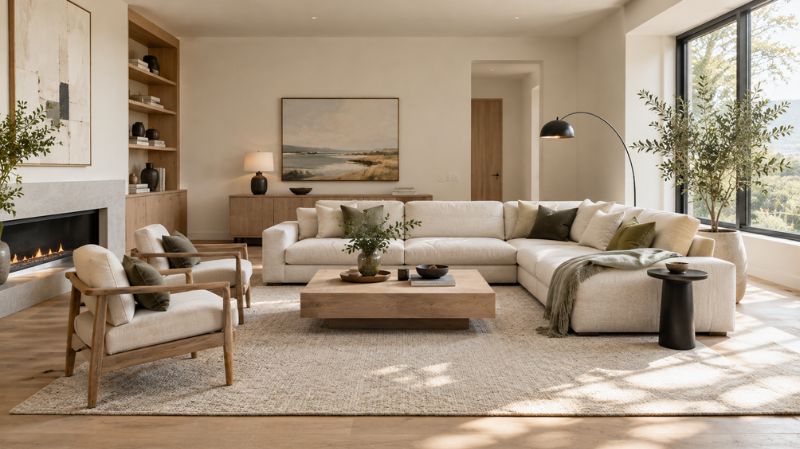
Modern living rooms combine clean lines, considered furniture choices, practical layouts, and coordinated colors. The latest living room interior design ideas also place greater emphasis on personality, tactile materials, vintage accents, and comfortable spaces rather than rooms that look like showrooms.
1. Create a Modern Living Room With Clean Lines
Choose a streamlined sofa, a simple coffee table, and furniture with understated silhouettes. Warm white walls, black accents, and natural wood create a balanced contemporary look.
Designer tip: Leave breathing room around larger furniture pieces. A carefully edited arrangement often looks more polished than filling every empty corner.
2. Embrace Contemporary Neutral Living Room Décor
Combine cream, beige, taupe, and soft greige for a relaxed, versatile backdrop. Introduce depth with linen curtains, textured cushions, a wool-look rug, and wooden furniture.
Neutral rooms work best when their undertones complement one another. Test paint samples beside your flooring and upholstery before choosing a final shade.
3. Design a Warm Minimalist Living Room
Minimalism does not have to mean cold or empty. Choose a comfortable sofa, a few functional tables, concealed storage, and a small collection of meaningful decorative objects.
Warm white walls, oak finishes, and soft fabrics make the room feel inviting while keeping visual clutter under control.
4. Make a Statement With a Sculptural Sofa
A curved sofa or distinctive sectional can become the room’s main design feature. Keep surrounding furniture relatively simple so the silhouette remains prominent.
For a versatile combination, try a muted green or caramel sofa against cream walls, with a neutral rug and dark wood accents.
5. Bring Nature Indoors With Organic Modern Design
Organic modern interiors combine natural materials with contemporary shapes. Pair rounded furniture with oak, stone, woven baskets, linen, and indoor plants.
This style works especially well when you repeat two or three materials throughout the room rather than introducing a different finish in every corner.
Living Room Paint Colors and Wall Inspiration
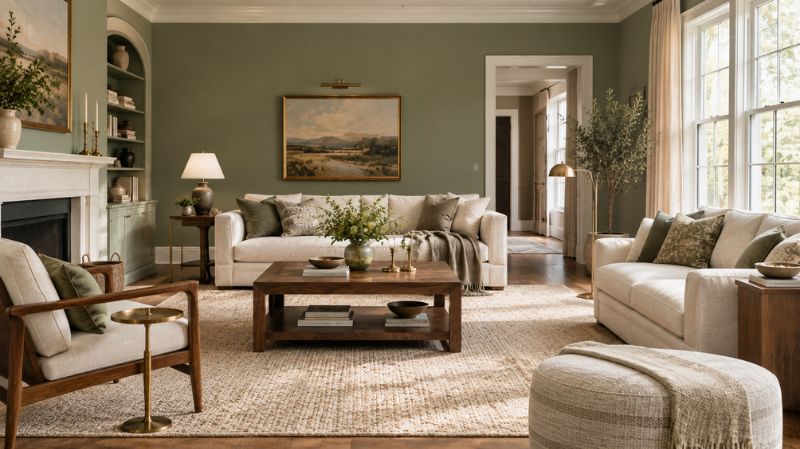
Paint is one of the most effective ways to change a room’s atmosphere without replacing its furniture. Current design coverage highlights warm cream, olive green, charcoal blue, welcoming taupe, and rich mulberry as options for creating distinctive living rooms. These are design directions, not universal recommendations; the right choice depends on lighting, furnishings, and personal taste.
6. Brighten the Room With Warm White Walls
Warm white creates a flexible background for both traditional and contemporary furniture. Pair it with cream upholstery, oak furniture, natural textiles, and a few black or brass details.
White shades vary considerably. A sample that appears creamy in one room may look more yellow or gray in another, so check it in morning, afternoon, and evening light.
7. Try a Beige and Greige Color Scheme
Beige adds warmth, while greige blends gray and beige for a more restrained effect. Both work well with stone flooring, wooden furniture, neutral sofas, and layered textiles.
For a harmonious palette, pair warm greige walls with ivory upholstery and walnut furniture. Add muted green or rust-colored cushions for contrast.
8. Use Sage Green for a Relaxing Atmosphere
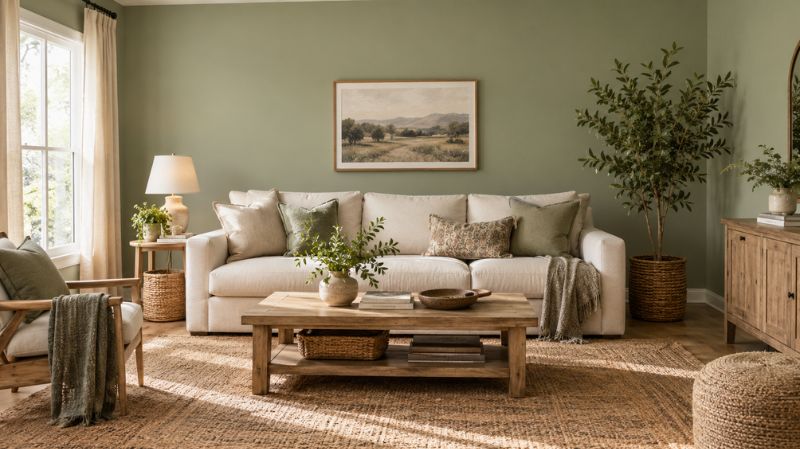
Sage green offers a nature-inspired alternative to conventional neutrals. Combine it with warm white trim, light oak, woven accessories, and cream upholstery.
If repainting the entire room feels like too much commitment, start with a single wall, alcove, or built-in bookcase.
9. Create Drama With a Moody Accent Wall
Deep navy, charcoal blue, forest green, and burgundy can bring depth to a living room. These shades work particularly well behind a sofa, around a fireplace, or on a carefully selected architectural feature.
Balance darker walls with lighter upholstery, warm lighting, and reflective or natural materials. Dark colors do not automatically make a room smaller; contrast, lighting, and proportions all affect the result.
10. Add Character With Wall Paneling
Board-and-batten, picture-frame molding, and wood slat panels introduce architectural interest to otherwise plain walls. Paintable molding is a useful option for homeowners seeking a custom look without extensive construction.
Use the same color on the wall and trim for a subtle, unified finish, or choose contrasting trim for a more traditional appearance.
11. Pair Blue and White for a Timeless Look
Blue and white can feel coastal, classic, or contemporary depending on the shades and materials. Combine dusty blue walls with white curtains and pale wood for an airy room, or use navy accents against warm white walls for stronger contrast.
A patterned rug or artwork containing both colors helps bring the palette together.
12. Warm Up the Room With Terracotta and Earthy Brown
Terracotta, camel, chocolate brown, and muted rust create a grounded, inviting color scheme. These shades pair naturally with cream walls, natural wood, leather, and woven materials.
If you prefer subtle changes, introduce earthy tones through cushions, pottery, curtains, or a rug before repainting.
13. Create a Monochromatic Living Room
Choose one color family and layer different shades throughout the room. A blue scheme might combine pale blue walls, a navy accent chair, and a patterned rug with both tones.
Vary the textures and finishes to keep the room from looking flat. Matte paint, velvet upholstery, woven fabrics, and smooth wood can add dimension even when the colors remain closely related.
Cozy Living Room Ideas for a Welcoming Home
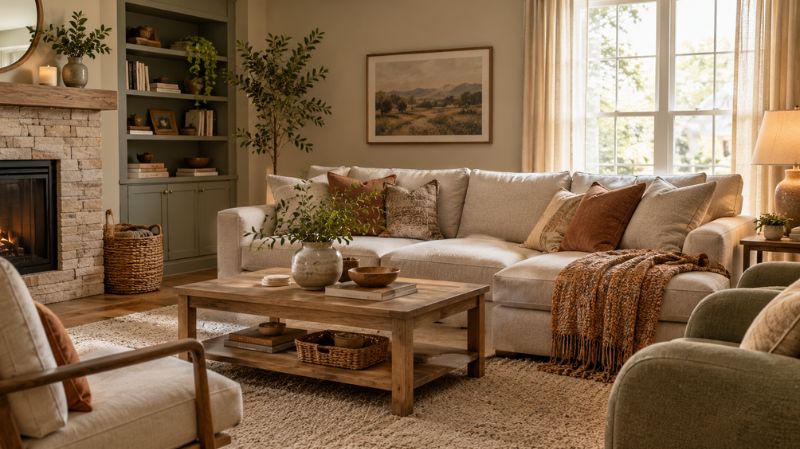
A comfortable living room should support the way you actually live, whether that means reading, entertaining, watching television, or spending time with family. Recent designer advice emphasizes conversational seating, layered lighting, accessible tables, and comfortable furnishings as foundations of a welcoming room.
14. Layer Rugs, Throws, and Cushions
Combine different textures to make the seating area feel more comfortable. A woven rug, cotton cushions, a soft throw, and a textured sofa can add depth without requiring major purchases.
Keep the color palette consistent if you plan to mix stripes, florals, or geometric patterns.
15. Bring Warmth Through Natural Wood
Wooden coffee tables, sideboards, shelving, and picture frames soften rooms dominated by painted walls or hard flooring. Oak creates a lighter look, while walnut and darker finishes add richness.
Repeat the chosen wood tone in a few places to establish visual continuity.
16. Layer Lighting for Different Activities
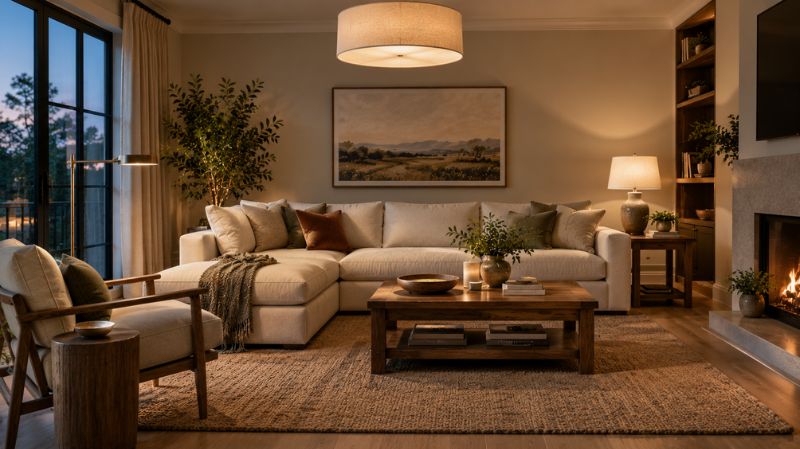
Use ambient lighting for general visibility, task lighting for reading, and accent lighting to highlight artwork or architectural details. A ceiling fixture, floor lamp, and table lamp can serve different purposes throughout the day.
Choose bulbs according to the room’s needs and test how they render your paint colors and fabrics. Dimmers can make a living room more adaptable for entertaining and relaxing.
17. Create a Reading Corner
Turn an unused corner into a small retreat with an accent chair, side table, reading lamp, and compact bookcase. Position the chair near natural light where possible.
In a small home, a reading corner can also serve as occasional guest seating without requiring an additional full-size sofa.
18. Personalize the Space With a Gallery Wall
Display framed prints, family photographs, original artwork, or collected objects. Start by arranging the pieces on the floor before hanging them, and keep spacing reasonably consistent.
A gallery wall looks more cohesive when a few frame finishes or colors repeat, even if the artwork itself varies.
19. Make the Fireplace or TV Wall a Focal Point
Choose one main feature rather than letting the television, fireplace, shelving, and artwork compete equally. Arrange seating to provide comfortable sightlines and keep frequently used controls accessible.
If you have no architectural focal point, a large artwork, a bookcase, or a distinctive wall color can create one.
20. Add Plants and Natural Textures
Indoor plants, woven baskets, ceramic pots, and linen accessories bring variety to a room’s surfaces. Choose plants that suit the actual light levels and your maintenance routine.
Repeat natural materials across several areas so they feel integrated into the design rather than added as an afterthought.
Small Living Room Ideas That Make Better Use of Space
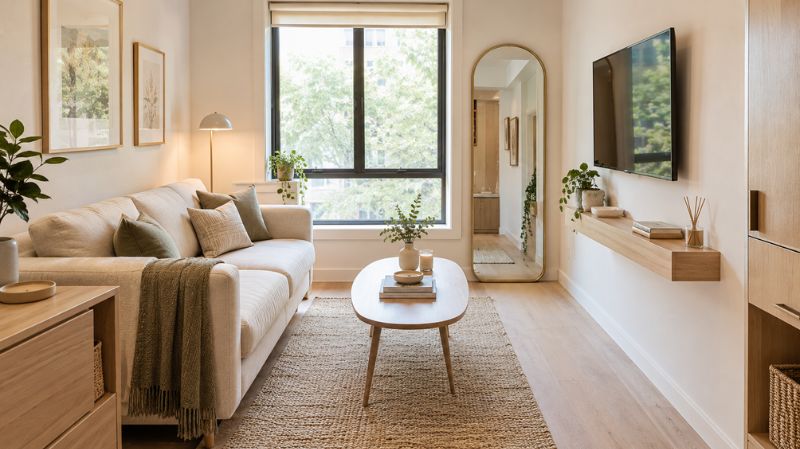
Small living rooms benefit from thoughtful proportions and a layout that preserves comfortable movement. You do not need to make every surface white or remove all decorative elements; instead, focus on furniture scale, light, storage, and visual continuity.
21. Use Light Colors to Create Visual Openness
Warm white, pale beige, and soft greige can help a compact room feel brighter, especially when natural light is limited. Continue similar tones across walls and larger furnishings to reduce abrupt visual breaks.
Use darker colors selectively in artwork, cushions, or a small accent feature.
22. Position Mirrors to Reflect Light
A mirror placed opposite or beside a window can reflect daylight into the room. Choose a size that suits the wall and check what it reflects before hanging it.
Mirrors can create a greater sense of depth, although they do not increase the room’s actual floor area.
23. Choose Multifunctional Furniture
Storage ottomans, nesting tables, compact sectionals, and lift-top coffee tables can provide extra utility without requiring more furniture.
Before purchasing, measure the item in both its everyday and expanded positions. A foldout table is only useful if you can still move around it comfortably.
24. Make Use of Vertical Space
Tall bookcases, floating shelves, and wall-mounted lighting free up floor area for seating and circulation. Keep frequently used objects within easy reach and place heavier items on suitable, secure shelves.
A slim console can also provide useful storage behind a sofa without occupying the same depth as a full cabinet.
25. Arrange Furniture for a Narrow Living Room
Position the sofa along a suitable long wall, then add a compact coffee table and one or two chairs if space permits. Avoid blocking doors, windows, and essential walkways.
Use a rug to define the seating area and curtains hung near ceiling height to draw the eye upward.
26. Define an Open-Plan Living Room
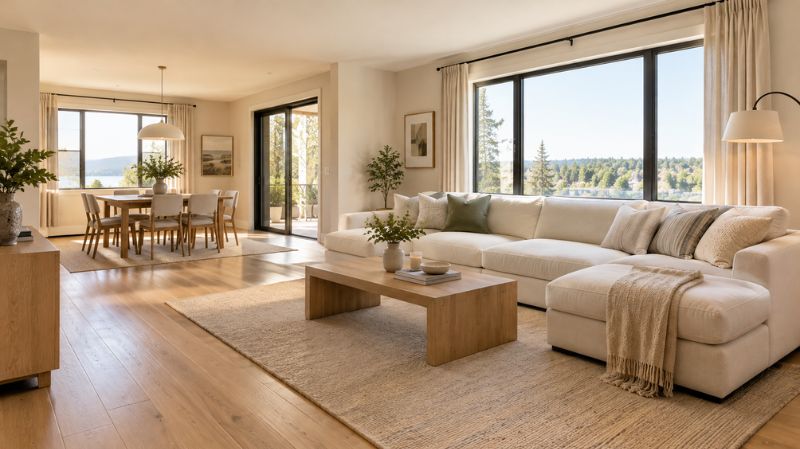
In an open-plan home, use a rug, lighting, or furniture arrangement to distinguish the living area from the dining or kitchen zone. A sofa can act as a soft boundary without obstructing movement.
Repeat a few colors or materials across the connected spaces so the overall interior feels coordinated.
Living Room Interior Design Ideas for Different Styles
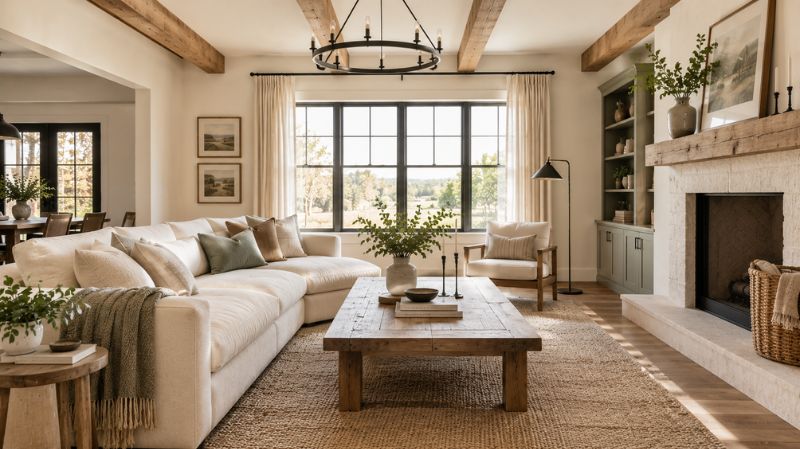
The best style is one that complements your home’s architecture and supports your everyday routine. These living room interior design ideas offer different starting points rather than strict rules you must follow.
27. Create a Modern Farmhouse Living Room
Combine warm white walls, natural wood, comfortable upholstery, and a few rustic accents. Keep distressed finishes and decorative signs to a minimum if you want the room to feel current rather than themed.
28. Style a Relaxed Bohemian Living Room
Layer plants, woven materials, patterned cushions, and collected accessories. A base of cream or muted beige helps multiple patterns coexist without overwhelming the space.
29. Embrace Mid-Century Modern Furniture
Look for tapered legs, walnut finishes, geometric forms, and sculptural lighting. A vintage-inspired accent chair can provide character without requiring an entire period-themed room.
30. Design a Scandinavian Living Room
Use simple functional furniture, pale wood, soft neutrals, and tactile fabrics. Introduce muted green, blue, or rust accents if the room needs more personality.
31. Refresh a Traditional Living Room
Classic furniture, framed artwork, layered curtains, and patterned rugs can create a timeless setting. Modern paint colors or updated lamps can refresh traditional pieces without replacing everything.
Budget-Friendly Living Room Makeover Ideas
A successful living room makeover does not necessarily require new furniture. Prioritize the changes that solve your room’s biggest problem before spending money on decorative extras.
32. Refresh the Room With Paint
Painting a wall, refreshing suitable trim, or repainting a tired piece of furniture can change the room’s appearance. Prepare the surface properly, choose a finish suited to its use, and test samples before committing.
For a low-risk update, repaint a bookcase or alcove rather than the entire room.
33. Rearrange Existing Furniture
Move the sofa to improve conversation, reposition chairs toward a focal point, and remove furniture that obstructs circulation. Try the new layout before buying replacement pieces.
This is one of the easiest ways to test a different design direction at little or no cost.
34. Update Curtains and Cushion Covers
Soft furnishings are a practical way to introduce a new accent color. Try olive cushions with cream curtains, or rust-colored textiles with warm white walls and wood furniture.
Repeat the accent color in artwork or a decorative object so the update feels intentional.
35. Mix Thrifted and Vintage Finds With Modern Pieces
Secondhand tables, vintage lamps, framed artwork, and older wooden furniture can give a room a distinctive character. Check each piece for structural condition, stability, and repair costs before purchasing.
Combining one or two vintage finds with simpler contemporary furniture can create a collected look without requiring a full room redesign.
How to Choose the Right Living Room Inspiration for Your Home
Before starting a project, translate the inspiration into a plan that suits your room rather than copying a photograph exactly.
| What to consider | Practical approach |
| Room size and layout | Measure walls, windows, doorways, and furniture before buying anything. |
| Natural light | Test paint samples at different times of day and under your evening lighting. |
| Existing furniture | Choose wall colors and accents that work with your sofa, flooring, and wood finishes. |
| Household needs | Select durable upholstery and practical storage if children, pets, or frequent guests use the room. |
| Budget | Start with rearranging, decluttering, paint, and soft furnishings before considering major renovation. |
| Long-term style | Use expensive, difficult-to-replace pieces as flexible anchors and introduce trends through smaller accessories. |
How Do You Choose a Living Room Color Palette?
Begin with an element you intend to keep, such as the sofa, flooring, a favorite rug, or a piece of artwork. Identify its main undertones, then select a wall color that complements rather than competes with it.
For example, a warm beige sofa can work beautifully with sage walls, ivory curtains, walnut furniture, and muted brass accents. A cool gray sofa may suit dusty blue walls, crisp white details, and natural oak.
Color psychology can help guide the atmosphere you want: muted greens and blues are often associated with calm, while warmer reds and terracottas can create a more energetic impression. These are broad design associations, not guaranteed emotional effects.
How Can You Make the Design Feel Cohesive?
Repeat a few colors, materials, or shapes in different parts of the room. A walnut coffee table, walnut picture frames, and a similar wood tone on shelving can establish continuity without making every item match.
Keep some contrast, too. A room made entirely of the same finish can look flat, while too many unrelated materials may feel chaotic.
Final Thoughts
The best living room inspiration is not about following every new trend. It is about choosing colors, furniture, lighting, and decorative details that make your space more comfortable, functional, and personal.
Start with one achievable change, whether that means testing a new wall color, rearranging your sofa, layering a rug, or introducing a distinctive vintage piece. Build from there, keeping your budget and everyday needs in mind.
Ready to refresh your home? Choose your favorite idea from this list, create a simple color palette, and plan one practical improvement you can complete this week. Small, intentional changes can make a living room feel remarkably different.
Frequently Asked Questions
How can I make my living room look more stylish?
Start with a clear focal point, a coordinated color palette, and a furniture arrangement that allows comfortable movement. Add layered lighting, a properly sized rug, and a few personal accessories rather than filling every surface.
What are the best colors for a living room?
Warm white, beige, greige, sage green, dusty blue, and earthy terracotta are versatile options. The best choice depends on natural light, existing furniture, room size, and the atmosphere you want to create.
How do I make a small living room look bigger?
Use appropriately scaled furniture, maintain clear walkways, and consider light wall colors and mirrors that reflect daylight. Multifunctional furniture and vertical storage can also help reduce clutter.
How can I decorate my living room on a low budget?
Rearrange furniture, declutter, repaint a wall or suitable furniture, update cushion covers, and look for secondhand accessories. Make changes in stages instead of purchasing everything at once.
What should I put on a living room wall?
Consider artwork, a gallery wall, mirrors, floating shelves, decorative molding, or an accent color. Choose a feature that suits the wall’s size and the furniture beneath it.
How do I choose furniture for my living room?
Measure the room and plan the layout before shopping. Prioritize comfortable seating, appropriate scale, durable materials, and enough clearance around doors, windows, and frequently used pathways.
How can I make my living room feel cozy and inviting?
Layer soft textures, use comfortable seating, add warm-toned lighting, and arrange chairs to encourage conversation. Curtains, rugs, cushions, and natural materials can soften a room with hard surfaces.
Which living room design styles are timeless?
Simple contemporary, Scandinavian, traditional, and organic modern styles can remain adaptable when built around quality furniture, cohesive colors, and practical layouts. Personal details can evolve as your tastes change.
How do I choose an accent wall color?
Consider the room’s focal point, existing furnishings, natural light, and the undertones of neighboring walls. Test a sample on the intended wall before painting, and repeat the accent shade in smaller accessories if you want a coordinated result.
What is the easiest way to transform a living room without renovating?
Rearrange the furniture, edit clutter, change the lighting, update textiles, and add artwork or plants. If you want a more noticeable change, repainting a carefully selected wall can refresh the room without a full renovation.


