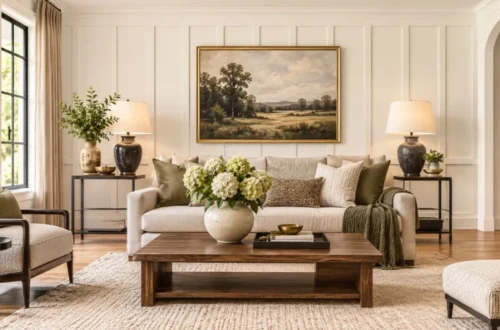

How to decorate with vintage finds starts with choosing a few pieces that add character without overwhelming the room. Mix older furniture and accessories with modern shapes, cohesive colors, comfortable textiles, and plenty of breathing room so the result feels collected rather than dated. The best vintage interiors make old pieces part of everyday life instead of treating them like museum exhibits.
Whether you find a carved wood cabinet at an estate sale, a faded rug at a flea market, or an unusual kitchen object at a thrift store, the right styling can give it a completely new role. You can also use paint, wall color, lighting, and furniture placement to make vintage pieces feel natural in a contemporary home.
Fast Answer: How Do You Decorate With Vintage Finds?
Start with one meaningful or visually interesting vintage piece, then build around it with modern furniture and a restrained color palette. Repeat one or two materials or colors throughout the room, use vintage objects for practical purposes when possible, and leave enough negative space for each piece to stand out. For a fresh look, combine aged finishes with clean-lined furniture, contemporary lighting, warm neutrals, and comfortable textiles.
What Makes a Vintage Find Worth Decorating With?
A vintage find does not have to be rare or expensive to improve a room. Its value can come from craftsmanship, material, unusual proportions, patina, color, or simply the story attached to it.
The terms also overlap. “Vintage,” “antique,” “retro,” and “thrifted” are not interchangeable: antique generally refers to an item at least 100 years old, while vintage is commonly used for older objects associated with a particular period. Thrifted simply means previously owned and says nothing about age.
For decorating purposes, condition and suitability matter as much as age. A sturdy secondhand wooden stool that fits your room can be more useful than an expensive antique that is too fragile or oversized.
17 Brilliant Ways to Bring Vintage Character Into Your Home
1. Let One Vintage Piece Become the Room’s Anchor
Start with one item that immediately attracts attention rather than filling the room with small antiques.
A carved sideboard, old cabinet, substantial mirror, vintage rug, sculptural chair, or beautifully weathered table can establish the room’s personality. Keep the surrounding furniture simpler so the piece has visual authority.
This approach also works particularly well in smaller homes. One substantial find can create character without consuming every shelf, wall, or tabletop.
2. Pair Old Furniture With Clean, Modern Shapes
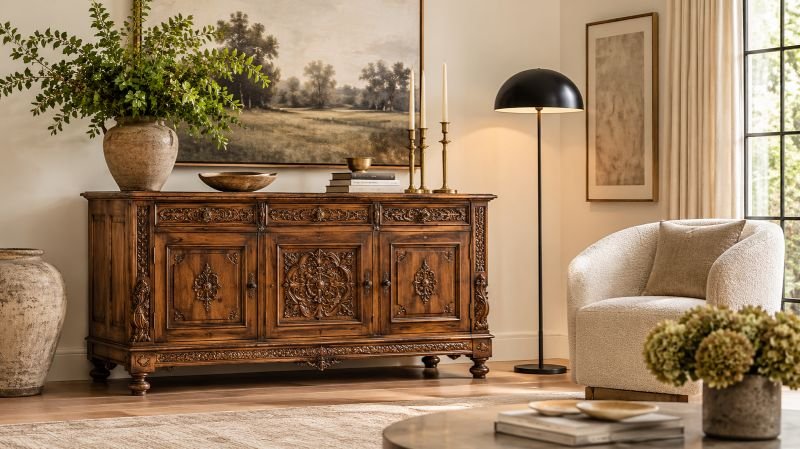
One of the easiest ways to make vintage furniture feel current is to place it beside something distinctly contemporary.
Try an antique dresser with a simple upholstered chair, a weathered console with a modern lamp, or a vintage dining table surrounded by streamlined chairs. The contrast prevents the room from becoming a period recreation.
Interior-design sources repeatedly recommend this old-and-new relationship because contemporary pieces provide visual contrast while allowing historic furniture to retain its character.
3. Give an Old Mirror a More Contemporary Setting

Vintage mirrors are among the easiest decorating pieces to introduce because they combine decoration with function.
Hang an ornate mirror above a simple bathroom vanity, place a weathered wood mirror over a modern console, or use a gilded frame against a quiet bedroom wall.
For wall color, warm white, soft beige, muted sage, and gentle greige can provide enough contrast for an aged frame without competing with it. A darker wall can work too, particularly when the mirror has a lighter or metallic frame.
4. Turn Vintage Art Into a Color Connection

Old artwork can do more than fill an empty wall. It can establish the room’s accent palette.
Look closely at a vintage landscape, botanical print, portrait, textile, or decorative plate and identify two or three recurring colors. Those shades can then appear in pillows, upholstery, curtains, rugs, or smaller accessories.
For example, a botanical print containing sage green, cream, and brown can inspire a warm-white wall, natural wood furniture, and muted green textiles. This creates cohesion without requiring every item to match.
5. Build a Small Vintage Display With Books and Ceramics
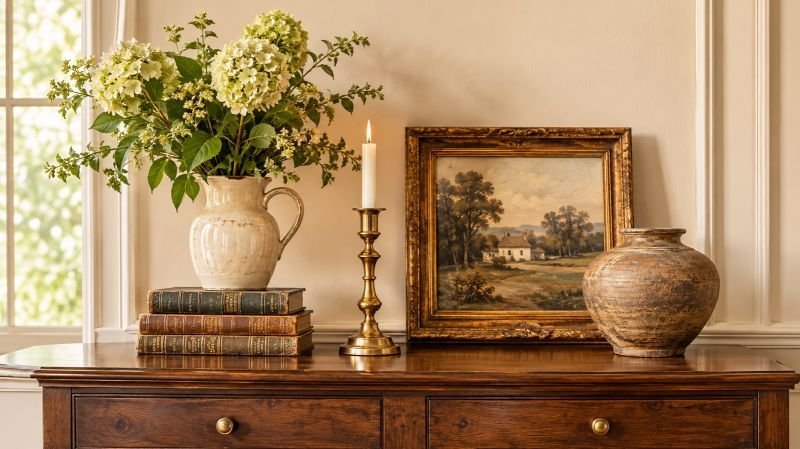
Instead of scattering vintage objects throughout the house, create a deliberate vignette.
Layer a few old books with a ceramic pitcher, small framed print, brass object, or pottery piece on a console, bookcase, or open shelf. Vary height and texture rather than lining everything up at the same level.
The goal is editing. Negative space matters just as much as the objects themselves. Contemporary styling guidance consistently emphasizes fewer meaningful pieces, visual breathing room, and a cohesive material or color thread.
6. Use a Vintage Rug to Establish the Room’s Palette
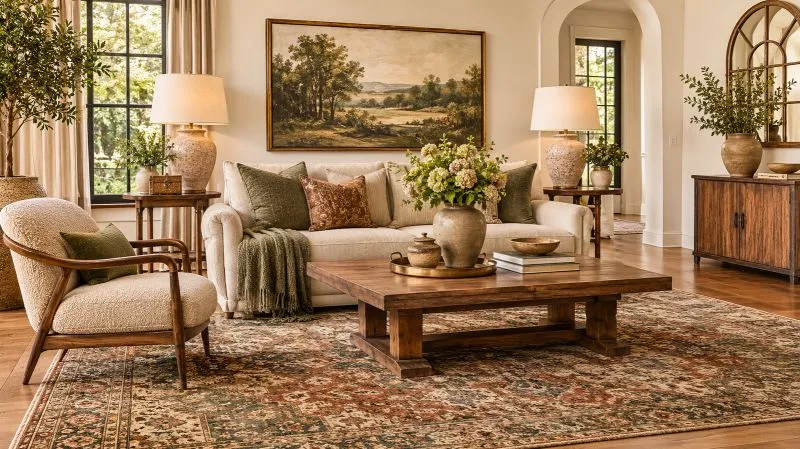
A vintage or vintage-inspired rug can connect furniture, wall color, and accessories more effectively than several small decorative objects.
For a warm room, look for faded rust, camel, cream, olive, or muted blue. If the furniture is dark, a lighter patterned rug can prevent the space from becoming visually heavy.
Check scale before buying. A rug that is too small can make a living room feel disconnected, while a properly sized rug can visually unite the seating arrangement.
7. Make Vintage Lighting Part of the Design
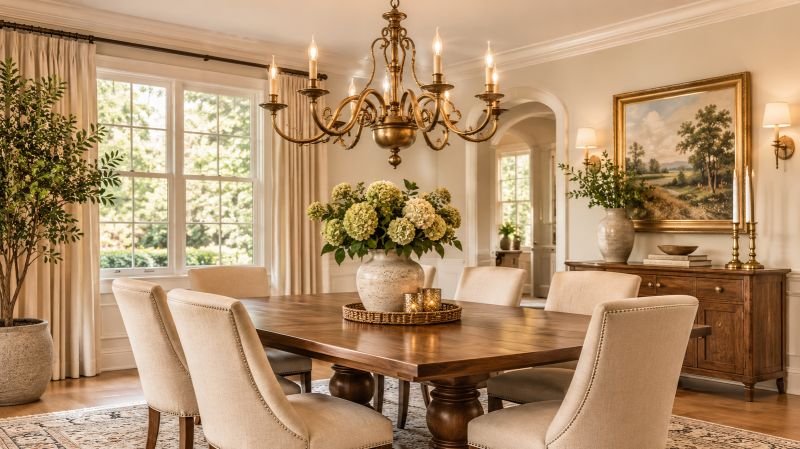
Vintage lamps, sconces, chandeliers, and pendant fixtures can introduce age without requiring a major furniture change.
A ceramic table lamp can soften a contemporary bedroom. An aged-brass fixture can add warmth to a modern dining room. A vintage-style pendant can also introduce a period reference without making every other element look old.
For older electrical fixtures, however, appearance should never outweigh safety. Have questionable wiring or fixtures evaluated by a qualified professional before regular use.
8. Refresh an Everyday Vintage Furniture Find With Paint
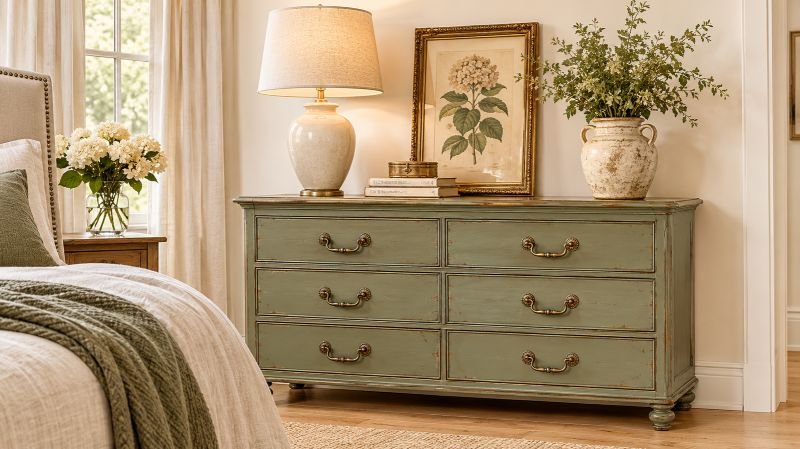
Not every old piece needs to remain in its original finish.
An inexpensive wooden nightstand, dresser, stool, or cabinet can gain a completely different personality with the right paint color. Soft sage, creamy white, muted blue, dusty rose, deep olive, or charcoal can work beautifully depending on the room.
But don’t automatically paint valuable or unusually well-preserved furniture. Beautiful natural wood, veneer, patina, or original finishes may be more desirable than a new coating.
A useful rule is simple: paint when the existing finish fights the room; preserve it when the original material is part of the piece’s appeal.
9. Repeat One Color or Material Across Different Vintage Pieces
Vintage collections do not need to match, but they do need a visual relationship.
Suppose your room contains a walnut cabinet, an aged brass lamp, and a faded green ceramic vase. Repeating walnut, brass, or green elsewhere can make those unrelated objects feel intentionally connected.
This is particularly useful when decorating with vintage items collected from different places. You are not matching their age; you are creating a common design language.
10. Mix Eras Instead of Recreating One Period
A room containing only furniture from one historical period can look more like a set than a lived-in home.
Instead, combine references thoughtfully. A mid-century chair can work beside a traditional rug. A Victorian mirror can sit above a streamlined vanity. A rustic wooden cabinet can share a room with contemporary upholstery.
Architectural Digest has highlighted interiors where antiques coexist with contemporary furniture and art, demonstrating that different eras can work together when the overall composition remains intentional.
11. Repurpose an Unexpected Vintage Object

This is where vintage decorating becomes especially creative.
An old sewing-machine base can become a console or side table. A vintage ladder can hold blankets. A sturdy trunk can serve as a coffee table. An old ceramic pitcher can become a vase.
The strongest repurposing projects preserve something distinctive about the original object while giving it a useful role.
The competitor example that inspired this article takes this concept much further with objects such as pastry cutters, cheese boxes, old hangers, shutters, shoe forms, springs, and cast-iron tub feet.
The opportunity is not simply to repeat those projects, but to apply the same principle more broadly: look at an old object for its shape and material before deciding what it was originally made to do.
12. Bring Vintage Kitchen Pieces Into Everyday Use
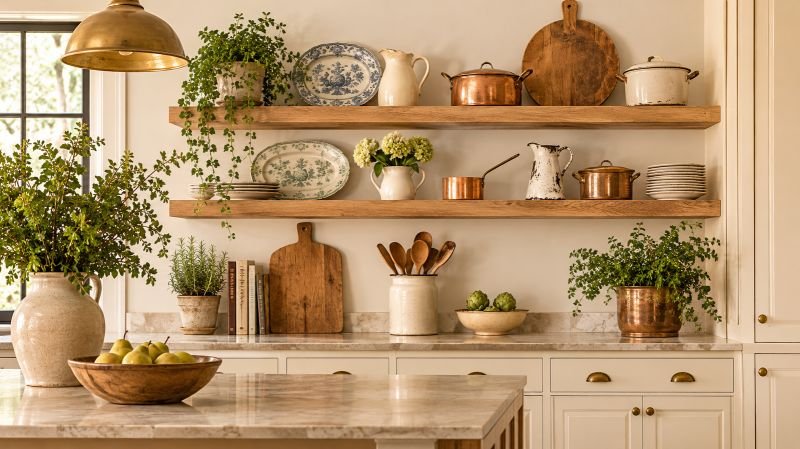
Kitchens are naturally suited to vintage finds because many old objects were designed to be functional.
Display ironstone plates, wooden cutting boards, copper cookware, ceramic pitchers, enamelware, vintage mixing bowls, or old storage containers on open shelving.
Use restraint with fragile or potentially unsafe items. Decorative glassware or ceramics can be displayed, while pieces intended for food preparation should be assessed for condition, cleanliness, and suitability before everyday use.
13. Create a Softer Vintage Bedroom
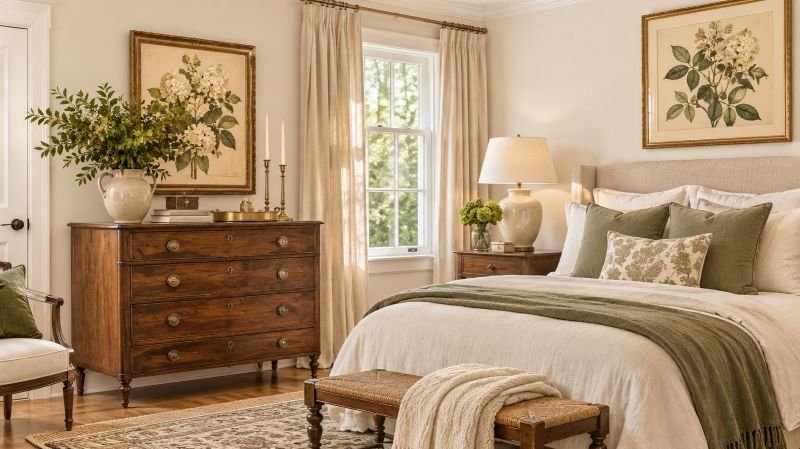
Bedrooms benefit from vintage pieces because aged materials naturally add warmth and softness.
Try a vintage dresser, old bedside table, framed botanical artwork, antique mirror, ceramic lamp, or wooden headboard. Balance these harder surfaces with linen bedding, woven textures, cotton curtains, and upholstered furniture.
For wall colors, consider warm white, cream, muted sage, dusty blue, soft taupe, or warm greige. These shades can complement aged wood without making the room feel excessively dark or traditionally styled.
14. Add One Vintage Detail to a Modern Bathroom
You don’t need a complete bathroom renovation to introduce vintage character.
A framed antique mirror, small wooden cabinet, aged-brass accessory, vintage artwork, or traditional stool can soften a contemporary bathroom.
Keep moisture in mind. Wood, paper, fabric, and untreated metal may require more care in humid environments. Choose placement carefully and avoid using fragile finds where water exposure could cause damage.
15. Give a Modern Living Room a Collected Feel
A modern living room can feel more personal with just a few vintage additions.
Start with one anchor piece such as a vintage rug, wood cabinet, mirror, or occasional chair. Then add one or two smaller elements—perhaps a ceramic vessel and framed artwork.
If you have dark vintage furniture, balance it with lighter upholstery, warm white or soft neutral walls, natural textiles, and contemporary lighting. If the vintage pieces are pale, add contrast through darker wood, charcoal accents, or richer textiles.
16. Make the Entryway Tell a Story

The entryway is an ideal place for a small vintage composition because it can establish the home’s personality immediately.
Try a vintage console, mirror, bowl, lamp, or stool. A repurposed cabinet can provide storage while an old frame or piece of artwork adds personality above it.
Keep circulation clear. Beautiful entryway decor should never obstruct doors, stairs, or the main walking path.
17. Choose Pieces With a Personal Story
The most convincing vintage interiors usually contain objects that mean something to the people living there.
That might be a family chair, a flea-market painting, a cabinet inherited from a relative, or a strange little object discovered during a trip.
Architectural Digest’s discussion of antique-filled homes makes a similar point: older pieces become more successful when they are integrated into comfortable everyday living rather than treated as untouchable displays.
A room does not need to look historically accurate to feel authentic. It needs to look like someone actually lives there.
How Do You Mix Vintage and Modern Decor Without Making the Room Look Dated?
The easiest method is to create contrast while maintaining one or two connections.
Use modern furniture with vintage accessories, contemporary lighting with antique furniture, or simple upholstery against an ornate frame. Then repeat a color, wood tone, metal finish, or textile somewhere else in the room.
There is no universal percentage of vintage furniture that works for every home. Some designers use rough starting ratios such as 70/30 or 80/20, but these should be treated as styling heuristics rather than design laws. A single large antique cabinet can have more visual impact than five small vintage accessories.
What Vintage Finds Work Best for Different Rooms?
| Room | Easy Vintage Starting Point | Modern Pairing |
| Living room | Rug, mirror, cabinet, lamp | Streamlined sofa or coffee table |
| Bedroom | Dresser, mirror, bedside table | Linen bedding and simple lighting |
| Kitchen | Ceramics, boards, cookware | Modern cabinetry and hardware |
| Bathroom | Mirror, stool, artwork | Contemporary vanity |
| Entryway | Console, mirror, bowl | Minimal storage and lighting |
| Dining room | Table, chairs, artwork | Contemporary pendant or upholstery |
The principle is to choose pieces that suit how the room is actually used. Decorative characters should support function, not interfere with it.
How Do You Choose Vintage Pieces That Are Worth Bringing Home?
Before buying, measure both the object and the intended location.
For furniture, check structural stability, joints, drawers, doors, odors, moisture damage, wood condition, upholstery, and previous repairs. For lighting, inspect wiring and sockets. For wall decor, check mounting hardware and the object’s weight.
Also ask yourself three questions:
Will I use it? Will it fit? Will I still like it if the trend disappears?
That simple test can prevent a beautiful flea-market find from becoming expensive storage.
Where Can You Find Good Vintage Decor?
Start with places where you can inspect the object in person:
- Estate sales
- Flea markets
- Antique stores
- Consignment shops
- Thrift stores
- Architectural salvage stores
- Community or charity shops
- Local auctions
- Family storage spaces and inherited collections
Online marketplaces can also be useful, but request dimensions and clear condition photos before purchasing large or fragile pieces.
Don’t assume an old-looking object is genuinely old. Reproductions are common, and age claims can be difficult to verify from appearance alone.
How Can You Decorate With Vintage Finds on a Budget?
You don’t need expensive antiques to create a vintage-inspired room.
Start with small functional pieces such as baskets, frames, ceramics, stools, lamps, books, mirrors, or wooden boxes. Then gradually add larger furniture when you find something that genuinely fits your home.
Another cost-effective strategy is to change the surroundings rather than the object. A vintage cabinet may look completely different against a new wall color, with updated hardware, modern lighting, and contemporary artwork.
This is where paint becomes a powerful home-improvement tool: instead of replacing a room, you can change its visual backdrop and allow an existing vintage piece to become the focal point.
What Vintage Decorating Mistakes Should You Avoid?
Filling Every Surface With Old Objects
A room becomes visually tiring when every shelf and tabletop is occupied. Leave deliberate empty space.
Matching Everything to One Era
A perfectly coordinated period room can feel theatrical. Mixing eras usually creates a more natural collected appearance.
Ignoring Scale
A tiny vintage table can disappear beside oversized contemporary seating, while a huge cabinet can overwhelm a small room.
Painting Valuable Furniture Without Research
A fresh color can improve an ordinary thrifted piece, but it can also permanently alter an important original finish.
Choosing Appearance Over Function
A beautiful chair that is uncomfortable or unstable is not a successful furniture choice.
Using Too Many Competing Colors
Vintage objects often contain a strong patina and pattern. A quieter wall and upholstery palette can give them room to shine.
Which Paint Colors Work Best With Vintage Decor?
Vintage furniture can work with almost any color family, but muted and warm shades are particularly versatile.
| Vintage Style | Wall Color Direction | Supporting Colors |
| Warm traditional | Creamy white | Walnut, brass, rust |
| English-inspired | Soft sage | Cream, brown, aged brass |
| Mid-century | Warm white | Walnut, olive, mustard |
| Rustic vintage | Beige or warm greige | Terracotta, brown, black |
| Romantic vintage | Dusty blue | Cream, muted rose |
| Dark traditional | Soft warm white | Deep green, camel, brass |
Think about undertones before choosing paint. A yellow-based vintage wood finish can look especially warm beside a creamy white, while a cooler gray wall may emphasize orange or red undertones in some older woods.
Lighting matters too. Test paint samples on different walls and observe them in morning, afternoon, and evening light before committing to a full room.
Conclusion
Decorating with vintage finds works best when you stop thinking about old objects as a category and start thinking about them as design ingredients.
A weathered cabinet can add warmth to a modern room. A faded rug can establish an entire color palette. An old mirror can soften a contemporary bathroom, while a simple ceramic pitcher can turn an ordinary kitchen shelf into something personal.
The goal is not to make your home look older. It is to make it feel more layered, individual, comfortable, and lived in.
Start with one piece you genuinely love. Give it a useful or visible role, surround it with modern elements, and let your color palette connect everything together. Over time, the room can evolve naturally into a home filled with objects that have character—and, ideally, a story worth telling.
Ready to start? Walk through one room today and identify one existing piece that could be refreshed, repurposed, or styled differently. Then build the rest of the space around what you already love.
FAQs
How do you decorate with vintage finds?
Begin with one substantial vintage piece and combine it with modern furniture, restrained colors, and comfortable contemporary textiles. Repeat a material or color elsewhere to make the older item feel integrated.
How do you make vintage decor look modern?
Pair ornate or aged pieces with clean-lined furniture, simple lighting, uncluttered arrangements, and contemporary fabrics. Contrast helps vintage pieces feel intentional rather than dated.
How many vintage pieces should you use in one room?
There is no fixed number. Start with one large piece and a few smaller accents, then evaluate the room’s visual weight. A large vintage cabinet may be enough to establish the look.
What are the easiest vintage items to decorate with?
Mirrors, artwork, lamps, rugs, pottery, books, baskets, small tables, and decorative trays are generally easy starting points because they can be introduced without redesigning an entire room.
Can vintage and modern furniture work together?
Yes. Connect the pieces through scale, color, material, shape, or finish. For example, a curved vintage chair can work beside contemporary curved seating even when the pieces come from different periods.
What colors go well with vintage furniture?
Warm whites, cream, beige, sage, dusty blue, muted olive, terracotta, camel, and soft greige are versatile choices. The best color depends on the wood tone, upholstery, lighting, and other finishes already present.
Is it okay to paint vintage furniture?
Yes, particularly for ordinary secondhand furniture where the existing finish is damaged or does not suit your room. Research valuable, rare, or historically significant pieces before painting them.
How do you decorate with vintage items without making a room cluttered?
Use fewer, more meaningful pieces, group related objects, vary heights, repeat colors or materials, and leave negative space. If every surface is decorated, remove a few items and reassess.
Where is the best place to find vintage home decor?
Estate sales, flea markets, antique shops, consignment stores, thrift stores, architectural salvage shops, auctions, and reputable online marketplaces are all useful sources. Inspect condition carefully before buying.
What is the difference between vintage and antique decor?
Antique generally refers to an item that is at least 100 years old, while vintage is commonly used for older objects associated with a particular period but does not have the same universally applied age threshold. For decorating, authenticity and condition should be considered alongside age.