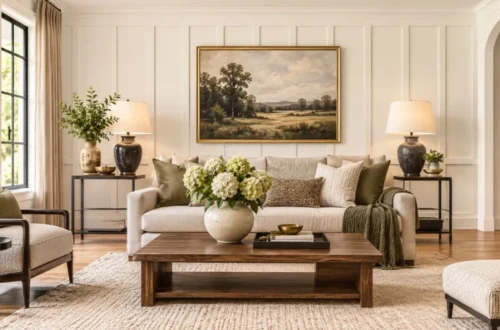
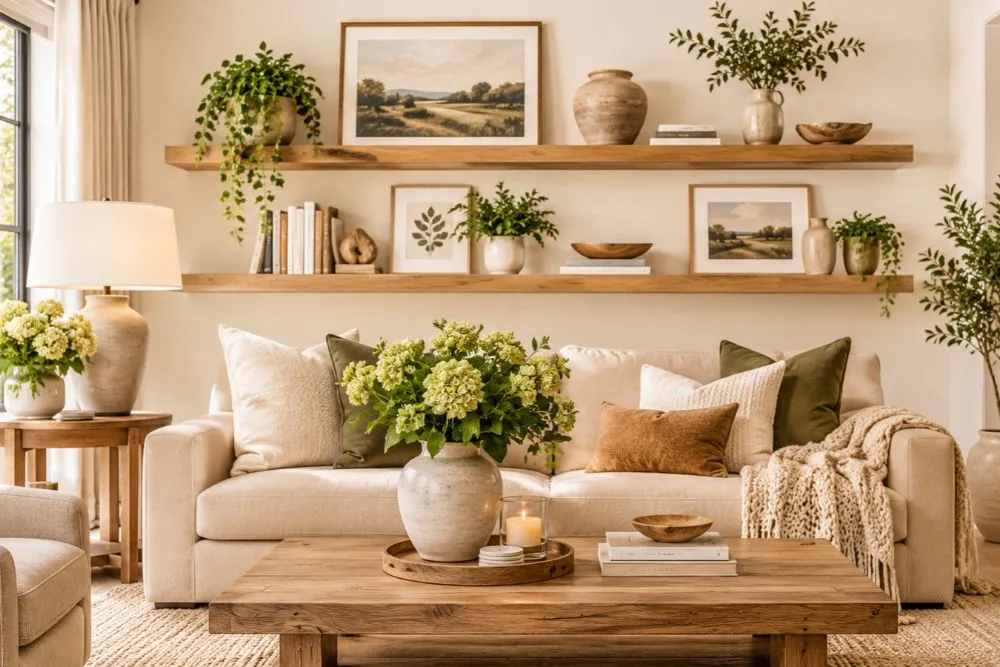
Floating shelves ideas offer a stylish way to transform empty walls into functional, attractive spaces while adding storage, personality, and visual interest to your home. From natural wood shelves above kitchen counters to elegant bedroom displays and modern living room arrangements, the right design can complement your furniture, wall colors, and overall interior style.
Whether you’re decorating a small apartment, refreshing an outdated room, or planning a larger home improvement project, floating shelves provide versatile solutions for almost every space.
Instant Answer: What Are the Best Floating Shelves Ideas?
Some of the best floating shelves ideas include natural wood shelves above sofas, open kitchen shelving, minimalist bedside shelves, bathroom storage ledges, corner shelves, gallery-style picture ledges, and shelves with integrated LED lighting. Choose materials and colors that complement your walls, furniture, and flooring, and always use mounting hardware suitable for the shelf’s intended load.
25 Floating Shelves Ideas for Every Room
Floating shelves can serve as decorative focal points, everyday storage, or a combination of both. The best arrangement depends on your available wall space, interior design style, furniture layout, and what you want to display.
Here are 25 practical designs to inspire your next decorating project.
Living Room Floating Shelves Ideas

The living room is one of the most versatile places to introduce floating shelves. They can frame a television, highlight artwork, display personal collections, and make an empty wall feel more complete.
1. Long Wooden Floating Shelves Above the Sofa
Long wooden shelves create an attractive focal point above a living room sofa. Choose natural oak for a light Scandinavian appearance or walnut for a richer, more traditional atmosphere.
Arrange framed artwork, ceramic vases, small plants, and a few favorite books along the shelf. Leave some open space between objects so the arrangement feels intentional rather than crowded.
For a coordinated appearance, repeat the wood tone in your coffee table, side tables, or flooring.
2. Asymmetrical Floating Shelves for a Modern Look
Asymmetrical shelving brings movement and personality to contemporary interiors. Instead of installing shelves in perfectly aligned rows, use different lengths and staggered positions to create a more relaxed arrangement.
This design works particularly well against neutral walls, including warm white, soft greige, and light gray. Keep the displayed objects relatively simple so the unusual arrangement remains the main attraction.
3. Floating Shelves Around a TV Wall
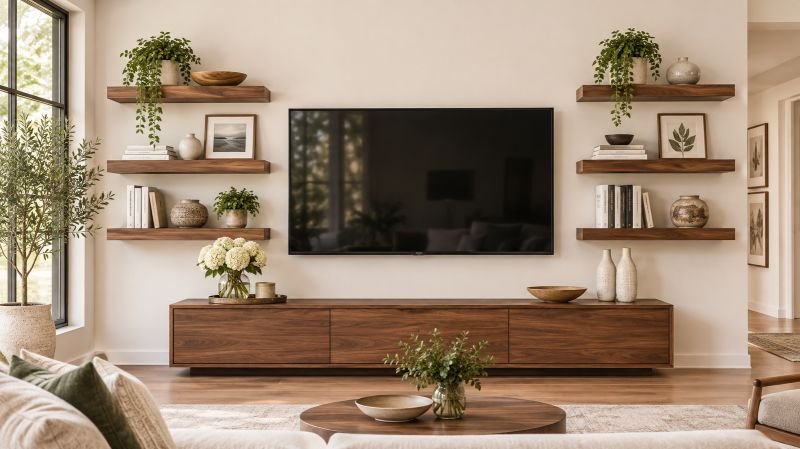
Floating shelves can make a television wall look more balanced without introducing a bulky entertainment cabinet.
Install shelves beside the television or combine them with a low media console. Display books, framed photographs, decorative bowls, and greenery to soften the appearance of electronic equipment.
Choose finishes that coordinate with the media unit. For example, walnut shelves against warm white walls create an inviting contrast, while matte black shelves complement contemporary furniture and darker accent walls.
Remember to leave sufficient clearance for ventilation, cables, and equipment access.
4. Built-In Look With Alcove Floating Shelves
Unused alcoves and recessed wall sections provide excellent opportunities for customized shelving.
Install two or three wooden shelves inside an alcove and use the available vertical space for books, artwork, storage baskets, and decorative accessories. Painting the back wall a contrasting shade can make the display more noticeable.
For a subtle built-in appearance, paint the shelves and surrounding wall in the same color. This technique works particularly well in traditional living rooms, fireplaces, and narrow architectural niches.
5. Floating Picture Ledges for a Gallery Wall
Picture ledges offer an easy way to display artwork without committing to permanent frame arrangements.
Place framed photographs, illustrations, and small prints along narrow shelves. Layer smaller frames in front of larger ones to introduce depth and make it easier to change the display whenever you want.
A combination of black frames, natural wood, and neutral artwork creates a timeless look. Alternatively, introduce colorful prints to brighten a simple living room.
Kitchen Floating Shelves Ideas
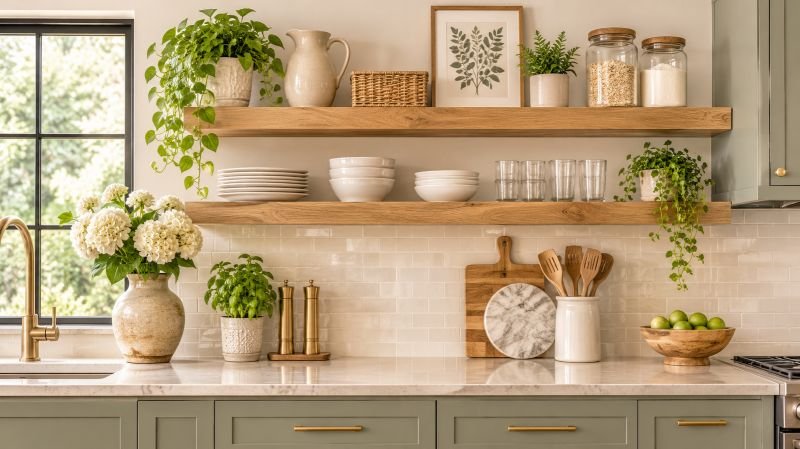
Kitchen floating shelves combine practical storage with decorative appeal. They can make everyday dishes accessible while creating opportunities to introduce natural textures and complementary colors.
6. Natural Wood Floating Shelves Above Kitchen Counters
Natural wood shelves look particularly attractive against white, cream, and light beige kitchen walls.
Use them to display everyday plates, drinking glasses, serving bowls, and carefully arranged jars. Oak and maple create a light appearance, while walnut introduces deeper contrast.
If your kitchen has white cabinets and a pale backsplash, natural wood shelves can prevent the overall design from feeling too plain.
Choose finishes that can tolerate the cleaning and moisture conditions of your kitchen.
7. Dark Wood Shelves With Contrasting Cabinets
Dark wooden floating shelves bring depth and sophistication to kitchens with lighter cabinetry.
Pair walnut or espresso finishes with warm white, soft gray, or muted sage green cabinets. Brass hardware and warm lighting can complete the arrangement.
This combination is especially effective in transitional and contemporary kitchens where contrast helps define different design elements.
8. Floating Shelves for a Coffee Station

Turn an unused kitchen corner into a small coffee station with one or two floating shelves.
Arrange coffee mugs, glass jars, coffee accessories, and a small decorative plant above the coffee maker. A narrow shelf is usually sufficient for lightweight accessories, while a deeper shelf offers more room for larger containers.
For a coordinated appearance, match the shelf finish with your countertop, cabinetry, or nearby furniture.
9. Floating Shelves Beside the Cooking Zone
Install short floating shelves beside a cooking area to keep frequently used spices and lightweight kitchen accessories accessible.
Wooden shelves work beautifully with neutral backsplashes, while black metal or dark wood can complement modern kitchens.
However, avoid positioning ordinary wooden shelves too close to direct heat, steam, or grease. Keep required clearances around cooking appliances and follow the appliance manufacturer’s safety instructions.
10. Corner Floating Shelves for Extra Kitchen Storage
Kitchen corners are often overlooked, particularly in smaller homes.
Corner floating shelves provide additional space for spice containers, small bowls, decorative ceramics, and frequently used accessories. A natural wood finish creates warmth, while white shelves blend into pale walls.
Before installation, measure the available corner carefully to ensure the shelves do not interfere with cabinets, doors, or everyday kitchen activities.
Bedroom Floating Shelves Ideas
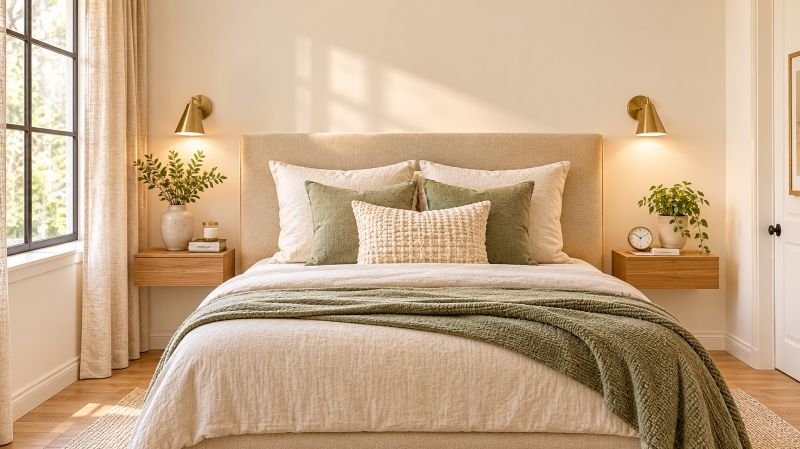
Floating shelves can replace traditional bedside tables, provide additional book storage, and introduce decorative elements without occupying valuable floor space.
11. Floating Bedside Shelves Instead of Nightstands
A floating bedside shelf is a practical alternative to a conventional nightstand in a compact bedroom.
Choose a shelf large enough for your phone, reading glasses, a small lamp, and other everyday essentials. If you need additional storage, consider a floating design with a drawer.
Light oak works well with soft white and beige bedroom palettes, while walnut complements darker furniture and warm neutral interiors.
12. Floating Shelves Above the Headboard
A carefully arranged shelf above the headboard can introduce personality without requiring a large gallery wall.
Display lightweight framed artwork, small decorative objects, or a simple arrangement of greenery. Choose colors that complement your bedding and existing bedroom furniture.
For safety, use secure mounting and avoid placing heavy, fragile, or potentially hazardous objects above the sleeping area.
13. Vertical Floating Bookshelves for Small Bedrooms
Vertical floating shelves make use of otherwise empty wall space while keeping the bedroom floor clear.
Arrange books, small baskets, framed photographs, and decorative accents at different heights. A series of narrow shelves can create a compact reading display beside a desk or armchair.
White or pale wood finishes help maintain a light appearance, particularly in bedrooms with limited natural daylight.
Bathroom Floating Shelves Ideas
Bathrooms benefit from shelving because additional storage can make daily routines easier without requiring a larger vanity or storage cabinet.
14. Floating Shelves Above the Toilet
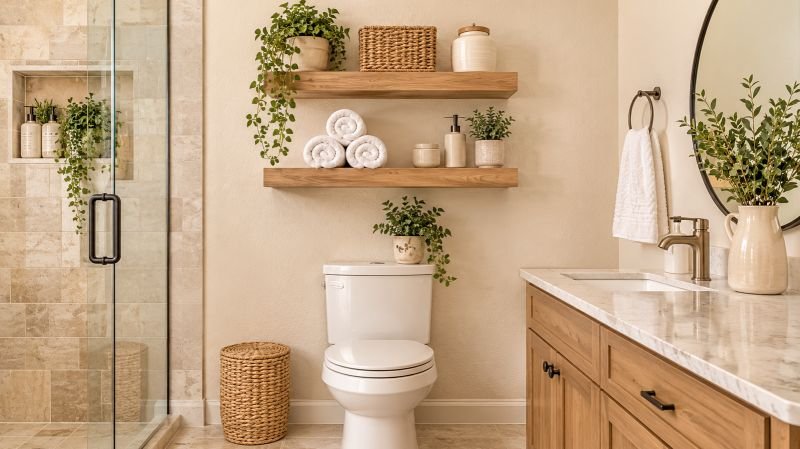
The wall above the toilet is often an underused area in small bathrooms.
Install two or three shelves to organize rolled towels, toiletries, small baskets, and decorative accessories. Natural wood can soften a bathroom dominated by white tile and porcelain fixtures.
For humid environments, select moisture-resistant materials and suitable hardware. Keep the arrangement accessible without interfering with toilet use or maintenance.
15. Glass Floating Shelves for a Spa-Like Bathroom
Glass shelves create a visually light appearance that works well in contemporary bathrooms.
Use them beside a vanity mirror or in an appropriate dry storage area to display neatly arranged toiletries, small glass containers, and decorative accessories.
Tempered glass and corrosion-resistant fittings are preferable for bathroom applications. Always check the manufacturer’s instructions regarding installation and weight limits.
16. Floating Shelves With Baskets for Hidden Clutter
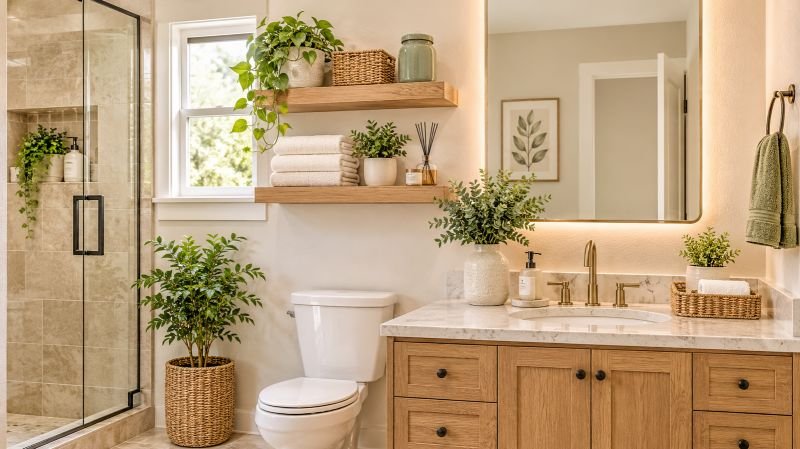
If your bathroom contains numerous small accessories, combine floating shelves with coordinated storage baskets.
Woven baskets introduce natural texture, while white or neutral containers create a more streamlined appearance. Use the shelves for towels, spare toiletries, and everyday essentials.
This arrangement works especially well with warm white walls, beige tiles, muted green accents, and natural wood vanities.
Entryway, Home Office, and Small-Space Floating Shelves
Floating shelves are particularly useful in transitional areas and smaller rooms where traditional storage furniture may occupy too much space.
17. Minimalist Floating Entryway Shelves

A slim floating shelf can serve as a compact entryway table.
Place a small decorative bowl for keys, a framed photograph, and a vase with fresh greenery on top. Pair it with a round mirror and subtle wall lighting to create a welcoming first impression.
Natural oak, painted white, and matte black are versatile finishes for different entryway styles.
18. Floating Shelves Above a Home Office Desk
Install floating shelves above a desk to keep books, stationery, storage boxes, and decorative objects organized.
Long walnut shelves create a sophisticated backdrop, while white shelving works well in bright minimalist offices. Coordinate the finish with your desk and other furniture to create a cohesive workspace.
Keep the shelves positioned safely above monitors and avoid overcrowding the area with distracting objects.
19. Corner Floating Shelves for Small Apartments
Small apartments often have unused corners that can accommodate compact floating shelves.
Use triangular or customized corner designs to display books, small plants, photographs, and lightweight storage containers.
This approach adds vertical storage without introducing another piece of floor furniture. It is particularly useful in studio apartments, reading corners, and compact bedrooms.
20. Floating Shelves Along a Staircase Wall
A staircase wall offers an opportunity to create an attractive vertical display.
Install staggered floating shelves along the wall and decorate them with framed photographs, small sculptures, and carefully selected accessories.
Use a consistent material or repeat a few colors throughout the arrangement to maintain visual continuity. Ensure the shelves do not reduce stairway clearance or create hazards along the walking route.
Creative Floating Shelves Designs and Decor Styles
Beyond traditional wooden shelving, alternative finishes, shapes, and lighting treatments can help create a more distinctive interior.
21. Black Floating Shelves for Bold Contrast
Matte black floating shelves introduce definition and structure against light-colored walls.
They work especially well with warm white, pale gray, beige, and soft cream backgrounds. Add brass accents, monochromatic artwork, and simple ceramic pieces for a contemporary appearance.
In darker rooms, balance black shelves with adequate lighting and lighter surrounding finishes.
22. Floating Shelves Against a Painted Accent Wall

One of the easiest ways to make floating shelves stand out is to install them against a carefully selected accent wall.
Consider these combinations:
| Wall color | Recommended shelf finish | Design effect |
| Sage green | Natural oak | Soft, organic warmth |
| Warm white | Walnut | Rich, timeless contrast |
| Light greige | Matte black | Modern definition |
| Dusty blue | Light natural wood | Calm, balanced appearance |
| Terracotta | Cream or pale oak | Warm, earthy character |
| Charcoal gray | White oak | Striking contrast |
Consider the undertones of your existing flooring, furniture, and trim before selecting a paint color. Test paint samples under both natural and artificial lighting to see how the combination changes throughout the day.
23. Rustic Reclaimed Wood Floating Shelves
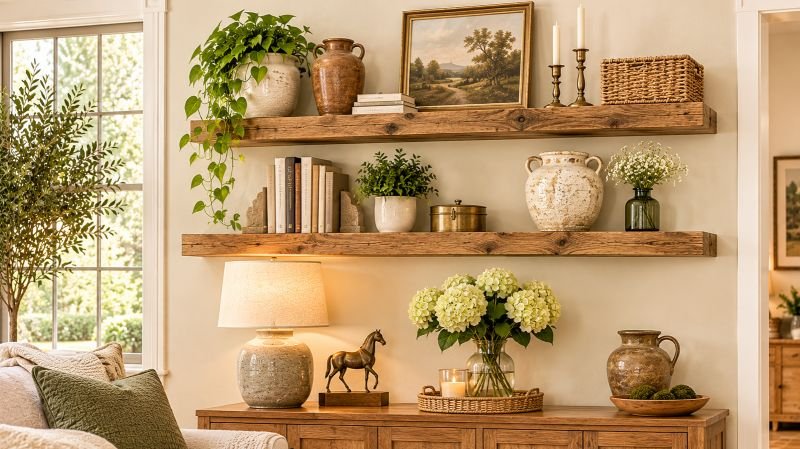
Reclaimed wood shelves bring natural character and texture to farmhouse, cottage, and rustic interiors.
The visible grain, knots, and weathered finish make each shelf visually distinctive. Pair reclaimed wood with cream walls, textured fabrics, woven baskets, and vintage-style accessories.
Before using reclaimed timber, inspect it for damage, pests, contamination, and structural weaknesses. Sand and finish it appropriately before installation.
24. Marble and Brass Floating Shelves for a Luxe Look

Marble and brass create an elegant combination for sophisticated living spaces and bathrooms.
A stone shelf with subtle veining can complement cream walls, marble surfaces, and warm metallic hardware. Brass brackets or decorative accents introduce additional visual interest.
Because stone can be heavy, use a mounting system specifically designed for the material and intended load. A professional installer may be appropriate for larger or heavier installations.
25. Floating Shelves With Integrated LED Lighting
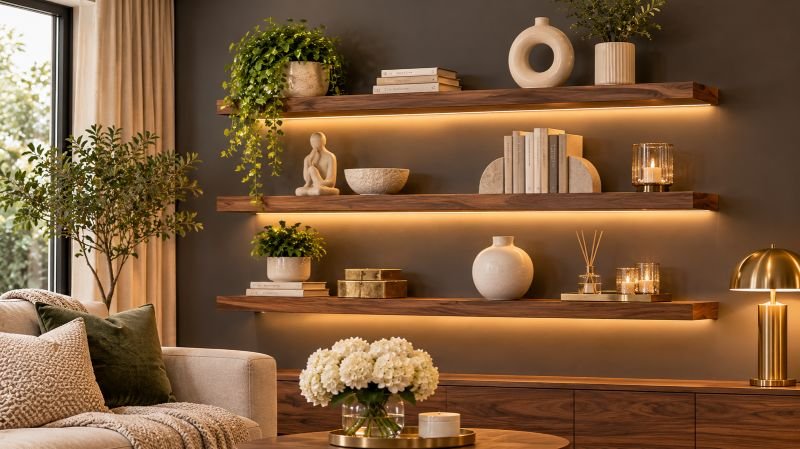
Integrated LED lighting can turn ordinary shelving into a decorative feature.
Install suitable LED strips beneath the shelves to highlight artwork, ceramics, books, and other displayed objects. Warm white lighting can create a cozy atmosphere, while neutral white light provides a cleaner contemporary appearance.
Conceal wiring where practical, select lighting suitable for the installation environment, and ensure the electrical work meets applicable safety requirements.
How to Choose the Best Floating Shelves for Your Home
Choosing the right floating shelves involves more than selecting an attractive finish. Consider the wall construction, shelf dimensions, intended use, and surrounding interior design.
Which Floating Shelf Material Is Best?
Different materials create different visual effects and offer varying levels of durability.
| Material | Best applications | Main consideration |
| Solid wood | Living rooms, bedrooms, kitchens | Grain, finish and structural support |
| Engineered wood | Decorative displays | Edge quality and moisture resistance |
| Metal | Modern and industrial interiors | Corrosion protection and bracket strength |
| Tempered glass | Light decorative displays | Correct fittings and glass rating |
| Stone or marble | Premium accent shelving | Weight and specialized mounting |
The material alone does not determine how much weight a shelf can support. The mounting system, wall construction, fasteners, shelf design, and installation quality all matter.
How to Match Floating Shelves With Wall Colors
The right shelf finish should complement the overall room palette rather than compete with it.
For example, natural oak pairs beautifully with sage green and warm white, while walnut adds depth to beige and cream interiors. Black shelves can create a striking focal point against pale walls, and white shelves can visually blend into similarly painted surfaces.
Consider color temperature as well. Warm wood tones generally coordinate naturally with warm neutrals, while cooler gray finishes may work better with cooler contemporary palettes.
How to Choose the Right Shelf Size
Measure the available wall area before purchasing or building a shelf.
Consider:
- Length: The shelf should look proportionate to the furniture or wall beneath it.
- Depth: Choose sufficient depth for the objects you intend to display.
- Thickness: Thicker shelves create a substantial appearance, while slim ledges look lighter.
- Spacing: Allow enough vertical room for books, vases, plants, and other objects.
- Load: Check the manufacturer’s capacity and mounting requirements.
How to Style Floating Shelves Like an Interior Designer
A well-designed shelf should feel collected rather than crowded. A few simple principles can make even inexpensive shelving look thoughtfully arranged.
Combine Decorative and Functional Objects
Mix books, framed artwork, ceramic vessels, small plants, and useful storage containers.
For example, a kitchen shelf can combine everyday dishes with a decorative bowl and a small herb planter. A living room shelf might feature stacked books, a sculptural vase, and a framed photograph.
Vary Heights and Create Visual Balance
Place taller objects beside shorter accessories to create variation. Grouping three related objects can be a helpful starting point, but avoid applying the rule mechanically.
Leave some empty space so individual objects remain visible. If one side of a shelf contains a large vase, balance it with a smaller group of objects on the opposite side.
Introduce Texture and Natural Elements
Combine smooth ceramics with woven baskets, natural wood, glass, and greenery.
These contrasting textures add depth without requiring numerous decorative accessories. Repeat one or two materials across multiple shelves to create a cohesive appearance.
Avoid Overcrowding
Too many objects can make even attractive shelves look messy.
Remove items that do not contribute to the display, keep frequently used accessories accessible, and periodically rearrange the collection.
How to Build Floating Shelves as a DIY Home Improvement Project
Building your own floating shelves allows you to customize the length, depth, thickness, wood finish, and overall appearance.
A common DIY design uses a hollow wooden box that slides over a hidden support frame, or cleat, attached to the wall.
Materials and Tools
Depending on the design, you may need:
- Appearance-grade lumber or hardwood
- Plywood for the top and bottom panels
- Timber for the wall cleat and internal supports
- Wood glue and suitable screws
- Measuring tape and carpenter’s square
- Drill and driver
- Circular saw or miter saw
- Sander and wood filler
- Paint, primer, or wood stain
- Safety glasses and hearing protection
Step 1: Plan the Dimensions and Cut the Wood
Measure the available wall area and decide the shelf length, depth, and thickness.
Cut the top, bottom, front, and side panels to the required dimensions. Accurate measurements are important because the hollow shelf body needs to fit over its internal support frame.
Step 2: Build the Hidden Support Cleat
Create a rigid timber support frame using a back rail and appropriately spaced support arms.
The frame should fit securely inside the hollow shelf. Its dimensions and fastening locations must be designed around the expected load and the available wall framing.
Step 3: Assemble the Hollow Shelf

Join the top, bottom, front, and side panels using suitable wood glue and mechanical fasteners.
Check that the corners are square and allow the adhesive to cure according to the manufacturer’s instructions. Sand the surfaces and fill visible imperfections.
Step 4: Secure the Frame to the Wall
Locate appropriate structural fixing points and position the cleat using a level.
Fasten it with structural screws suitable for the wall and timber. Verify that the frame is secure before installing the decorative shelf body.
Step 5: Finish and Install the Shelf
Apply primer and paint or a suitable wood stain and protective finish.
Once the finish has cured, slide the hollow shelf over the cleat and secure it using the planned fastening method. Confirm that it sits level and follows the design specifications.
DIY safety note: Cutting lumber and drilling into walls require appropriate protective equipment and safe tool handling. If the wall construction, electrical services, structural support, or required load is uncertain, consult a qualified professional.
Common Floating Shelf Mistakes to Avoid
Even attractive shelves can become impractical when installation and styling are not planned properly.
| Common mistake | Better approach |
| Overloading the shelf | Respect the manufacturer’s load rating |
| Using unsuitable anchors | Match fasteners to the wall construction |
| Installing shelves unevenly | Measure carefully and use a level |
| Choosing the wrong depth | Match dimensions to displayed objects |
| Ignoring wall colors | Coordinate the finish with the room palette |
| Overcrowding decorations | Leave intentional negative space |
| Ignoring moisture | Choose appropriate bathroom materials |
| Placing shelves near heat | Follow appliance clearance requirements |
Final Thoughts
Floating shelves are a simple but effective way to improve the appearance and functionality of your home. Whether you prefer natural wood displays, modern black shelving, colorful accent-wall arrangements, or practical kitchen storage, the right design can make an ordinary wall feel purposeful.
Start by identifying an area that needs additional storage or visual interest. Then choose a shelf material, finish, and arrangement that complements your existing furniture, flooring, and wall colors.
Remember that successful shelving combines thoughtful styling with secure installation. Take time to measure your space, select appropriate mounting hardware, and arrange decorative objects without overcrowding the display.
Ready to refresh your home? Start with one empty wall, choose a floating shelf design that reflects your style, and create a space that feels more organized, welcoming, and beautifully finished.
Frequently Asked Questions
What are the best floating shelves ideas for a living room?
Long wooden shelves above sofas, asymmetrical arrangements, TV wall shelving, alcove displays, and picture ledges are excellent options. Choose a design that complements your furniture, wall colors, and available space.
How do you decorate floating shelves without making them look cluttered?
Combine a few books, decorative objects, artwork, and natural elements. Vary their heights, use a consistent color palette, and leave some empty space between groups.
What should you put on floating shelves?
You can display books, framed photographs, ceramic vases, small plants, decorative bowls, baskets, and everyday kitchen or bathroom accessories. Always consider the shelf’s depth and weight capacity.
Are floating shelves still in style?
Yes, floating shelves remain a versatile interior design feature because they combine storage with a clean, understated appearance. Natural wood, contrasting finishes, minimalist arrangements, and integrated lighting offer adaptable options for contemporary homes.
What color floating shelves look best with white walls?
Natural oak, walnut, matte black, and painted white are all attractive options. Oak creates warmth, walnut adds richness, black provides contrast, and white produces a seamless appearance.
Are floating shelves a good idea for small rooms?
Yes. They use vertical wall space instead of occupying valuable floor area. Narrow shelves, corner designs, and compact bedside ledges are particularly useful in small bedrooms, bathrooms, and apartments.
How high should floating shelves be installed?
The ideal height depends on the room, furniture arrangement, shelf purpose, and the height of the displayed objects. Measure from nearby furniture and consider accessibility rather than relying on one universal measurement.
How much weight can floating shelves hold?
There is no universal weight limit. Capacity depends on the shelf construction, bracket design, fasteners, wall material, installation quality, and load distribution. Always follow the manufacturer’s stated rating.
Can you hang floating shelves without drilling into wall studs?
Sometimes. Certain mounting systems can use appropriately rated hollow-wall anchors or other wall-specific fasteners. However, their suitability depends on the intended load and installation conditions. Heavy-duty shelving should have appropriate structural support.